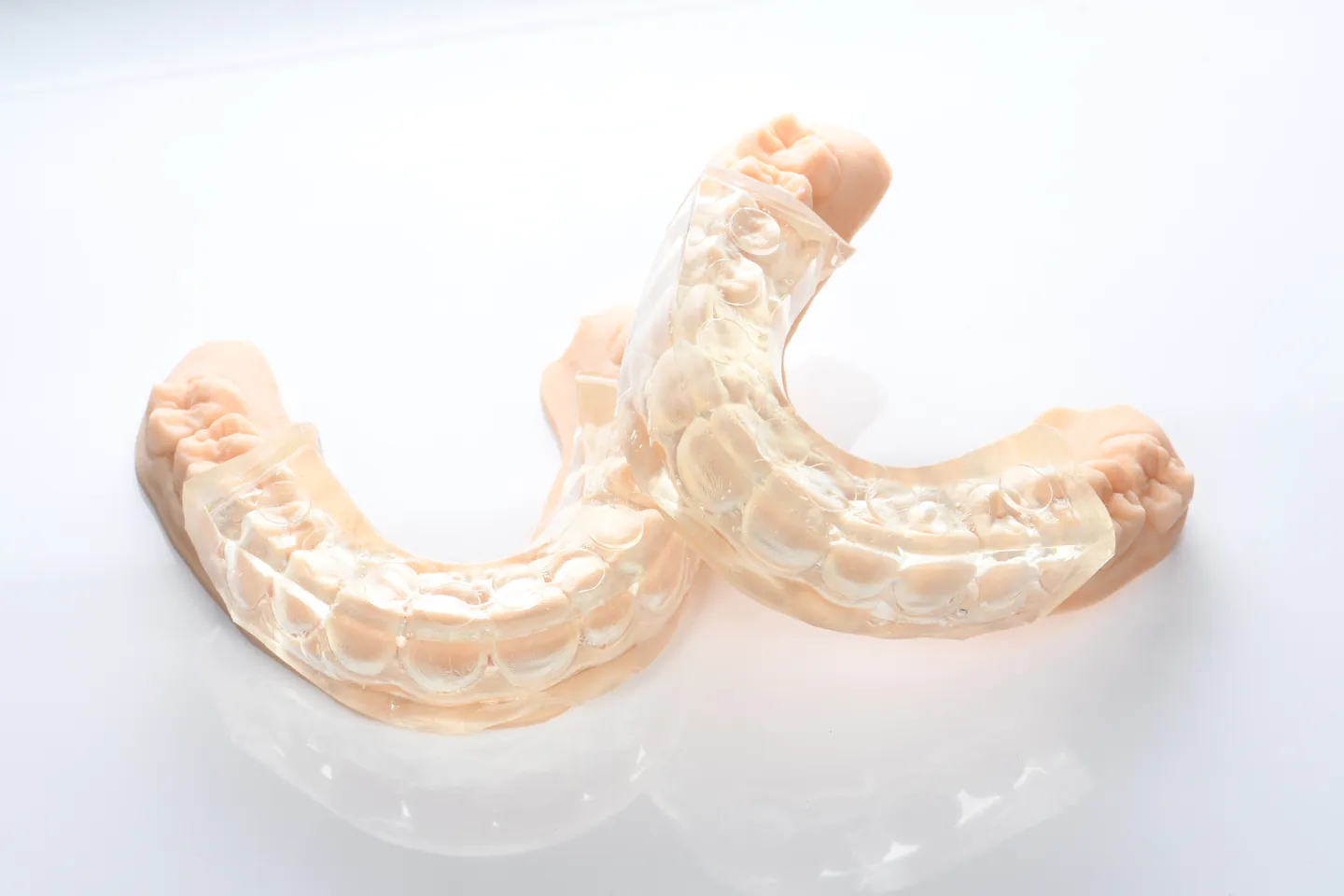
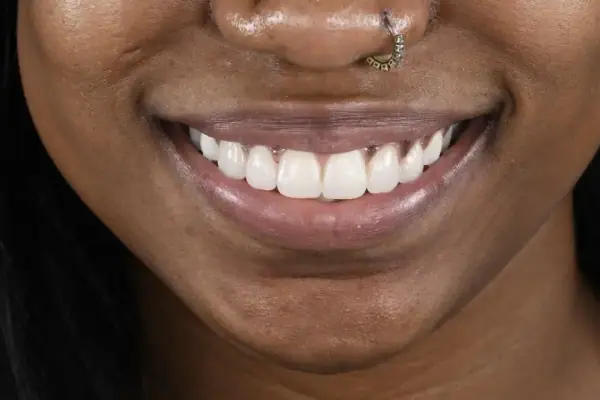
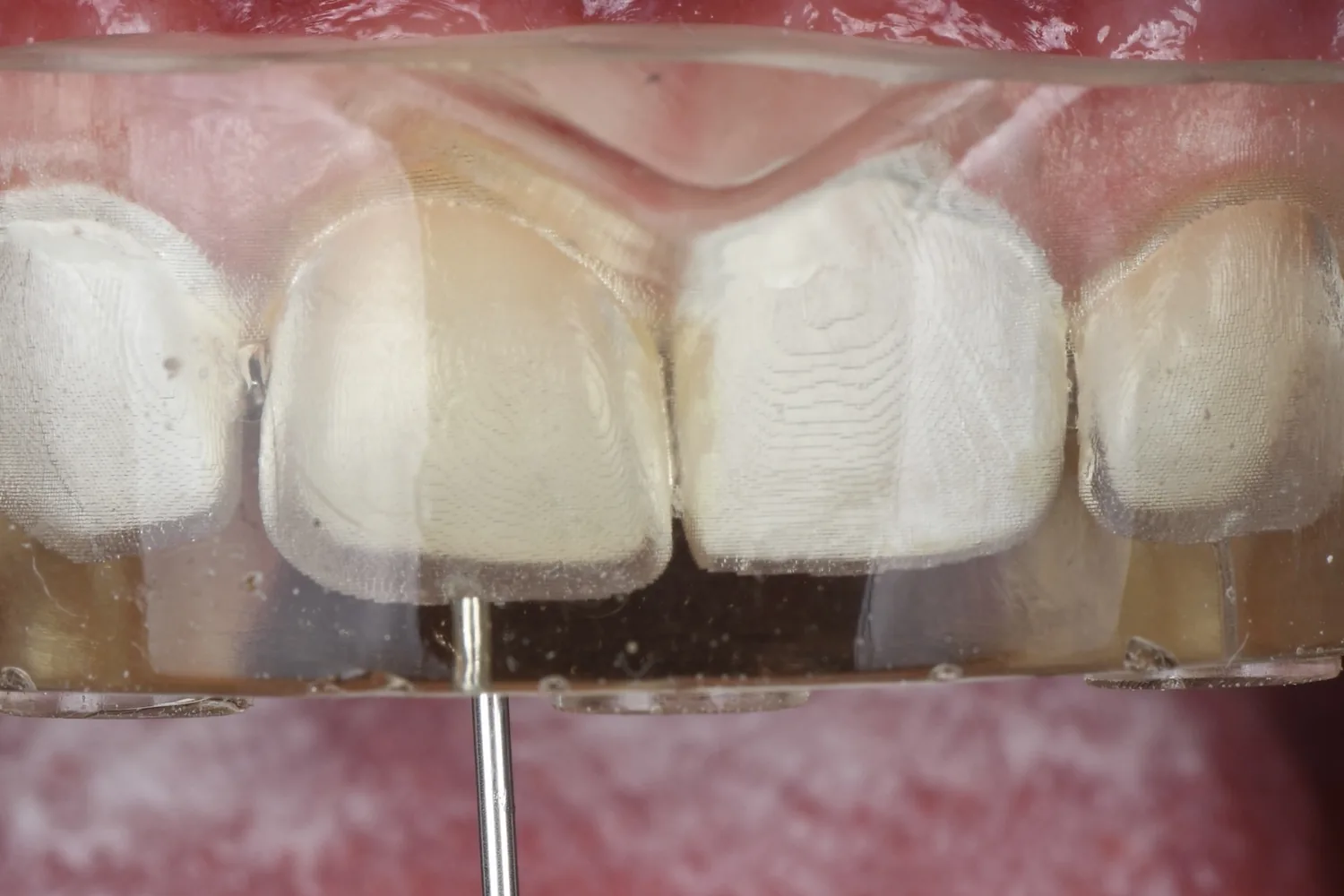
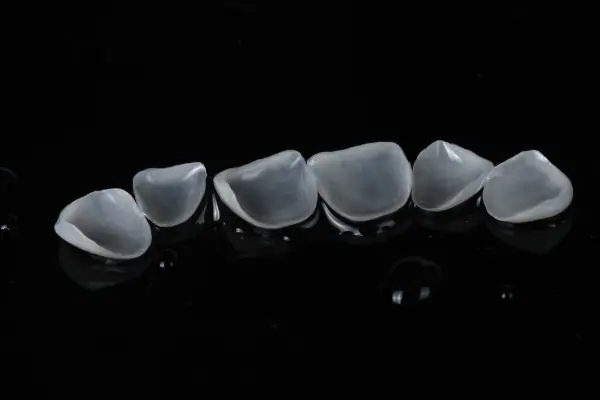
Two transparent injection guides moulded on the teeth, on a white background.

Injection-moulded composite: correcting tooth shape by adding material.

Adding composite can sometimes correct a shape without preparing the tooth. It is neither always possible nor always indicated.

Injection-moulded composite is not a material: it is a way of placing composite. A plan is designed before treatment and turned into a transparent key, then the composite is injected through it: the shape obtained in the mouth follows the approved plan, before being adjusted and polished.

The value of the technique lies in this order: the shape is decided, tried and approved before it is carried out.

Dr Jérémy Haccoun, dentist Updated

Key points

See a case of injection-moulded composite veneers

Understanding the technique

What “injection-moulded” means

The key is made of transparent silicone: the composite inside it is hardened by light shone through it, without the key having to be removed. The composite used is chosen, or prepared, so that it flows easily.

The term “composite veneers” is sometimes used for this result. It can be misleading: a veneer is a piece that is made and then bonded, whereas here the material is added and hardened directly on the tooth. The results may look alike, but the process is different.

Injection-moulded or layered?

Both techniques place the same material; what differs is when the decisions are made. Layering is built up freehand in the chair, layer by layer, which particularly suits a single tooth. Injection reproduces a shape decided in advance, more consistently from one tooth to the next.

Neither is superior: they suit different situations.

The plan comes before the treatment

Nothing is injected until the shape has been seen.

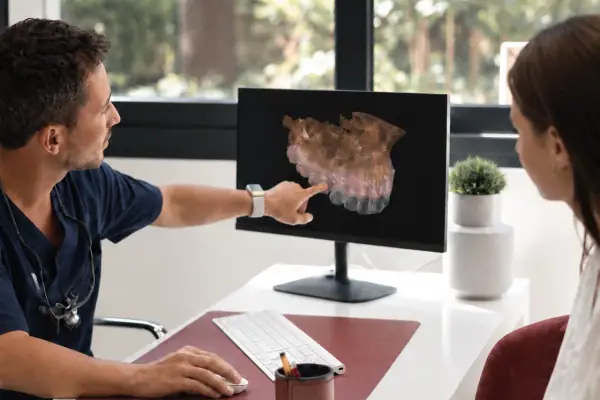
Photographs, an analysis of the proportions and a digital impression build the aesthetic plan from measurements. Where indicated, it can then be tried in the mouth without altering the tooth in any way. This trial also serves as a guide: it shows where material can be added, and where it cannot be added without creating excessive bulk.

The digital design (wax-up): the new shape is drawn on the impression, before any work on the tooth.
A projection of the design onto the smile, generated by artificial intelligence: it helps you picture the result, but it is not a result.

What the technique can do

Situations in which adding material is enough to achieve the desired shape. Each one assumes a favourable clinical context.

Gaps (diastemas)
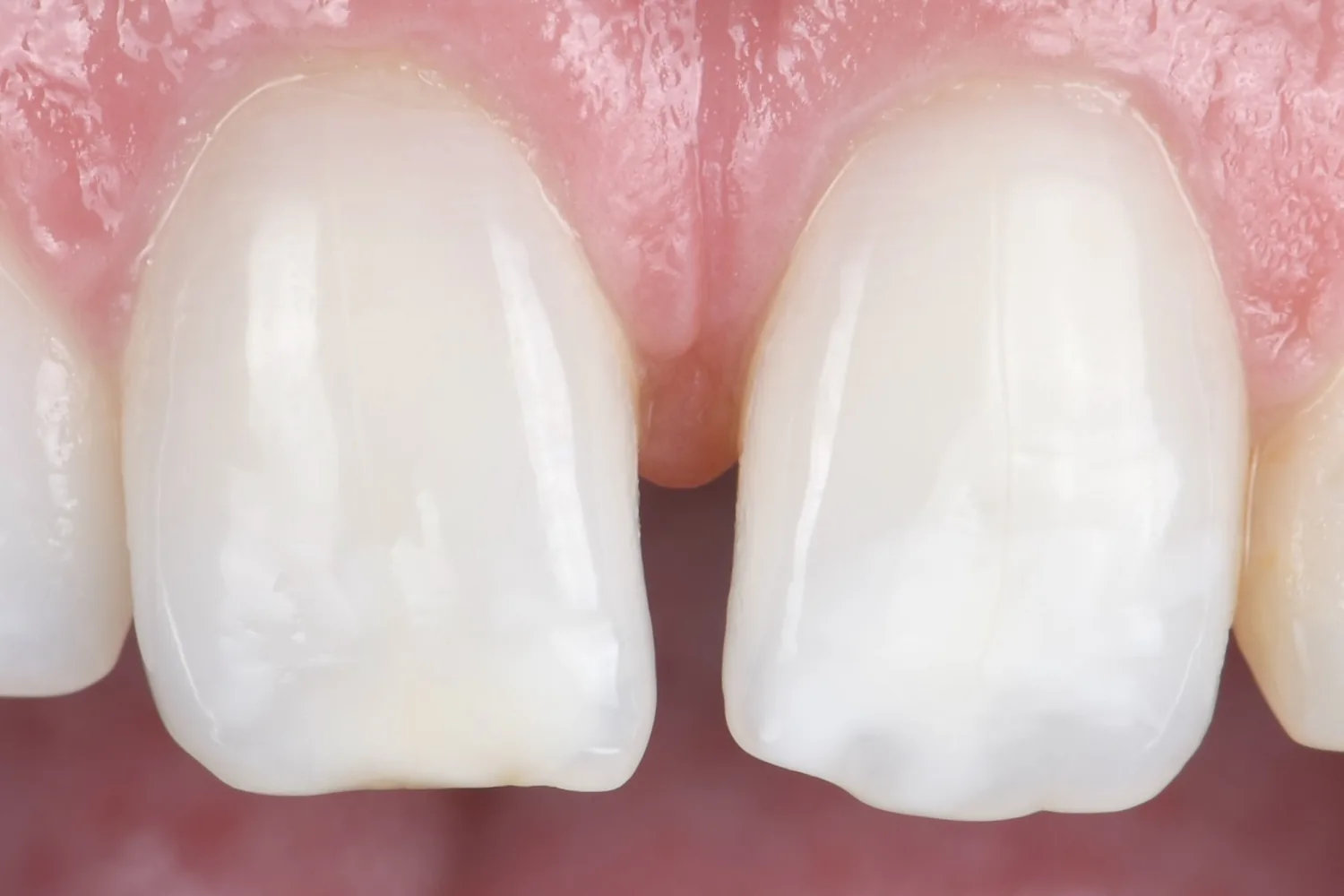
Closing a gap between two teeth by widening them on the sides that face each other, when the size of the gap and the proportions allow.
Proportions
Restoring a balanced width-to-length ratio on teeth considered too narrow or too short.
Small teeth
Microdontia, or an undersized lateral incisor.
Worn edges
Restoring worn biting edges, once the cause of the wear has been identified and addressed.
Harmonising the smile
Reworking several teeth together to restore an even line of edges, or symmetry.
Old composites
Replacing restorations that have deteriorated or become stained, with a redesigned shape.

Matching one of these situations is not enough. The examination checks the bite, the condition of the teeth, the health of the gums and the space actually available. Some requests call first for whitening, others for orthodontic movement that would reduce the material to be added, others for a restoration that covers more of the tooth. The indication leads to the technique, never the other way round.

The limits of composite

Masking marked discolouration requires opacity, and therefore thickness: when little space is available, added material cannot hide the underlying colour without making the tooth thicker.

The surface changes. The shine achieved by polishing alters over time, at a pace that depends on each person’s habits, and the margins between composite and enamel can become stained.

The edges are exposed: thin composite on a biting edge subject to heavy contact can chip.

Finally, uncontrolled bruxism or an unfavourable bite imposes stresses that the material cannot offset on its own. These must be identified and built into the treatment plan before the restoration.

The two address different problems. Here is what separates them; the detailed comparison is the subject of a separate article.

Tooth tissue removed
Composite can be purely additive in favourable situations. Ceramic often requires preparation, to a greater or lesser extent depending on the situation, the position of the tooth and the plan.
Shade stability
Ceramic is markedly more stable in shade. Composite changes more, and can be re-polished.
Surface finish
Ceramic keeps its shine better over time.
Repairability
Composite can generally be touched up and repaired locally. A ceramic restoration can sometimes be repaired, but the options depend on the nature and extent of the defect.
Masking
For a comparable thickness, ceramic generally masks marked discolouration better.
Fees
Composite generally costs less per tooth, but the ranges overlap depending on the extent of the plan.

Neither is better in itself. The useful question is what level of intervention is right for what needs correcting.

Tissue and time

Additive does not mean no intervention

When nothing is prepared, the approach remains essentially additive and the amount of tissue removed at the outset is very small. But this is not a rule: an old restoration may have to be removed, a surface smoothed to make bonding more reliable, and shape refinements as well as bite adjustments are made at the end, by subtraction.

Nor does a later removal or redo make it possible to promise a return to exactly the original state.

What is preserved therefore depends on the clinical situation more than on the technique, and is assessed at the examination.

Preservation Index

Add, and remove as little as possible.

02 / 04

  1. 01No preparation
  2. 02Additive
  3. 03Minimal preparation
  4. 04Restorative

The index shows what a treatment removes from the tooth and what it leaves. Injection-moulded composite sits at the second level: material is added to the tooth and, in favourable situations, no preparation is needed; shape refinements and bite adjustments may be made at the end. The level says nothing about how difficult the treatment is, only about how much tissue it removes.

What the literature can tell us

The key point: no study gives a lifespan that applies to everyone, and results vary a great deal between patients and between practitioners. The figures below give an order of magnitude.

A systematic review (Dental Materials, 2015; 17 studies, 1,821 restorations followed for 3 to 17 years) found annual failure rates of 0 to 4.1% and survival rates of 53.4 to 100%, depending on the study. For restorations placed for aesthetic reasons, as here, failures related to colour, shape and surface staining are more frequent.

A second review (International Journal of Esthetic Dentistry, 2019; 24 studies, too heterogeneous for a meta-analysis) reports annual failure rates of 0 to 33.5%, depending on the composite and the context.

Finally, a study of 72,196 front-tooth restorations in 29,855 patients (Journal of Dental Research, 2017) found a mean annual failure rate of 4.6% at five years, ranging from 2 to 11% between practitioners.

These studies mainly concern decayed or fractured teeth. On the injection technique itself, the literature still consists of technical articles and case reports, which do not make it possible to attribute a specific lifespan to it.

Results vary widely between studies. These data do not make it possible to predict precisely how long a restoration will last in a given patient.
The studies agree on one point: the result does not depend on the material alone.

  1. The volume restored, and the thickness of material at each point.
  2. The bite, and the way the teeth meet in use.
  3. Bruxism and other oral habits.
  4. The bonding protocol, and isolation of the teeth during bonding.
  5. Finishing and polishing, which determine the initial surface finish.
  6. Daily hygiene, how easily the margins can be reached, and eating habits.
  7. Regular check-ups, which allow re-polishing before repair becomes necessary.
  8. The variation between practitioners, which the 2017 study measures without isolating its cause.

Repairable, and what that means

Composite can be touched up: this is one of its most useful properties in practice. A stained area can be re-polished, and a chipped edge can usually be repaired locally, without redoing the whole plan.

Above all, this changes the type of follow-up: a restoration that is maintained with small touch-ups needs regular check-ups, whereas a more stable restoration needs fewer.

Damage that keeps recurring in the same place signals a cause to look for, functional or bite-related, rather than a simple surface defect.

In practice

The course of treatment

Treatment takes place in separate stages. As long as no material has been added, it is still possible to stop.

  1. The consultation establishes the diagnosis and compares the options.
  2. Photographs, an analysis of the proportions and a digital impression are used to build the plan.
  3. The plan is discussed and, where indicated, tried in the mouth.
  4. The transparent key is made from the approved plan.
  5. The composite is injected, with the teeth isolated.
  6. The shape is refined, the bite checked, then the surfaces polished.
  7. A check-up some time later assesses how the restorations have integrated and the condition of their surface.

Injection-moulded composite, in pictures

A case treated at the practice: the key, the injection, then the result, on the teeth and in the smile.

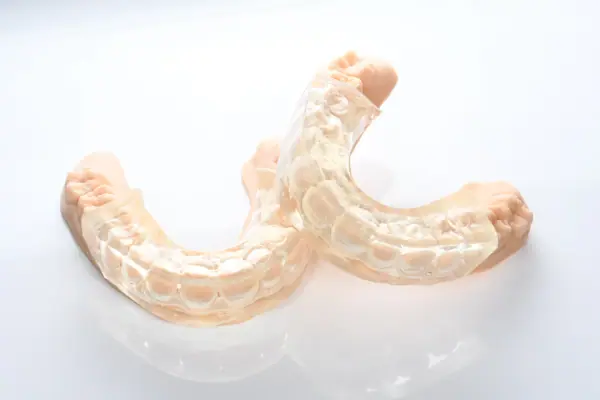
  1. Two clear silicone keys placed on the models of the planned design.

    The injection key

    Made from the approved design, the clear silicone key carries the shape that the composite will reproduce.

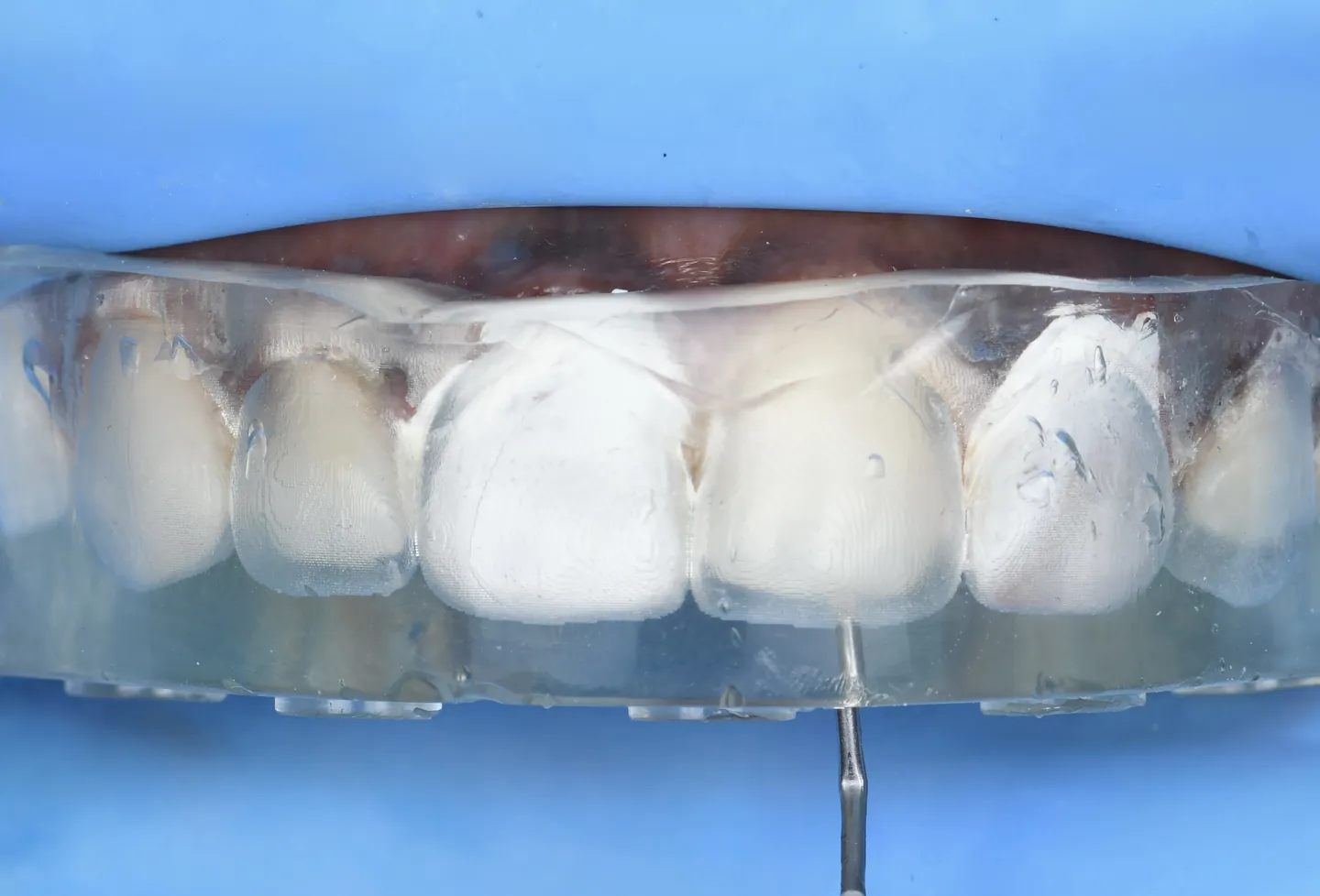
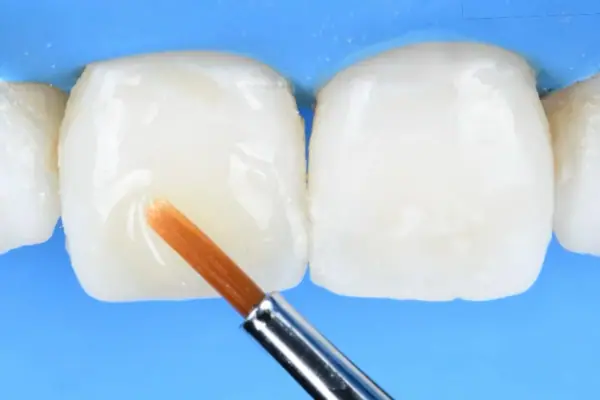
  2. Under a blue rubber dam, the clear key in place on the upper teeth, with an injection tip inserted into the key.

    The injection

    Under rubber dam, the composite is injected through the key, then hardened with light without the key being removed.

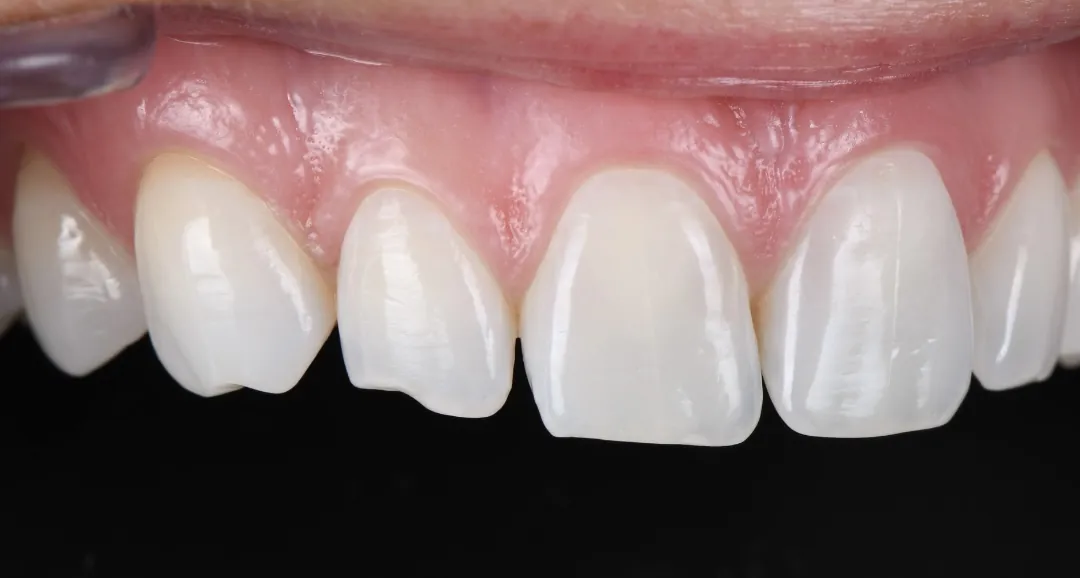
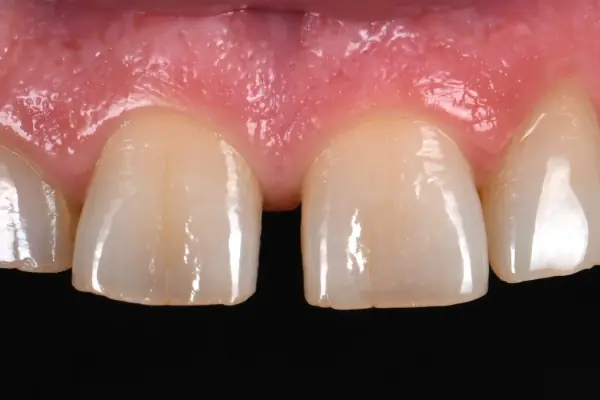
The upper incisors against the black background of a contrastor, before treatment.
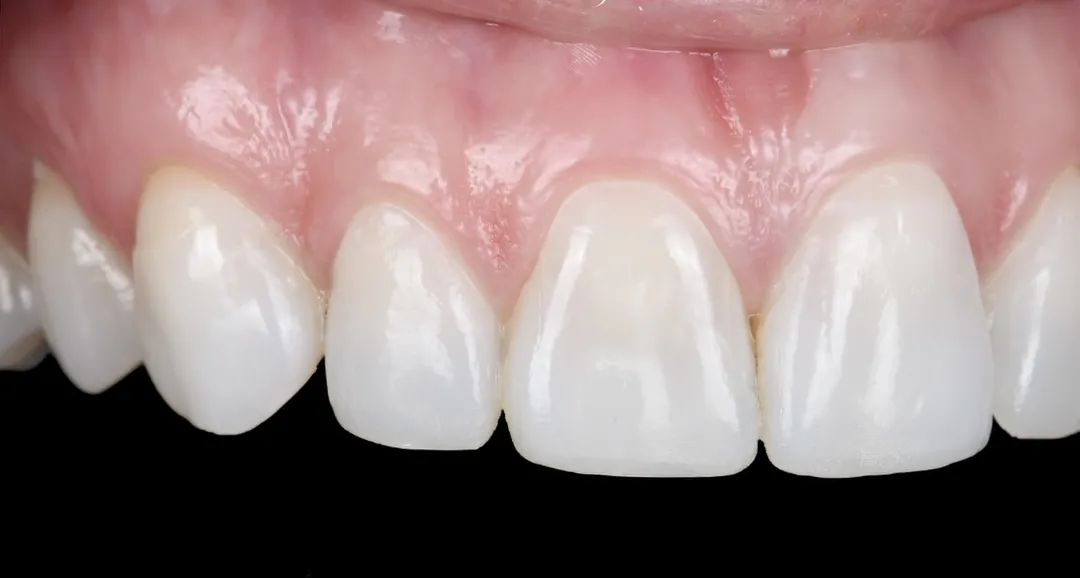
The same incisors, with the same framing, after injection-moulded composite bonding.
BeforeAfter
Intra-oral view with a contrastor: comparison before and after injection-moulded composite bonding. Individual result.
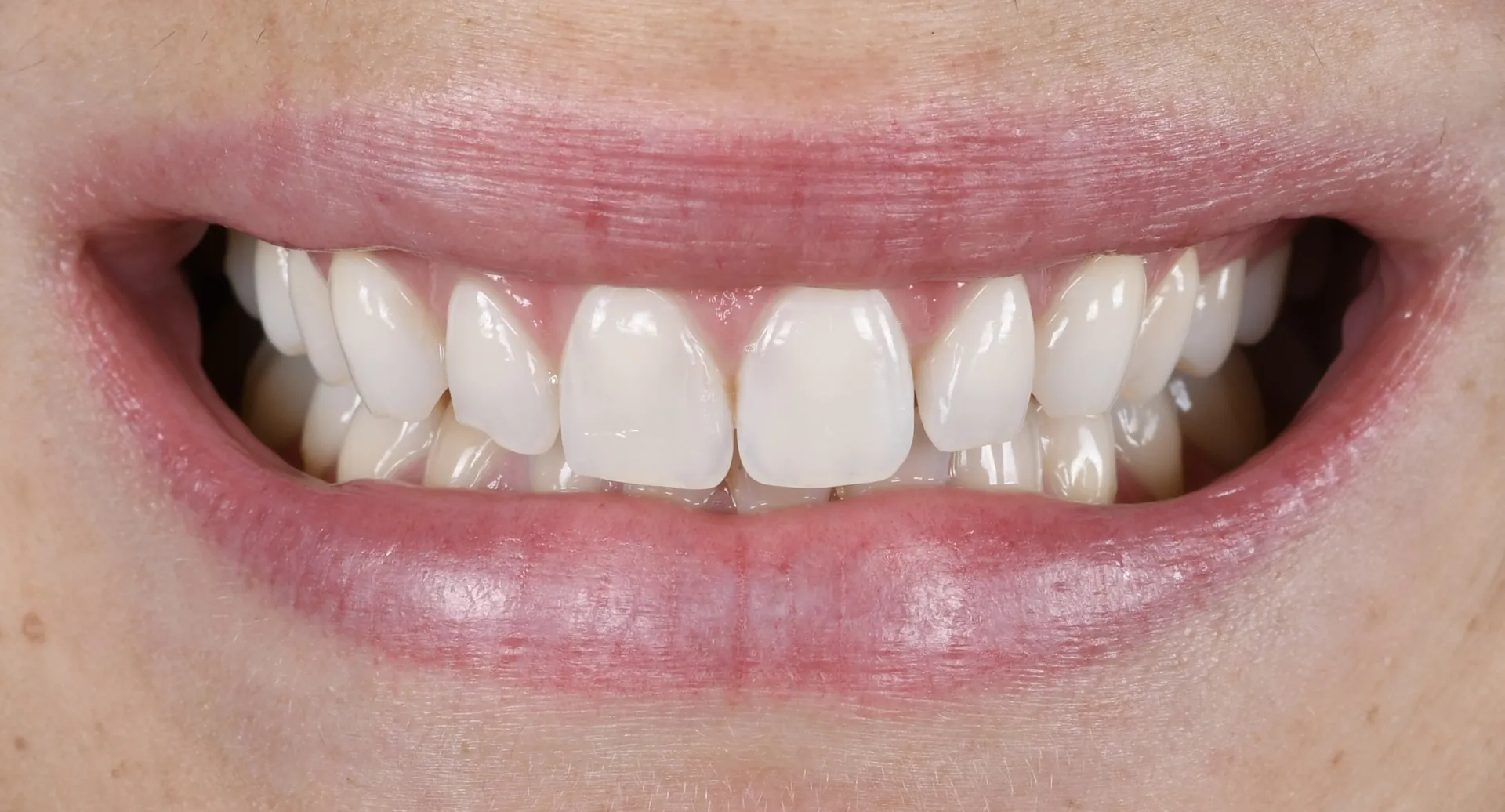
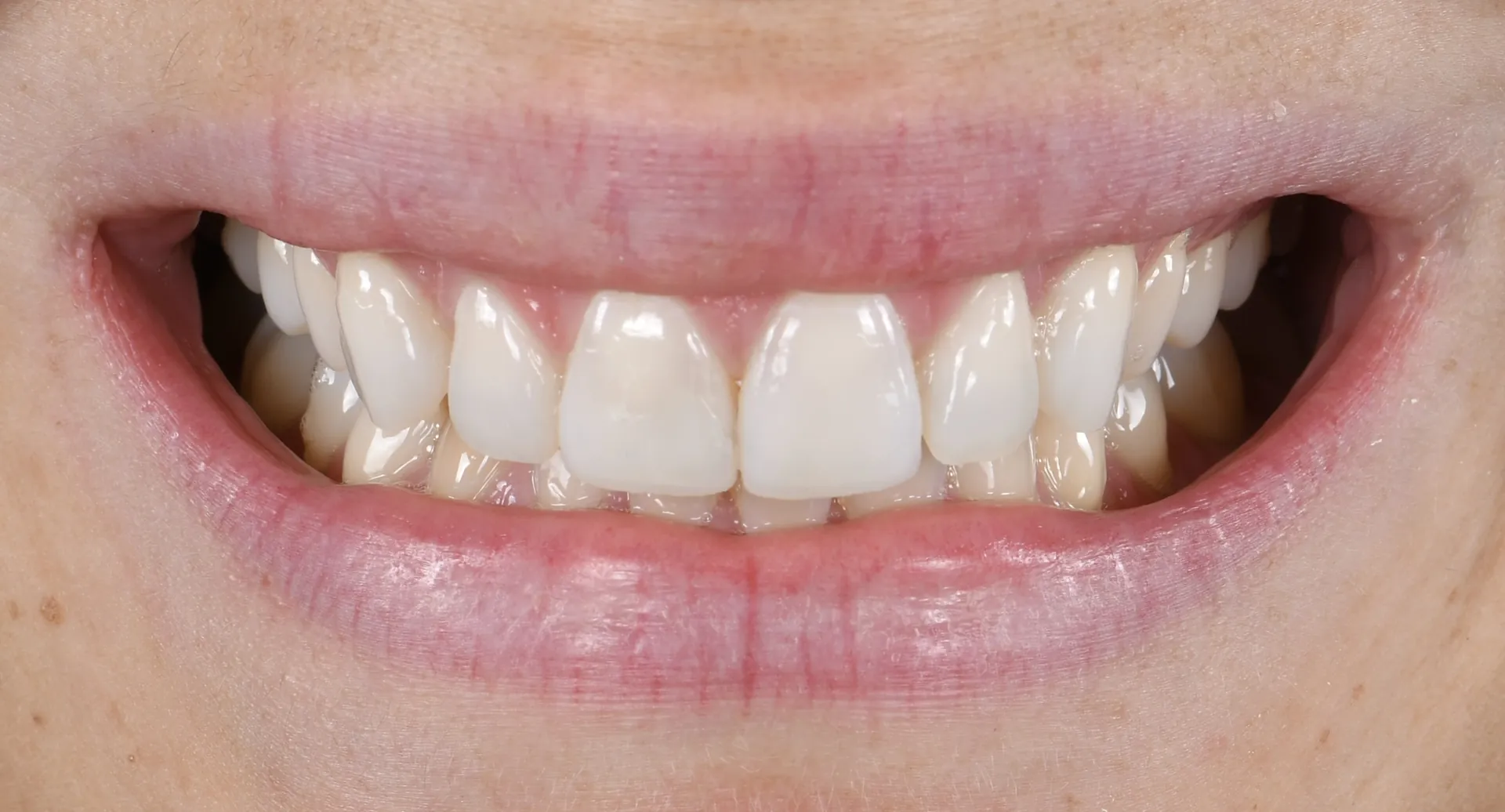
The smile before treatment.
The same smile after injection-moulded composite bonding.
BeforeAfter
How the result integrates into the smile after treatment with injection-moulded composite. Individual result.

An aesthetic composite on a front tooth costs between €63 and €1,500, depending on the number of teeth to be restored and on complexity. A localised touch-up and a plan involving six teeth are not the same procedure.

Treatment carried out for aesthetic reasons is not covered by the French national health insurance (Assurance Maladie), and a detailed written quote is provided before any decision.

Deciding, in Levallois-Perret

Here the examination looks for three things in particular: the space actually available for adding material without making the tooth thicker, the forces the bite places on the edges, and the condition of the restorations already in place.

Everything else depends on these three answers: the indication, the extent of the plan, and how much can really be preserved. The consultation takes place at the practice, 119 rue du Président Wilson, and the decision is made afterwards, never on the same day.

Understand before choosing.

What is injection-moulded composite?

A way of placing composite, not a particular material. What sets it apart is that the shape is decided and approved before it is carried out: it is transferred to the mouth through a key, instead of being sculpted directly.

Do the teeth have to be filed down?

Not necessarily, and that is one of its main advantages. In a favourable situation, the material is added to a tooth that has not been prepared. That is not a general rule, though: some situations require removing an existing restoration, smoothing the surface or making adjustments at the end of treatment.

Can a diastema (a gap between teeth) be closed with composite?

It is one of its common indications, when the size of the gap and the proportions allow. Closing a wide gap by widening only two teeth can produce disproportionate shapes: the preliminary analysis is there to check this, and sometimes to spread the correction across more teeth or to consider orthodontic tooth movement.

Does composite change colour over time?

Yes, gradually, and at a pace that varies with each person’s habits. This is where composite differs most from ceramic. Re-polishing at check-ups can often address it.

Can injection-moulded composite be repaired?

Yes, and this is one of the ways it differs from ceramic: a touch-up is usually done locally, without redoing everything. A ceramic restoration can also be repaired in some cases, but the options depend on the nature and extent of the defect.

Is it suitable if you grind or clench your teeth (bruxism)?

Uncontrolled bruxism subjects the edges to stresses that the material cannot offset on its own. This does not rule out the technique in every case, but the bruxism must be identified and built into the treatment plan, night guard included, before the restoration.

References

  1. Demarco FF, Collares K, Coelho-de-Souza FH, Correa MB, Cenci MS, Moraes RR, Opdam NJ. Anterior composite restorations: a systematic review on long-term survival and reasons for failure. Dent Mater. 2015;31(10):1214-1224. doi:10.1016/j.dental.2015.07.005
  2. Dietschi D, Shahidi C, Krejci I. Clinical performance of direct anterior composite restorations: a systematic literature review and critical appraisal. Int J Esthet Dent. 2019;14(3):252-270.
  3. Collares K, Opdam NJM, Laske M, Bronkhorst EM, Demarco FF, Correa MB, Huysmans MCDNJM. Longevity of anterior composite restorations in a general dental practice-based network. J Dent Res. 2017. doi:10.1177/0022034517717681

Every situation
needs its own diagnosis.

The information on this page is general. Only a clinical examination can establish whether a treatment is indicated, and clarify its benefits, limits and alternatives.

Message us