A specific request: improving her smile before her wedding
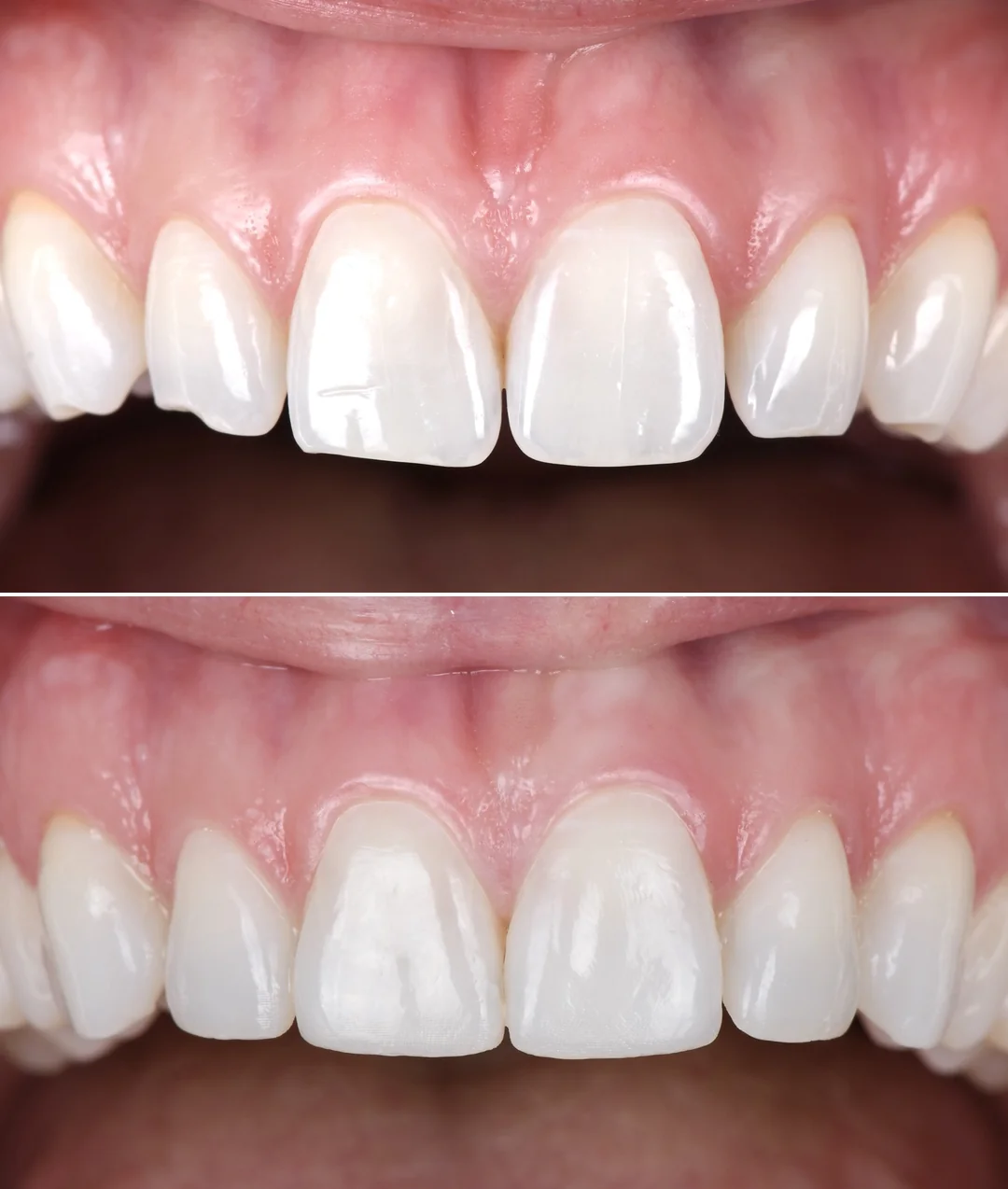
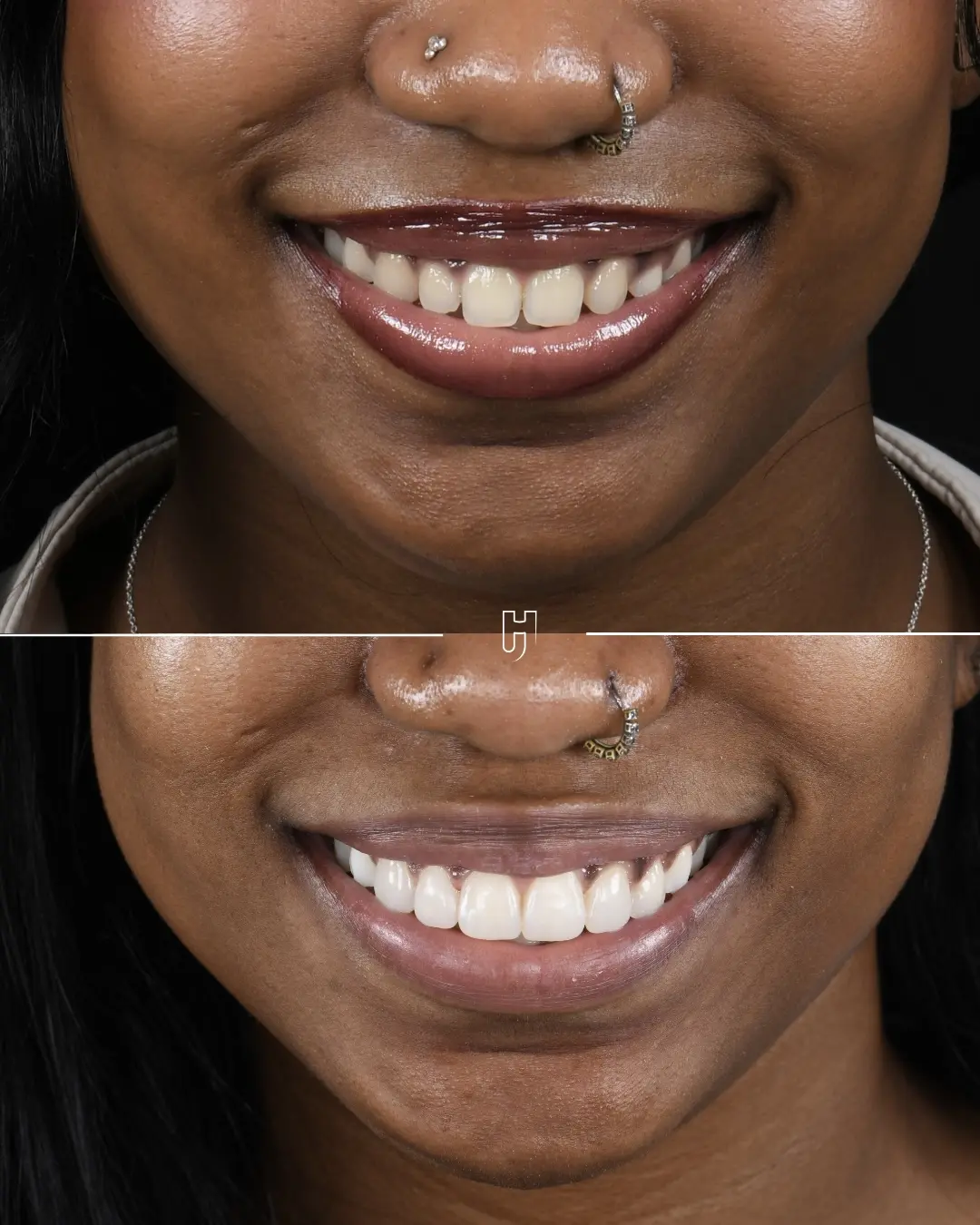
This patient came for a consultation with a very specific request: to improve her smile before her wedding. She was bothered by the shape of her teeth, by certain unbalanced proportions, and by wear of the biting edges linked to a former nail-biting habit.
Yet the clinical analysis showed a very favourable situation: healthy teeth, a naturally bright shade and enamel that needed to be preserved.
Improving without overtreating
Not every aesthetic request should lead to veneers. In this situation, the indication was not to prepare the teeth in order to cover them. On the contrary, the aim was to understand precisely what was missing, then to add only what was needed: that is the whole logic of conservative aesthetic dentistry.
Injection-moulded composite follows exactly this logic: composite veneers made without any preparation, with the material added to the tooth, never replacing any of it; a restoration that can be touched up and repaired in the chair.
Digital wax-up, two silicone keys, injection-moulded composite
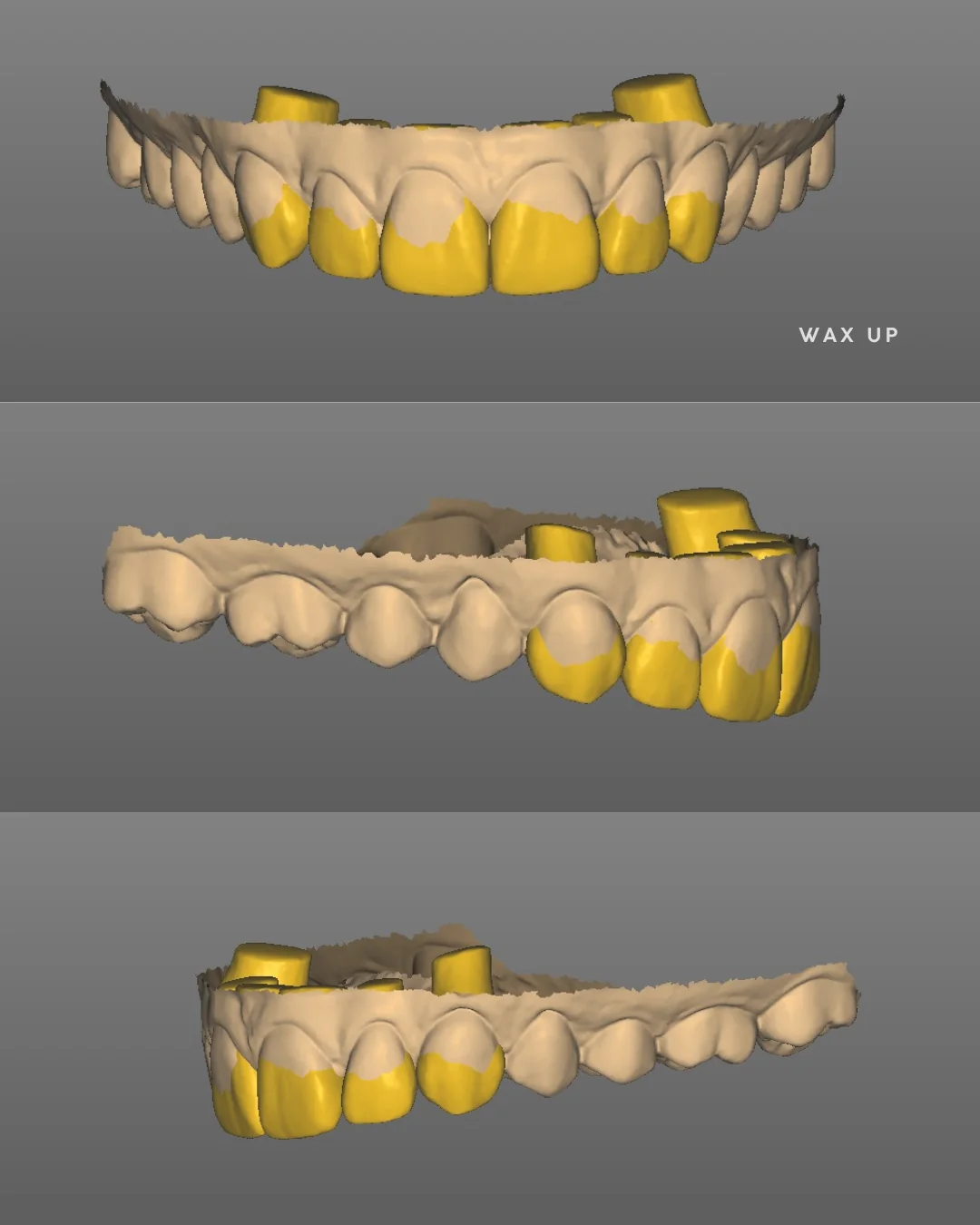
Planning with a digital wax-up came first, to redesign the proportions of the teeth, correct the areas of wear and visualise the volumes to be added.
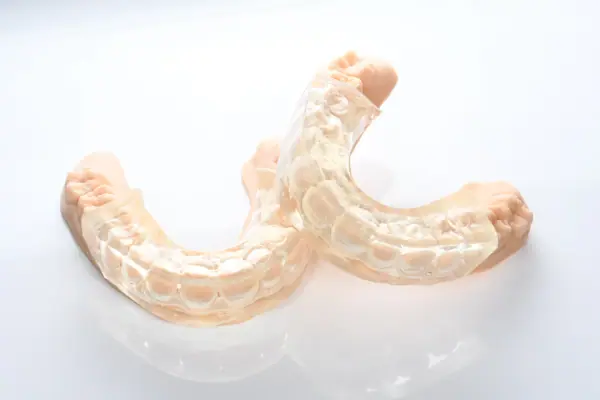
The treatment was then carried out using the injection-moulded composite technique, with two silicone keys that accurately transfer the plan to the mouth.
The shade chosen was JE, in G-ænial Universal Injectable.
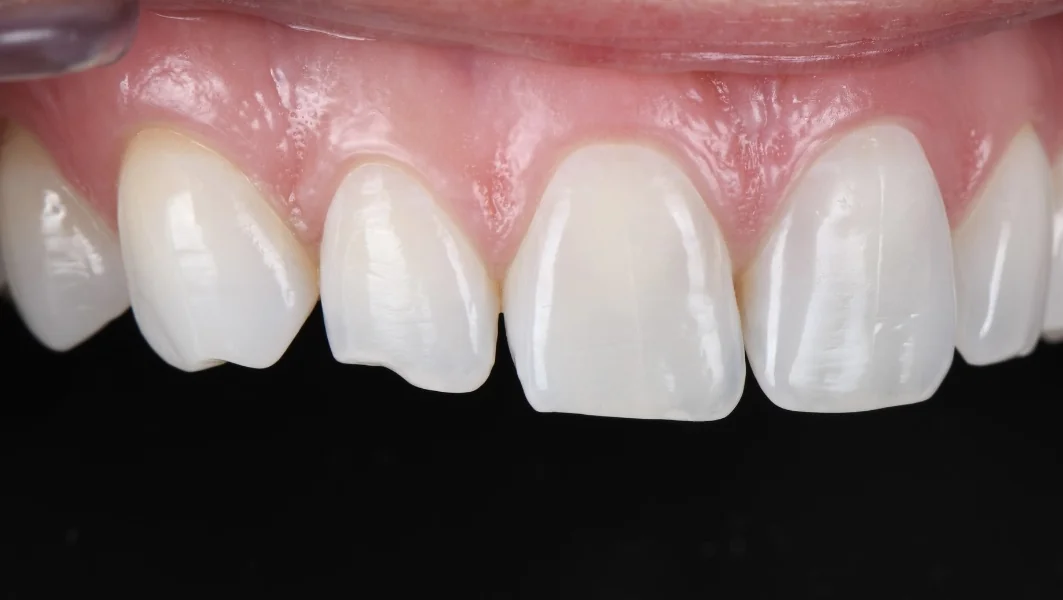
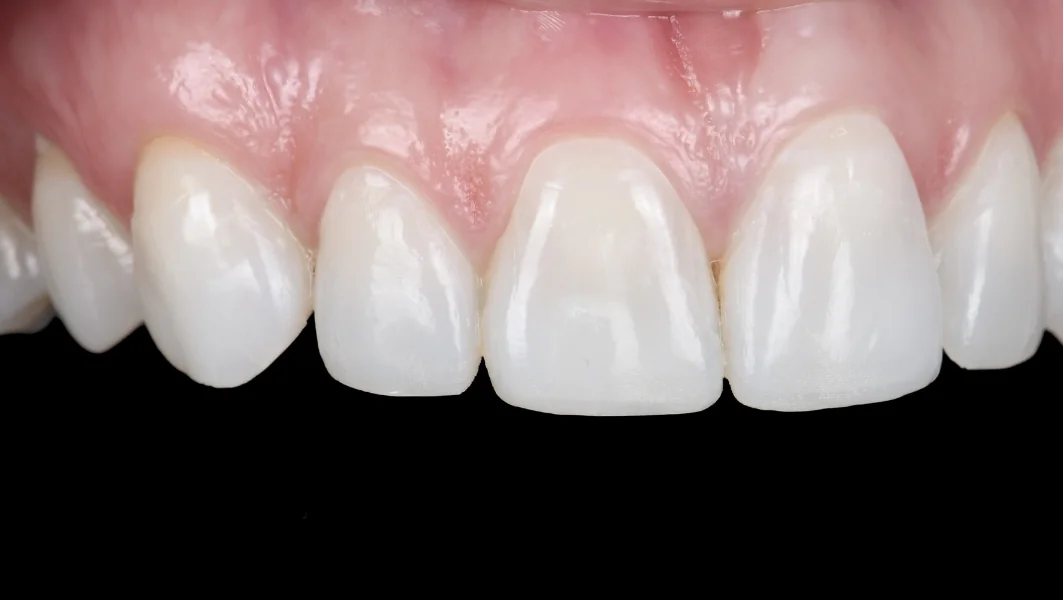
Before final approval, a contrastor (black background) made it possible to analyse the true appearance of the material, its brightness and its translucency in thin layers.
In this type of treatment, every detail matters. The difficulty is not only adding composite: it is knowing where to add it, how much, with what shape and with what intention.
A more harmonious smile, with no enamel reduction
The result: a more harmonious, softer, more balanced smile. Without preparation, without enamel reduction, without sacrificing a natural look.
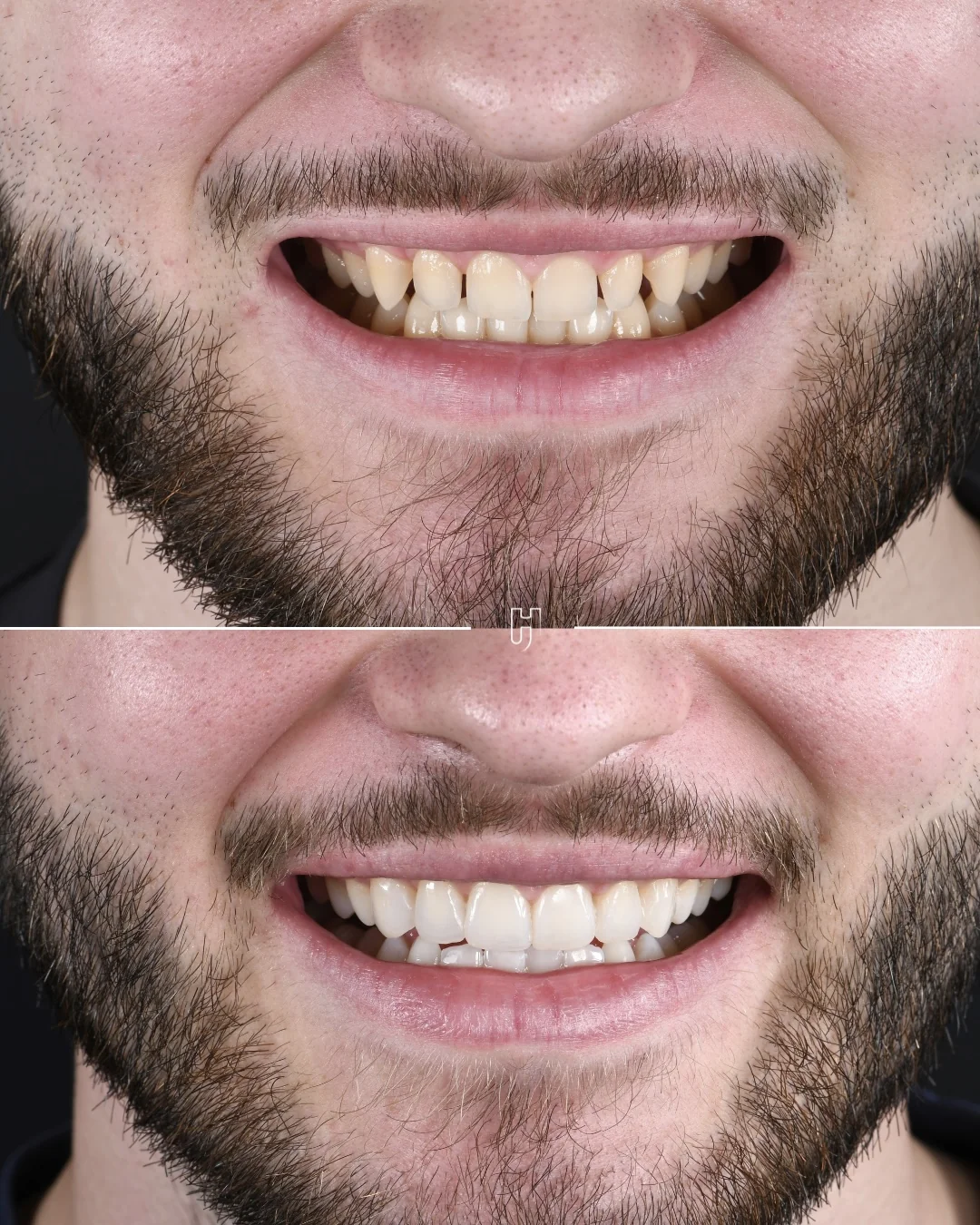
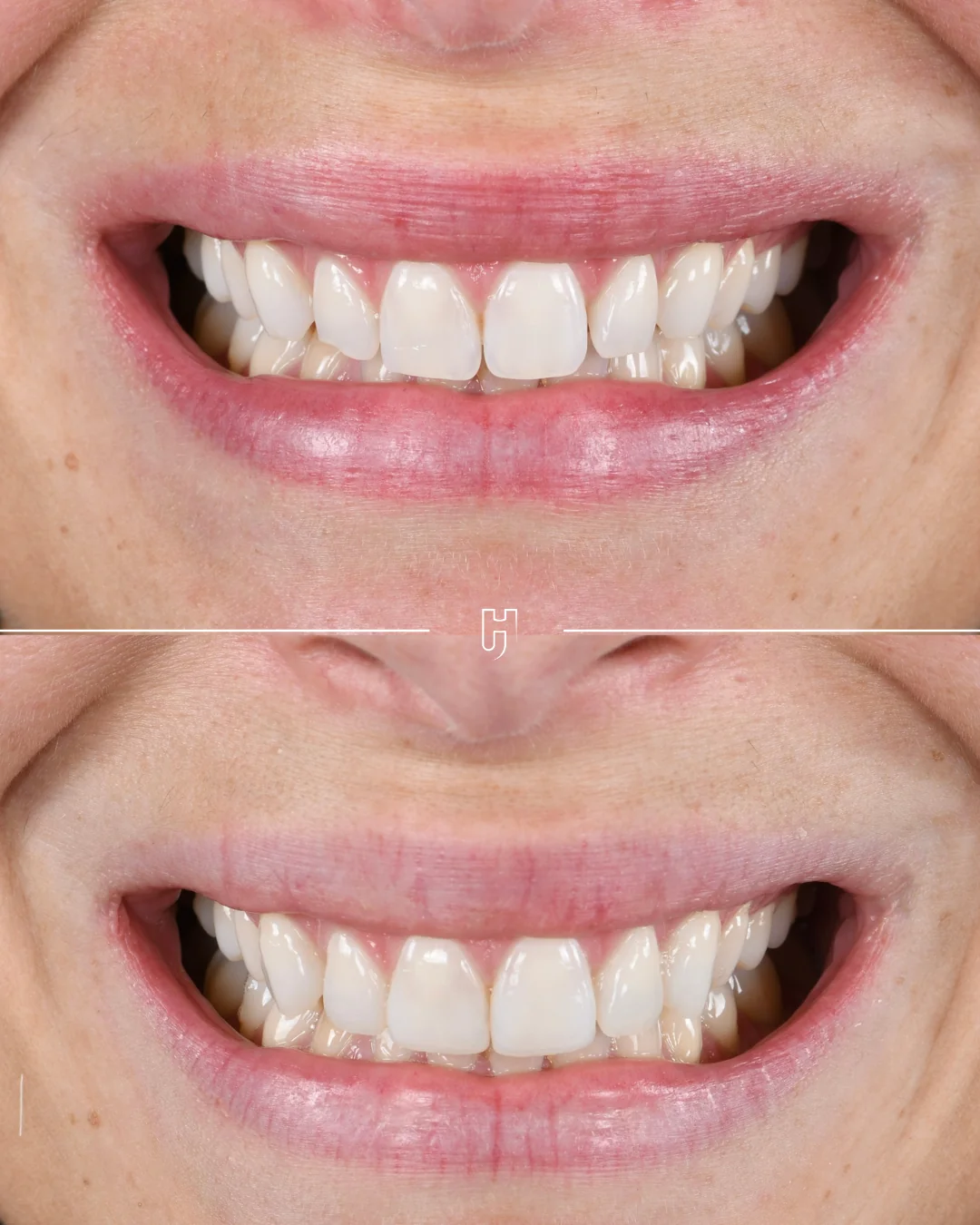
An individual result: it depends on the starting situation, which the examination and the wax-up try to anticipate. Another case of injection-moulded composite shows the same technique used to close gaps.