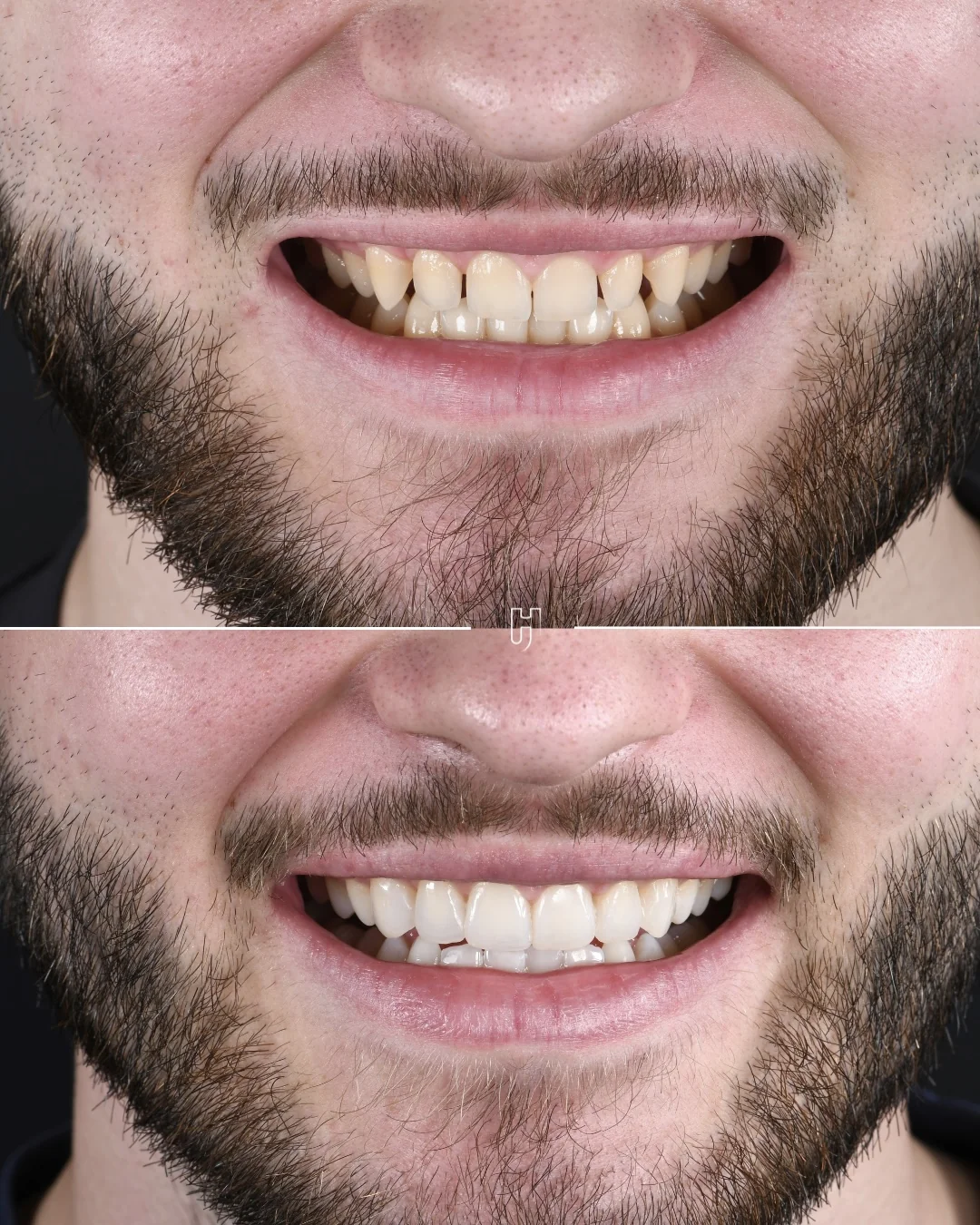
Gaps, and canines that were too pointed
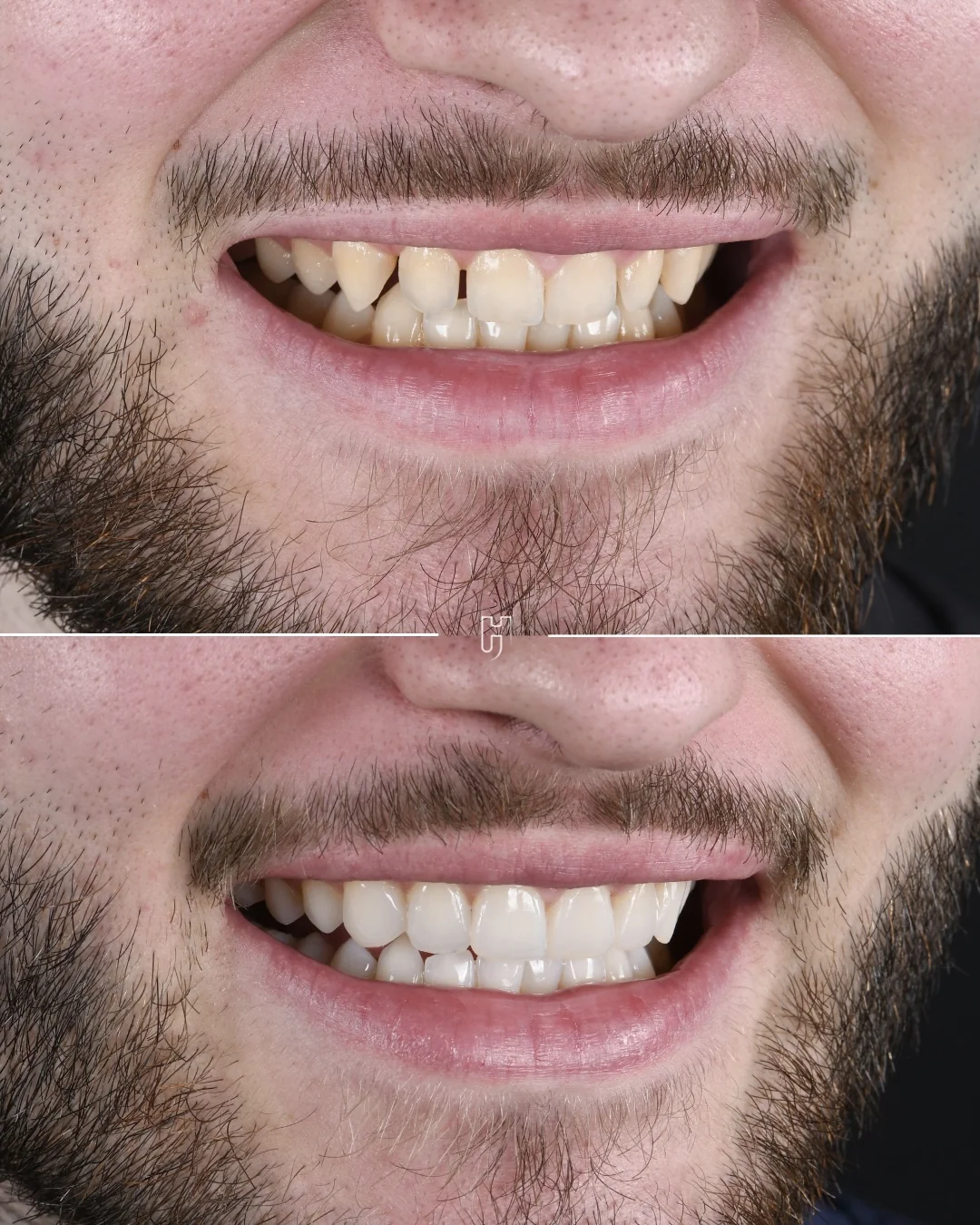
His request was first about the gaps between his upper teeth, which made him self-conscious. But what he noticed most when he looked at himself were his canines, which he found too pointed.
That detail guided the plan: closing the gaps, of course, but also softening the shapes and restoring consistency between the six front teeth, from canine to canine.
Why composite veneers rather than orthodontic treatment alone
The differences in shape between the teeth and the way their axes diverged were part of the analysis. Orthodontic treatment alone would not have met the whole request, which also concerned the shape and proportions of the teeth.
The plan chosen: restoring the six front teeth, from the upper right canine (tooth 13) to the upper left canine (tooth 23), with injection-moulded composite veneers, preceded by teeth whitening. An additive approach across the whole segment: only a slight reshaping of the canine tips, which were judged too long, was needed; the rest was done by adding material, preserving as much tooth structure as possible.
The treatment, in two stages: colour, then shape
First, colour: whitening provided a lighter base, which gives more freedom when choosing the shade of the composite, for a brighter, more even smile.
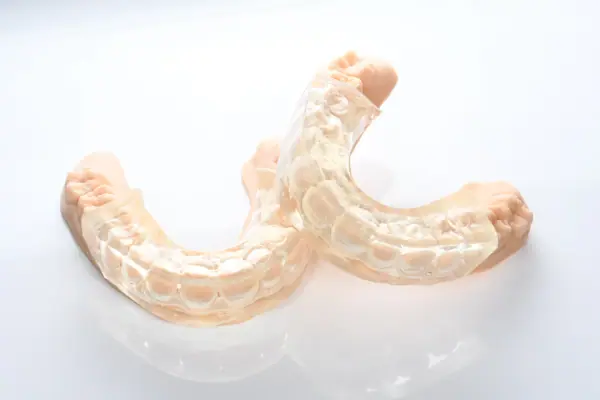
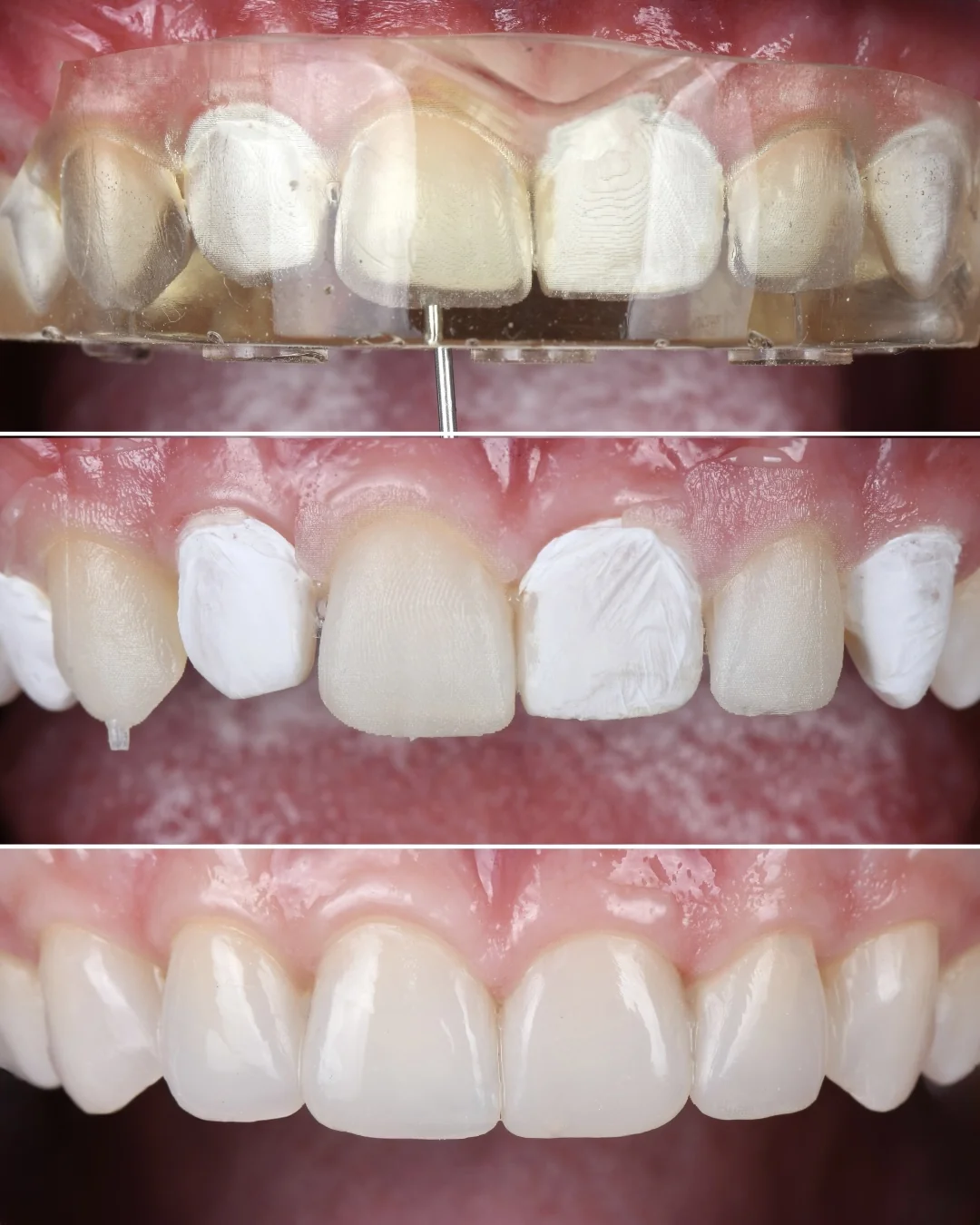
Then, shape: two models were made, the first with a wax-up of every other tooth, then the second with a complete wax-up.
This preparatory work makes it possible to sequence the injection, isolate the neighbouring teeth and make it easier to remove excess material, particularly between the teeth.
Injecting the composite, in a sequence guided by the two models, then finishing: behind the apparent simplicity of the technique lies precise work on the volumes, the transitions between the teeth and access for finishing.
The result: gaps closed, canines softened
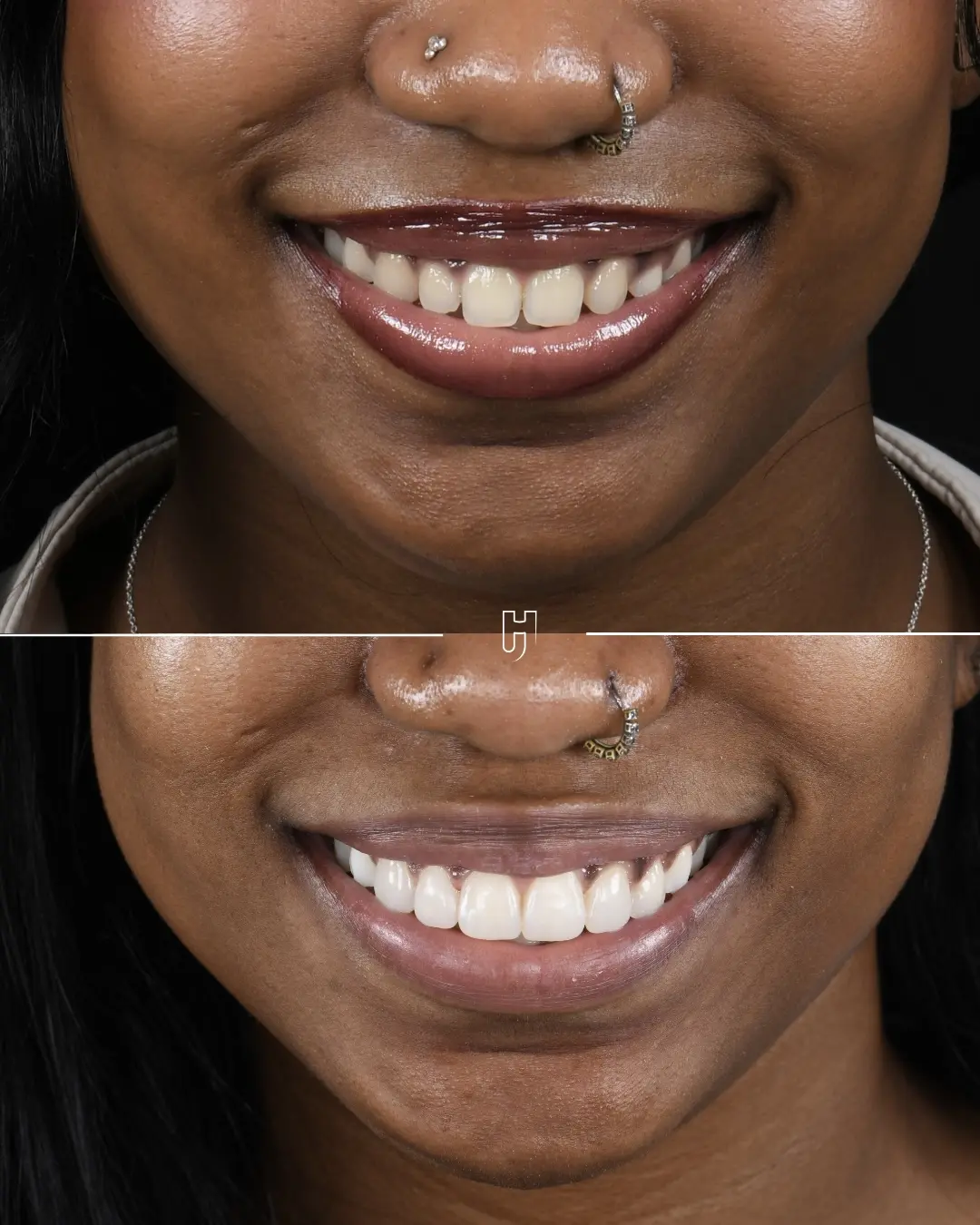
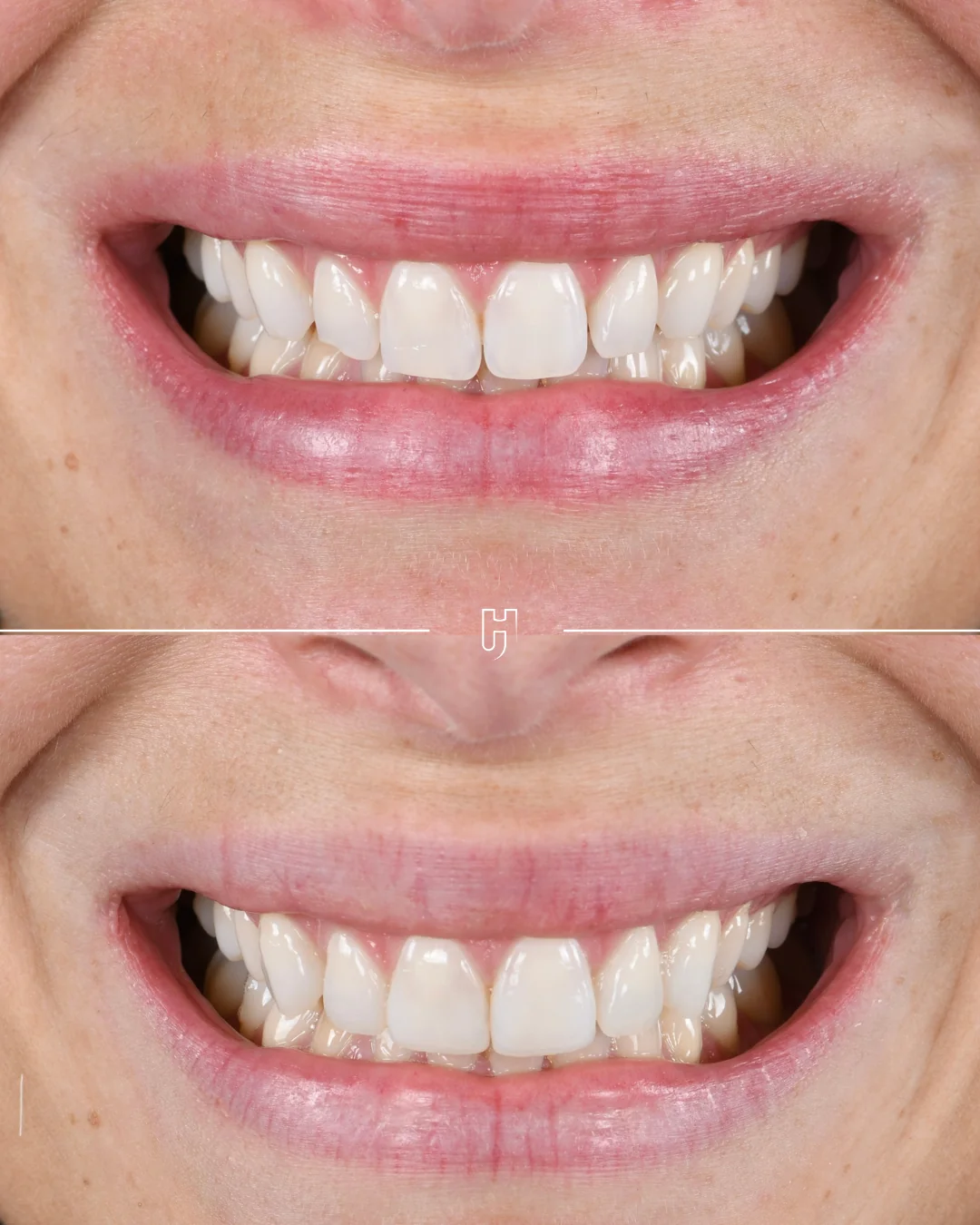
The gaps are closed, the canines softened, and the six front teeth now echo one another in shape as well as in colour. The photographs taken from the front and at a three-quarter angle show the same smile before and after treatment.
What this case teaches: understanding what the patient sees first in his smile helps to give the plan its direction. Like any injection-moulded composite restoration, these composite veneers can be touched up and repaired in the chair; the choice between composite and ceramic is weighed differently depending on the situation. Follow-up covers their surface condition and their maintenance over time.