
Key points
- In studies, ceramic veneers last longer and keep their appearance better than composite veneers.
- Composite is often placed without preparation, can be repaired in a single appointment and costs less at the outset; it needs more maintenance.
- The choice depends on the situation: the volume to be added, the shade to be corrected, the number of teeth, the bite, and whether you want to keep the option of going back.
How do they differ?
Composite is a tooth-coloured resin, sculpted directly on the tooth, or transferred with a key when the injection technique is used. It is added to the tooth, often without removing anything, in one or two appointments.
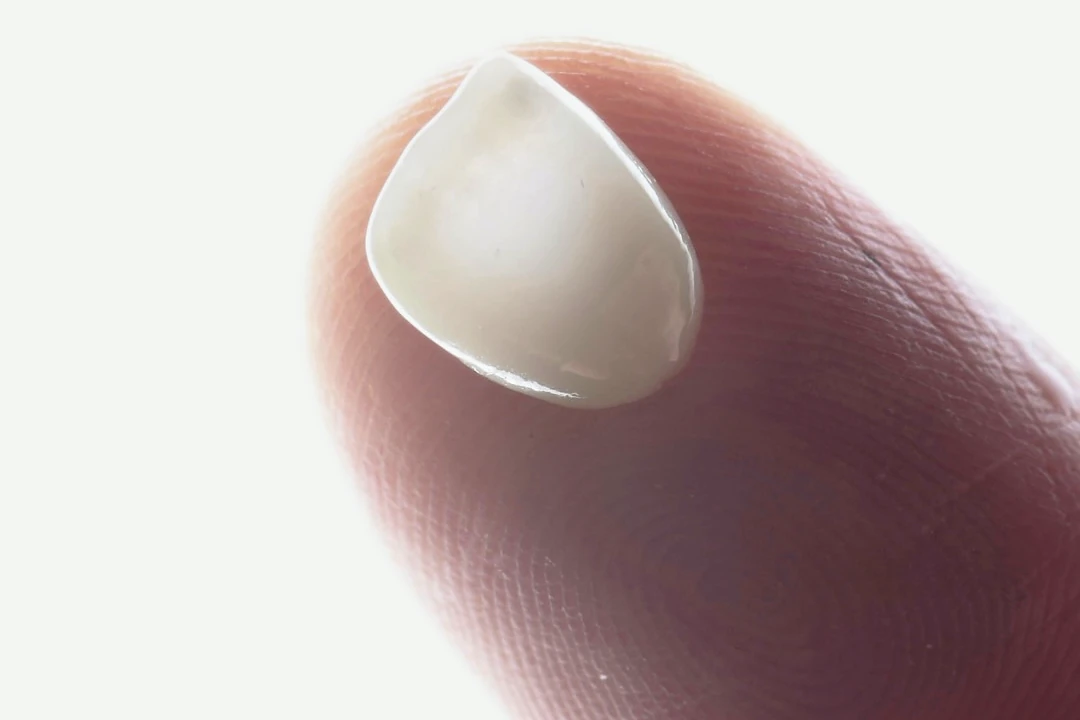
A ceramic veneer is made in the laboratory, based on a plan tried in the mouth beforehand, and is then bonded. It requires several appointments and, in most cases, light preparation of the enamel.
Which lasts longer?
The studies point the same way. In a trial in which each patient had received both types of veneer, all the ceramic veneers were still in place at ten years, compared with 75% of the laboratory-made composite veneers. The surviving composite veneers also scored less well for shade, surface roughness and wear. The trial involved a small number of veneers: 48.
A private practice that followed nearly 1,500 veneers, composite and ceramic, over ten years found a risk of failure about four times higher for composite placed directly in the mouth.
A review of studies on composite veneers reports, across the three randomised trials it brings together, a survival rate of about 88% over follow-up periods of two to eight years. The problems described are mainly surface roughness, shade mismatch and staining along the edges, most often judged acceptable, with or without a touch-up.
Which keeps its appearance better?
Ceramic changes very little in colour or shine over time. Composite polishes very well, but its shine fades and its edges can stain, at a pace that depends on habits (coffee, tea, smoking) and on maintenance. Re-polishing at check-ups restores part of its appearance.
Which removes less of the tooth?
Composite, in most cases: it is added without preparation, and can be modified or removed. A ceramic veneer generally requires a slight reduction of the enamel, calibrated to the plan, which cannot be undone.
Removing little at the outset does not always mean removing little over the whole life of the tooth: a composite redone several times and a well-indicated ceramic veneer that lasts have to be compared over the long term.
What happens if a veneer chips?
A chipped composite can usually be repaired in a single appointment, directly in the mouth. A cracked or broken ceramic veneer is generally replaced, which means having a new one made by the laboratory; a small chip can sometimes be polished or repaired.
How many appointments, and what does it cost?
Composite is often completed in one or two appointments; ceramic takes several appointments spread over a few weeks, with a trial in the mouth and temporaries.
At the practice, an aesthetic composite on a front tooth costs €63 to €1,500, depending on the number of teeth and the complexity; a feldspathic ceramic veneer costs €1,100 to €1,400 per tooth. The details are on the fees page.
Over time, composite needs more maintenance: re-polishing and touch-ups. So the initial cost does not tell the whole story.
How is the choice made?
Composite is suited to adding a little volume, closing a small gap, lengthening a worn edge or trying out a change. Ceramic is warranted for a major shade correction, several teeth to be harmonised, or when a stable appearance over many years matters.
Sometimes the answer is neither: whitening or orthodontic alignment may be enough.
Frequently asked questions
Are composite veneers less damaging to the teeth?
Often, at the outset: they are generally placed without preparation. But they need touching up more often, and each redo counts. At the examination, the two are compared over the long term.
Can you switch from composite to ceramic later?
Yes: composite placed without preparation leaves the enamel in place, which keeps the option of ceramic open.
Does composite turn yellow?
It can stain on the surface and along its edges, more or less quickly depending on your habits. Regular polishing limits this; ceramic, for its part, keeps its shade.
References
- Gresnigt MMM, Cune MS, Jansen K, van der Made SAM, Özcan M. Randomized clinical trial on indirect resin composite and ceramic laminate veneers: up to 10-year findings. J Dent. 2019;86:102-109. doi:10.1016/j.jdent.2019.06.001
- Mazzetti T, Collares K, Rodolfo B, Rodolpho PAR, van de Sande FH, Cenci MS. 10-year practice-based evaluation of ceramic and direct composite veneers. Dent Mater. 2022;38(5):898-906. doi:10.1016/j.dental.2022.03.007
- Lim TW, Tan SK, Li KY, Burrow MF. Survival and complication rates of resin composite laminate veneers: a systematic review and meta-analysis. J Evid Based Dent Pract. 2023;23(4):101911. doi:10.1016/j.jebdp.2023.101911