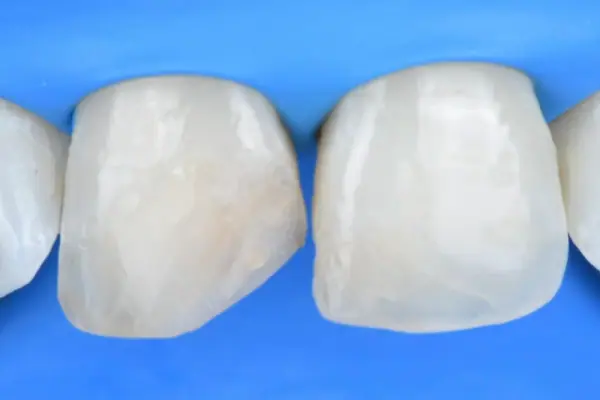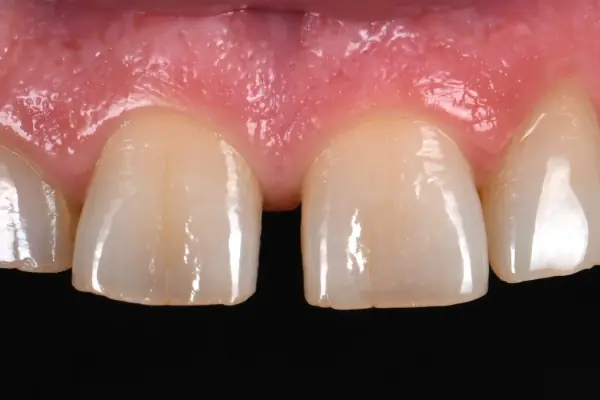
Close-up of the upper incisors with worn, shortened edges, before treatment.

Tooth wear: understanding before restoring.

The first question is not how to rebuild a worn tooth, but why it is wearing down.

Enamel does not grow back: what has been lost is lost for good. This is what determines the order of the decision. Identify the mechanism, slow down what can be slowed, and rebuild only what needs to be rebuilt.

Three main mechanisms damage tooth surfaces, most often together. Telling them apart is not an exercise in vocabulary: each calls for a different response, and getting the cause wrong means restoring a loss that will continue.

Dr Jérémy Haccoun, dentist Updated

Key points

See the full rehabilitation of a worn smile

Recognise

What we mean by tooth wear

Tooth wear is the gradual and irreversible loss of the hard tissues of the tooth: enamel first, then dentine once it becomes exposed. The process is normal: teeth that are in use wear down over the years.

It deserves attention when it progresses faster than age would explain, when dentine appears, or when it changes function: the way the dental arches meet, the height of the teeth, sometimes sensitivity. It is comparison over time, more than a single examination, that settles the question.
When to have your teeth checked

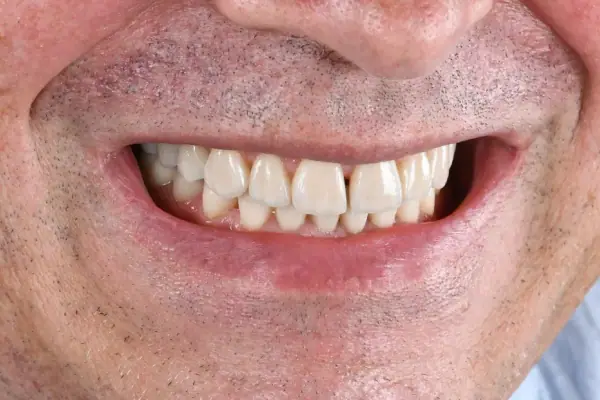
Incisor edges that flatten or become translucent, teeth that seem to be getting shorter, canine tips that become rounded. On the biting surfaces, small cup-shaped hollows in the centre, often bordered by a rim of enamel that has stayed higher. Sometimes just mild discomfort with cold, or the feeling that the teeth no longer meet as they used to.

Taken in isolation, none of these signs is conclusive. Together, they warrant an examination.

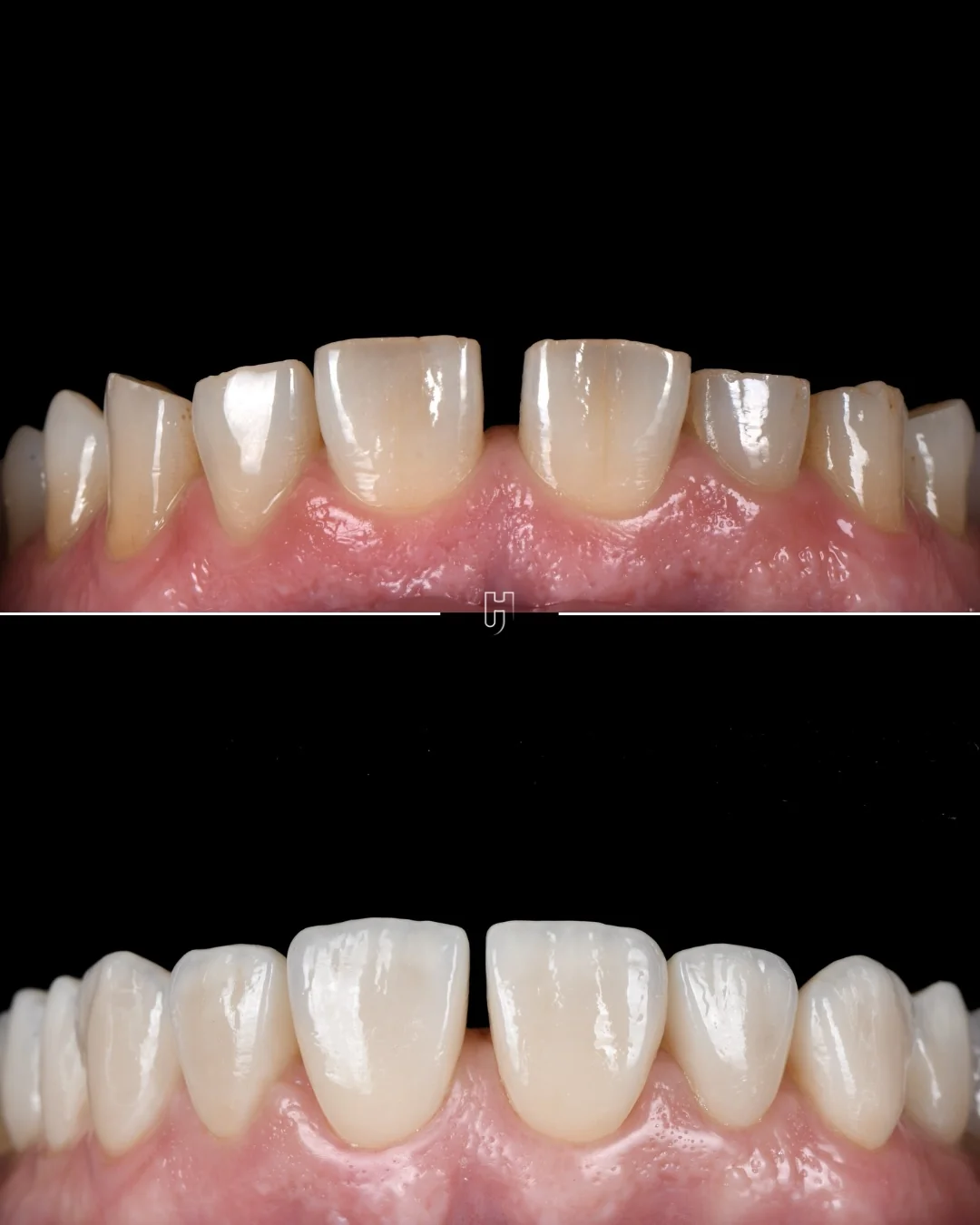
Before and after, the upper teeth seen from the front against a black background: worn, irregular biting edges, then rebuilt edges, consistent from one tooth to the next.
Biting edges flattened and shortened by attrition, in a patient who came for aesthetic reasons and had no pain; at the bottom, the same teeth after reconstruction. The case is described in detail in the clinical case gallery.

Understand the cause

Three mechanisms

Three main processes damage the surface of the teeth, and they are not corrected in the same way.

Attrition
Friction of one tooth against another, when chewing or clenching.
Erosion
The chemical dissolution of enamel by acid, coming from the diet or from the stomach.
Abrasion
The action of something from outside the tooth: brushing too hard, an object that is repeatedly nibbled.

They almost always coexist. Someone who clenches their teeth and has acidic drinks is exposed to both, and acid exposure temporarily makes the tooth surface more vulnerable to mechanical stress. Recognising which one dominates guides everything that follows.

The role of clenching

Clenching or grinding the teeth (bruxism) increases the load on their surfaces. It does not explain every loss of tooth structure, and worn teeth do not necessarily point to this diagnosis: it is one factor among others, and how active it is has to be assessed, not guessed.

When it is active, managing it before rebuilding avoids handing a new restoration over to the forces that damaged what was there before.

The role of acidity

Acids soften enamel before dissolving it. They come from the diet, for example citrus fruit, fizzy drinks, energy drinks or vinegar, or from the stomach when there is reflux.

The distinction matters, because the response is different. In the first case, it is a matter of changing habits; in the second, a doctor’s opinion is needed. And no restoration can be expected to last while the source of acid persists.

How the diagnosis is made

The examination looks for the mechanism, how active it is and what its consequences are. It is based on the appearance of the affected surfaces, analysis of the bite, the space available between the arches, and what the person says about their diet and habits.

Photographs and digital impressions serve as reference points. They are what will make it possible, later on, to tell whether the loss is still progressing.

Decide

Monitoring

Slow, stable loss with no effect on function often needs nothing more than follow-up. Documenting the situation at a given moment, then comparing, costs the tooth less than rebuilding as a precaution.

Monitoring is not the same as doing nothing. It means choosing not to intervene for as long as intervening would bring no benefit.

Bringing the cause under control

When the mechanism is still active, slowing it down comes before rebuilding, or goes hand in hand with it. Depending on the case: reviewing dietary habits, correcting brushing that is too hard, having reflux assessed by a doctor, or wearing a night guard when clenching warrants it.

A night guard protects against the forces. It does not remove what produces them, and it is no substitute for identifying the cause.

Rebuilding what needs to be rebuilt

Restoration becomes necessary when the loss compromises function, exposes the dentine, or changes the shape of the teeth enough to bother the person concerned.

It is not the default response. Rebuilding worn teeth while the cause of the wear is still active amounts to replacing tissue with a material that will be subjected to exactly the same forces.

Restoring without having understood means handing over to the material the forces that wore the tooth down.

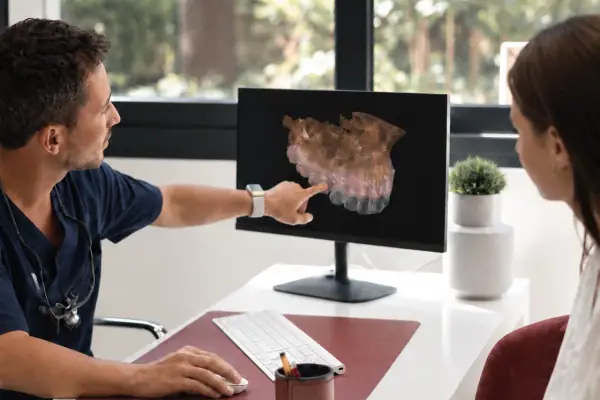
The complete digital wax-up for a rehabilitation: the new shapes drawn over the worn teeth, at the vertical dimension that has been set, before any work on the teeth.

Adding rather than preparing

When the situation lends itself to it, adhesive techniques restore volume by adding material rather than by reducing the tooth further. This is the reverse of the older approach, which prepared the tooth so that it would hold the restoration in place.

The plan for the new shapes is built and then, where possible, tried in the mouth before anything is bonded: the volumes can be seen before they are decided.

The options, and what sets them apart

Composite is placed directly in the dental chair, and is easy to repair and redo. Ceramic is made in a laboratory and generally keeps its surface finish better over time.

Neither is superior in itself: the choice depends on the extent of the loss, the space available, the functional context and what you are willing to have redone later.

Cost follows the same choices: the number of teeth to rebuild, the technique, composite placed in the chair or laboratory ceramic, and the steps of the plan. The fees for each restoration are listed in the table of fees, and each option is costed before any decision.

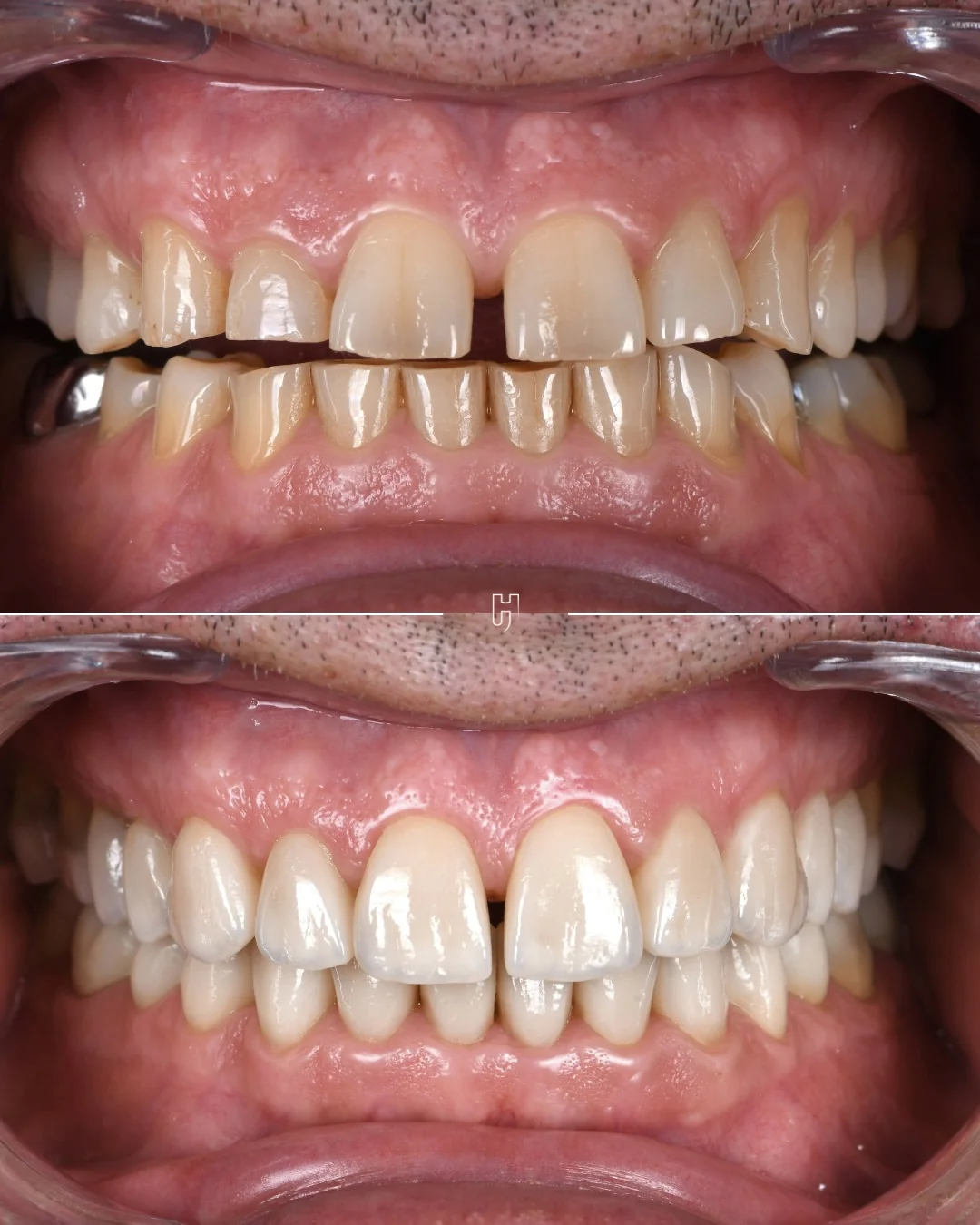
Before and after, both arches seen from the front with cheek retractors: worn, shortened, yellowed teeth, then the teeth rebuilt in ceramic, longer and more regular.
The same patient, both arches before and after the full rehabilitation: the height of the teeth regained, the vertical dimension restored. An individual result.
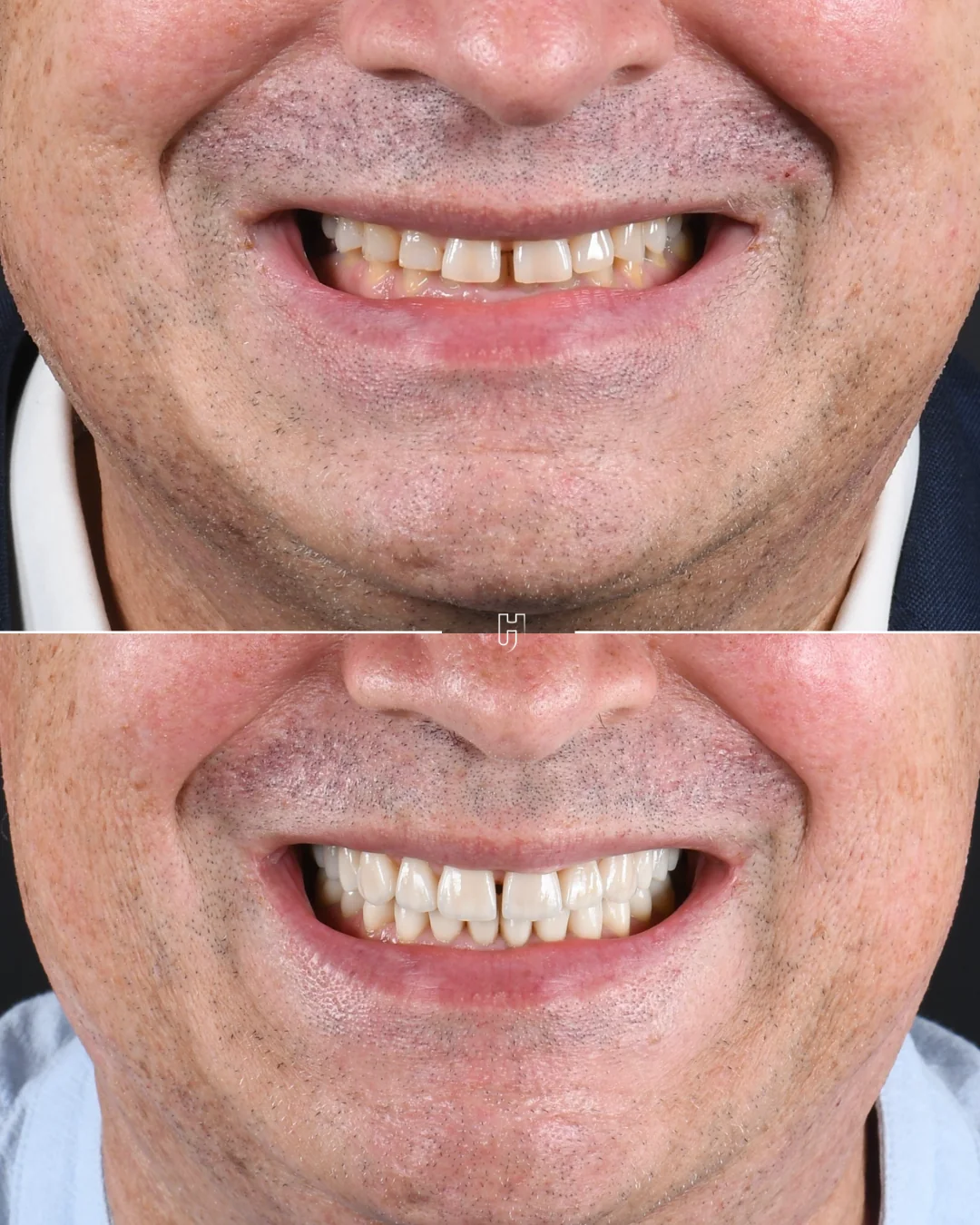
Before and after, a man’s smile seen from the front: worn, shortened teeth, then teeth rebuilt in ceramic, longer and lighter.
Here, stained monolithic ceramic restorations were chosen, to limit the risk of chipping in a context of severe bruxism (teeth grinding or clenching). The smile before and after six months of treatment.

Worn molars and premolars often call for bonded partial restorations, which rebuild the chewing surface without crowning the whole tooth.

The remaining thickness and the functional stresses guide the design as much as the choice of material.

Follow-up, which decides the rest

No reconstruction can be expected to hold if the cause has not been brought under control. Check-ups monitor the stability of the restorations, the condition of the tissues, and any change in the teeth that have not been treated.

It is this repeated attention over time, more than the technique used on a given day, that decides the outcome.

Understand before choosing.

When do worn teeth need treatment?

Not all wear needs immediate rebuilding. Management starts with identifying the cause, then analysing the bite and how the wear changes over time. It is this diagnosis that shows whether to monitor, protect or restore.

Can worn teeth be rebuilt without reducing them further?

When the situation allows, additive adhesive techniques can restore volume while limiting the preparation of the teeth. The digital plan and the mock-up make it possible to assess these volumes before any treatment.

Does the cause of the wear change how it is managed?

Erosion, bruxism (grinding or clenching) and certain habits can act alone or together, and identifying them comes before any restorative plan. Follow-up, control of the risk factors and sometimes a night guard go hand in hand with treatment.

References

  1. Loomans B, Opdam N, Attin T, Bartlett D, Edelhoff D, Frankenberger R, et al. Severe tooth wear: European consensus statement on management guidelines. J Adhes Dent. 2017;19(2):111-119. doi:10.3290/j.jad.a38102
  2. Schlueter N, Amaechi BT, Bartlett D, et al. Terminology of erosive tooth wear: consensus report of a workshop organized by the ORCA and the Cariology Research Group of the IADR. Caries Res. 2020;54(1):2-6. doi:10.1159/000503308
  3. Carvalho TS, Colon P, Ganss C, et al. Consensus report of the European Federation of Conservative Dentistry: erosive tooth wear, diagnosis and management. Clin Oral Investig. 2015;19(7):1557-1561. doi:10.1007/s00784-015-1511-7
  4. Lobbezoo F, Ahlberg J, Raphael KG, et al. International consensus on the assessment of bruxism: report of a work in progress. J Oral Rehabil. 2018;45(11):837-844. doi:10.1111/joor.12663
  5. Bartlett D, Ganss C, Lussi A. Basic Erosive Wear Examination (BEWE): a new scoring system for scientific and clinical needs. Clin Oral Investig. 2008;12 Suppl 1:S65-68. doi:10.1007/s00784-007-0181-5

Every situation
needs its own diagnosis.

The information on this page is general. Only a clinical examination can establish whether a treatment is indicated, and clarify its benefits, limits and alternatives.

Message us