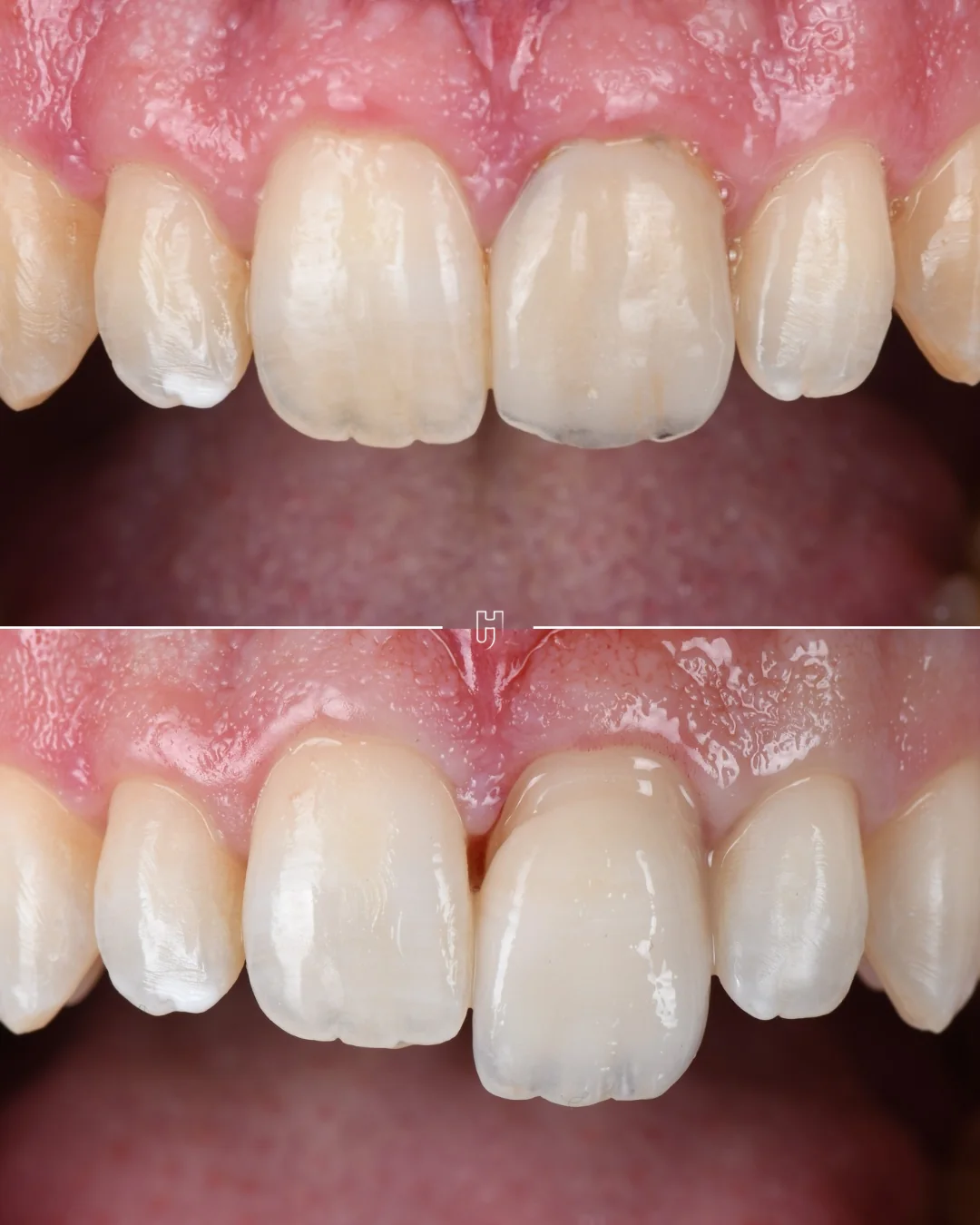
An old veneer next to a highly characterised tooth
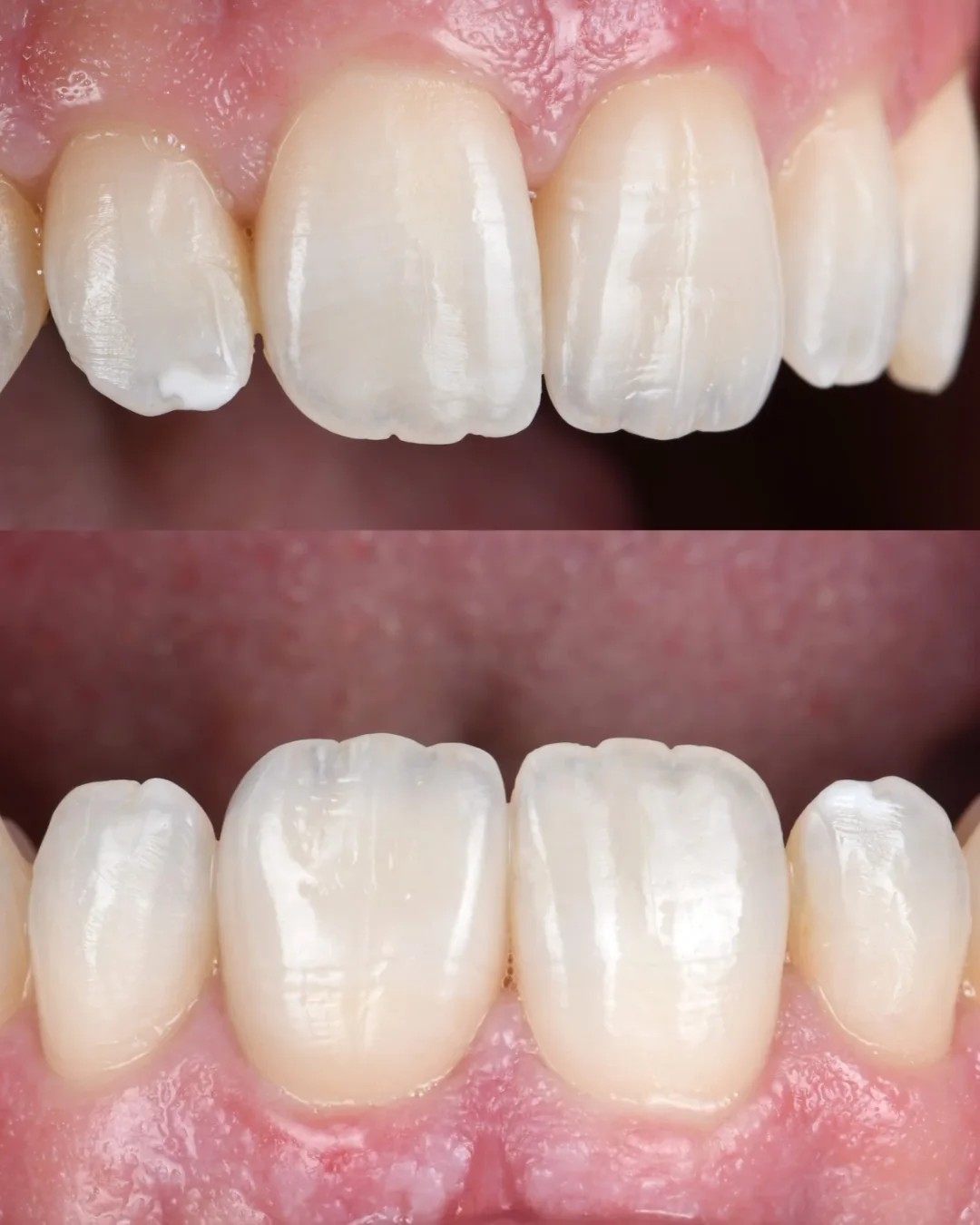
This patient had an old veneer on his upper left central incisor, 21. Its neighbour, the upper right central incisor (11), is a natural tooth with strong character of its own: nuances, surface relief and a translucency all its own.
That is what makes a single veneer so demanding: the new veneer has to go unnoticed next to a tooth that serves as the reference, and that reference is natural.
Whitening first, to bring the smile into tune
At-home whitening was carried out beforehand, to harmonise the colour of the smile and optimise the final aesthetic result: the new veneer is then matched to whitened teeth, rather than to a shade one would want to change later.
The difficulty then goes well beyond choosing the shade. The nuances, the translucency and the way the tooth plays with light all have to be found again: the details that make each tooth unique, and leave little room for approximation. That is the condition for a natural result.
A feldspathic ceramic, layered to copy the neighbouring tooth
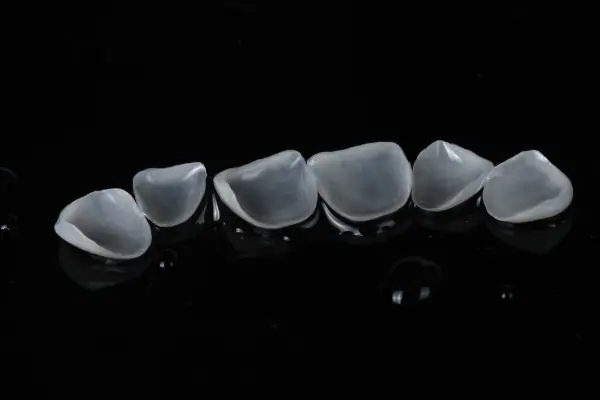
Feldspathic ceramic was chosen for its possibilities of layering and characterisation: built up layer by layer, it makes it possible to reproduce this optical richness as closely as possible.
In this kind of case, communication with the dental technician is essential. A clear photographic protocol conveys precise information, on colour as well as on surface condition: texture, relief and gloss. These give the laboratory the references it needs to reproduce the particular features of the neighbouring tooth.
A veneer that goes unnoticed
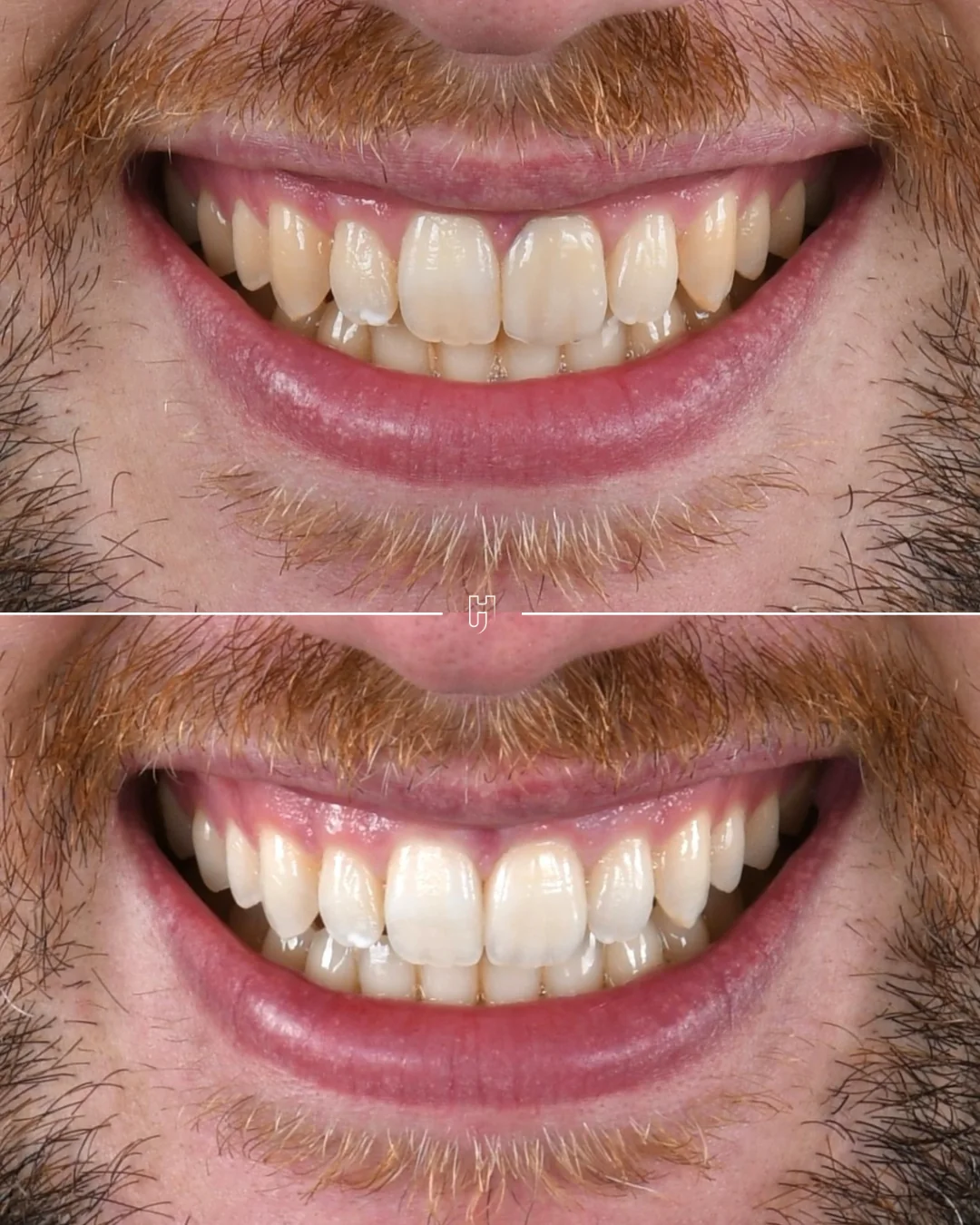
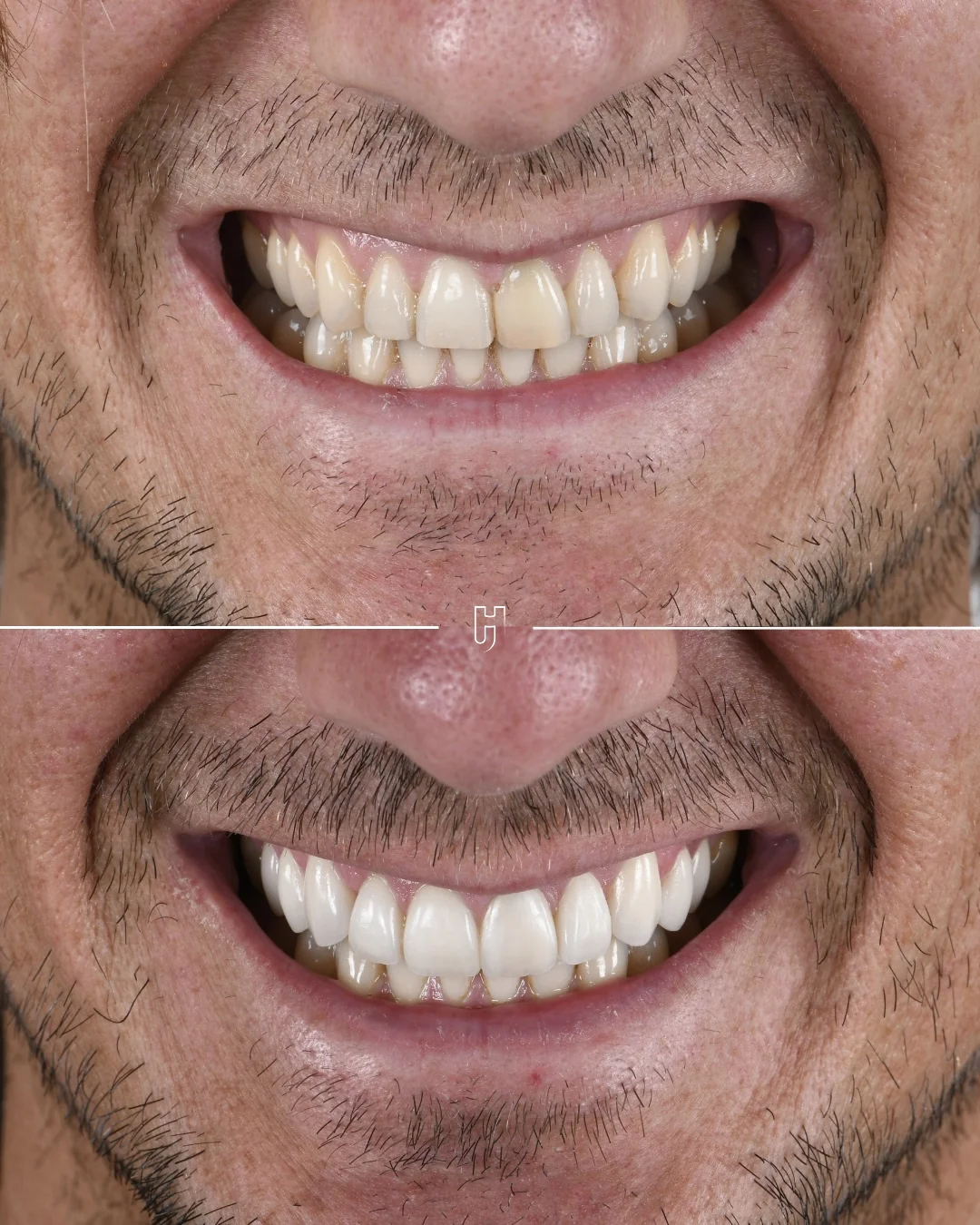
The new feldspathic ceramic veneer replaced the old one on 21, next to the natural 11, in a whitened smile. Close up as from the front, the two central incisors answer each other: the same nuances, the same play of light, down to the small surface irregularities that make a tooth look natural.
Precision work shared between the practice and the laboratory, from the photographic protocol to the final finishing. This case shows what ceramic veneers make possible when a single tooth is concerned: correcting it without touching the neighbouring teeth.
Individual result: another case of a ceramic crown on a central incisor shows the same demand, for a crown on a central incisor.