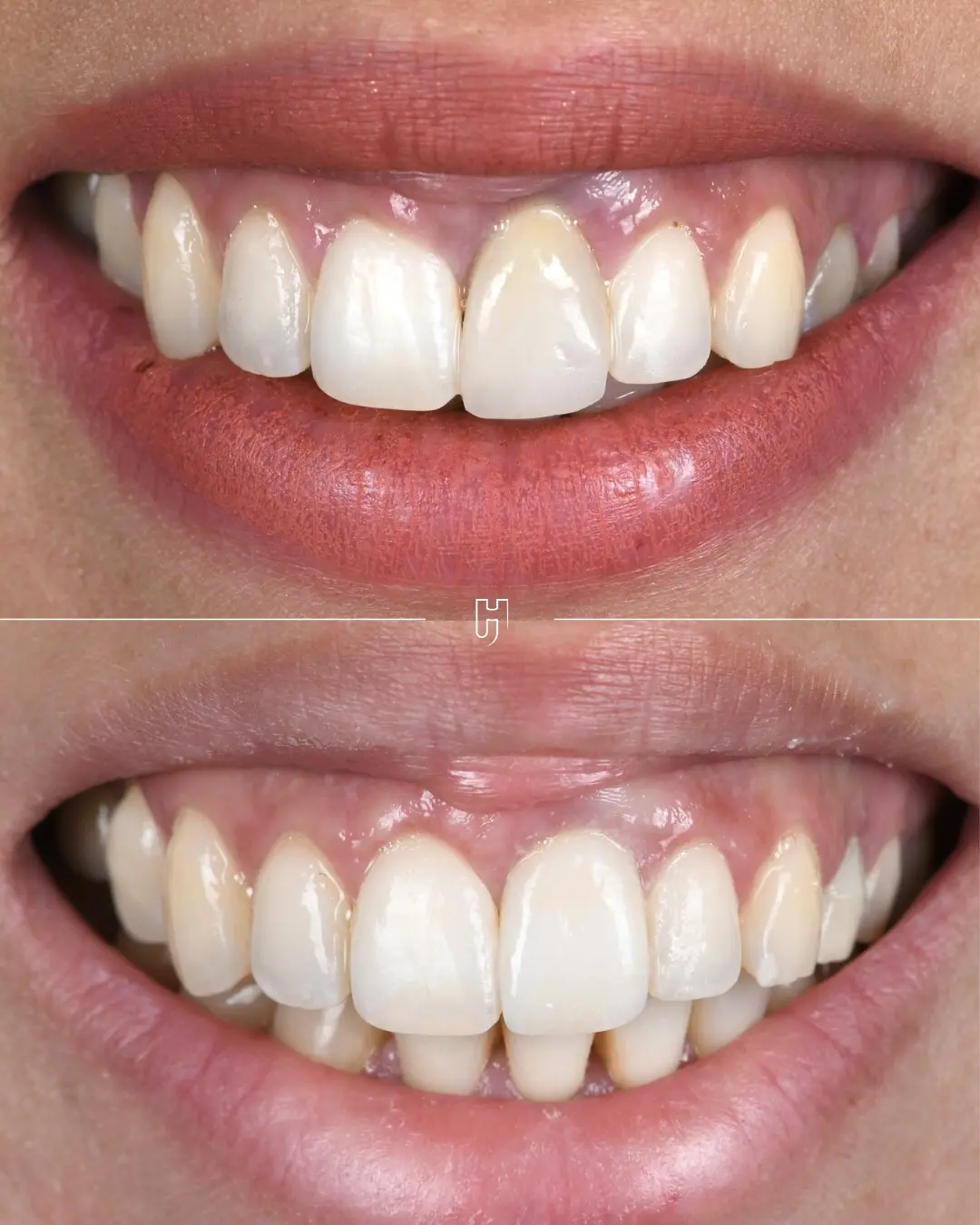
A single tooth to restore, with its neighbour as the reference
The request concerned the upper left central incisor (tooth 21), which already had a crown. A gum graft, performed by another practitioner, had not given the expected result.
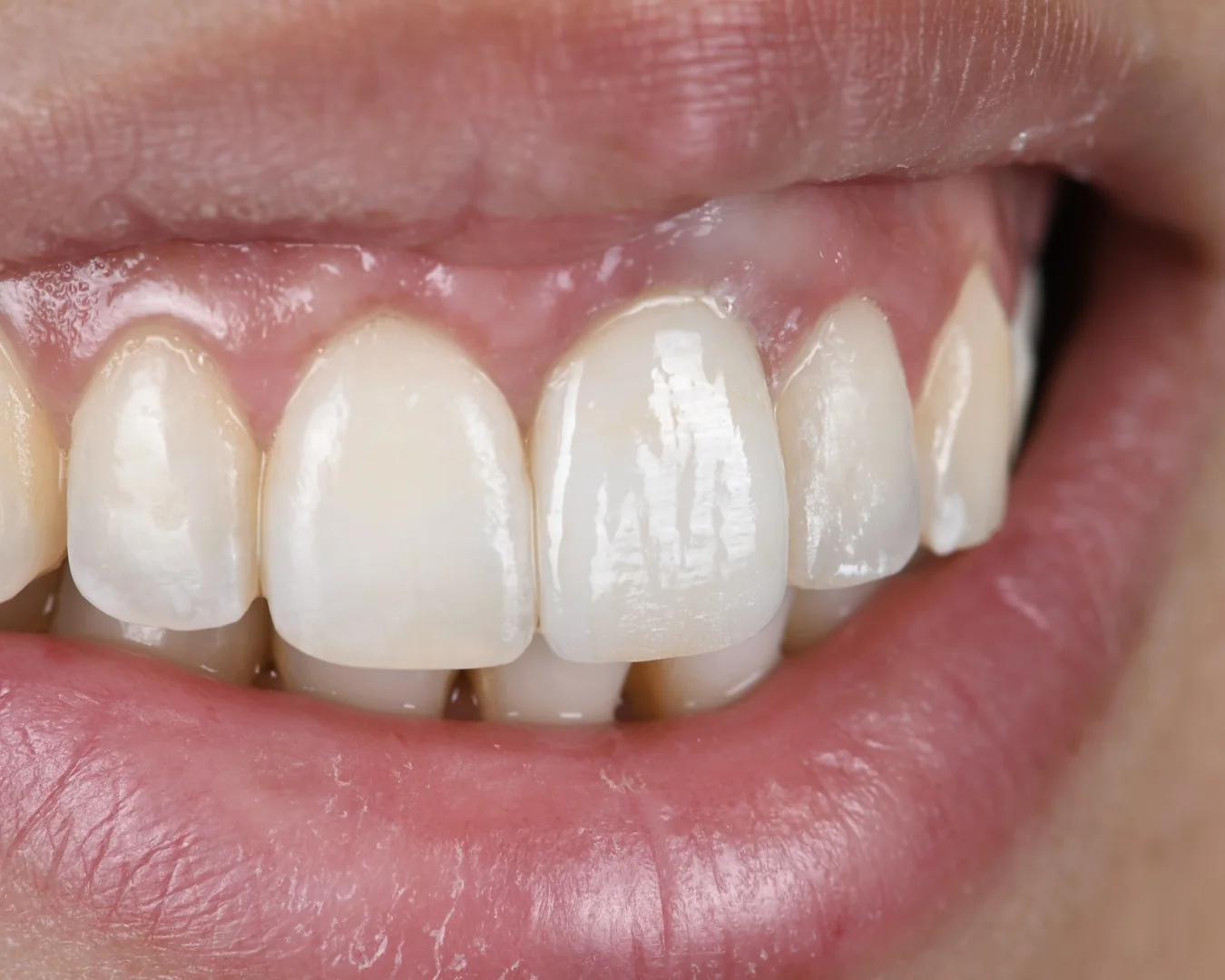
The aim came down to a single restoration, which had to blend in with its neighbour, the upper right central incisor (tooth 11): the same shade, the same shape, the same texture, and a gum line at the same level.
Stabilising before restoring
The gum level was not the same on the two central incisors, and the tissues around the upper left central incisor (tooth 21) had to regain their stability before any final restoration. Making a new crown straight away would have locked in a situation that was still changing.
A new strategy was therefore chosen: first balance the tissues, allow time for healing, and only then make the final crown.
The treatment steps
Removal of the old crown on the upper left central incisor (tooth 21) and fitting of a temporary crown, worn for six weeks to allow the soft tissues to stabilise.
At the same time, crown lengthening on the upper right central incisor (tooth 11), to harmonise the gum line of the two central incisors.
Tissue maturation: the final restoration was deliberately postponed until the gums had healed completely and evenly.
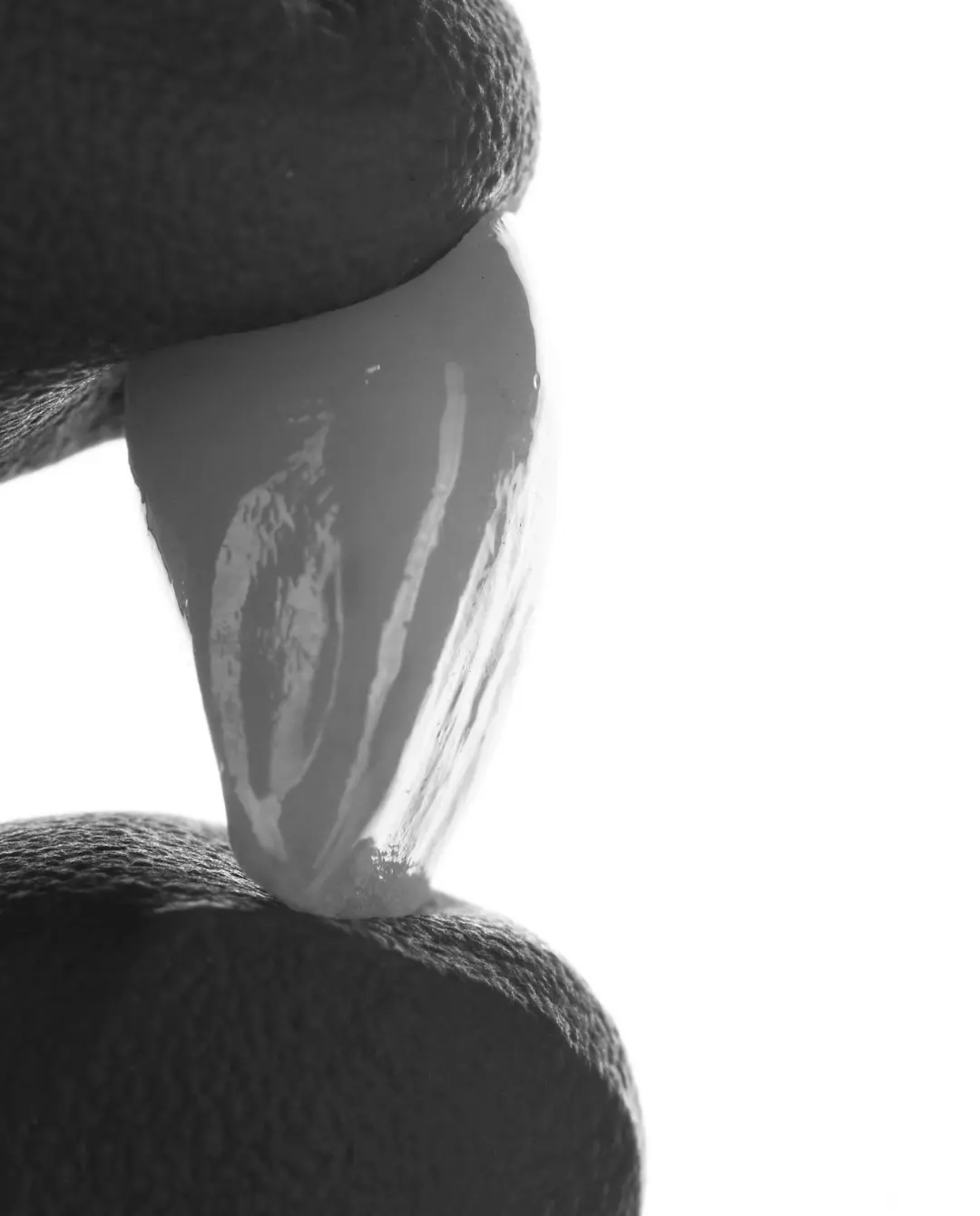
Fabrication of a custom-made ceramic crown by the dental technician Raphaël Abou, matched to the neighbouring central incisor in shade, shape and texture.
The result
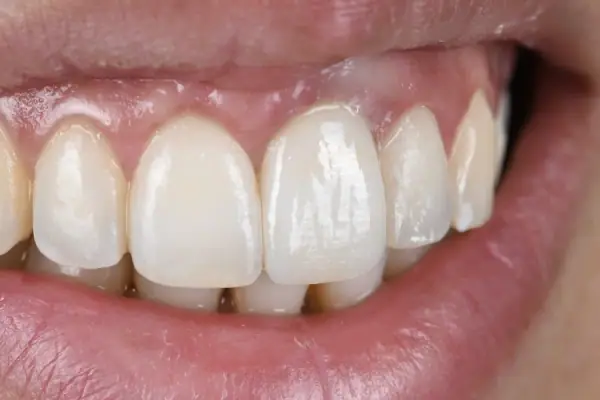
Side by side, the crown and its neighbour look like two natural teeth: the shade, the shape, the surface texture and the gum line echo each other. The close-up photograph shows the crown on the upper left central incisor (tooth 21) next to the natural upper right central incisor (tooth 11).
Follow-up focuses on the stability of the tissues around the crown and on how it blends in over time.