Ten ceramic veneers after orthodontics

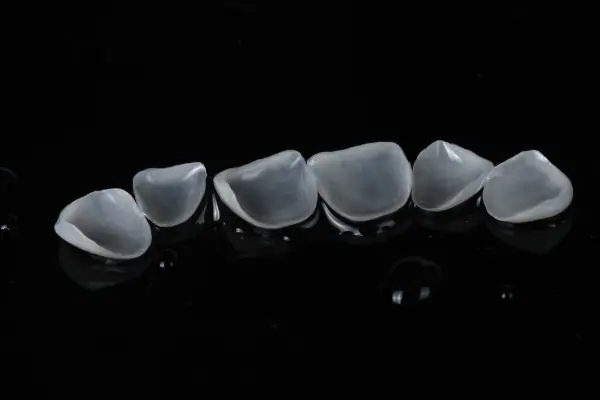
At the end of his orthodontic treatment, this patient had straight teeth but still did not recognise himself in his smile: the colour and shape of his teeth bothered him. External whitening, complemented by internal bleaching on the teeth concerned, was not enough. Ten feldspathic ceramic veneers, with minimal preparation, were designed using digital planning, then made on the basis of this plan.

  • after orthodontics
  • feldspathic ceramic
  • minimal preparation
  • external whitening
  • internal bleaching
  • digital planning

Dr Jérémy Haccoun, dentist Updated

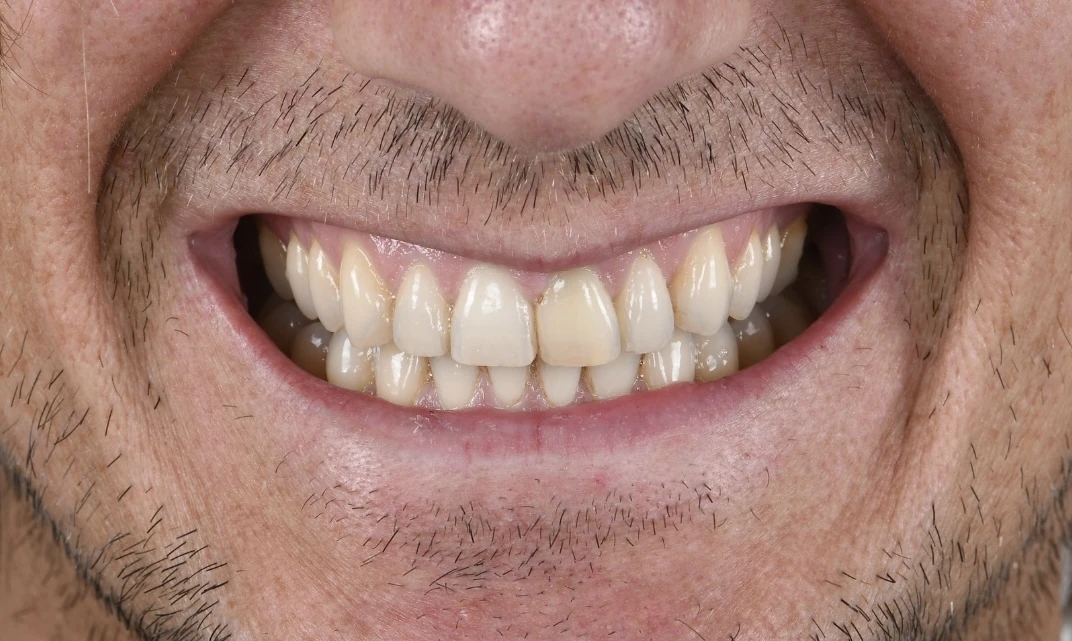
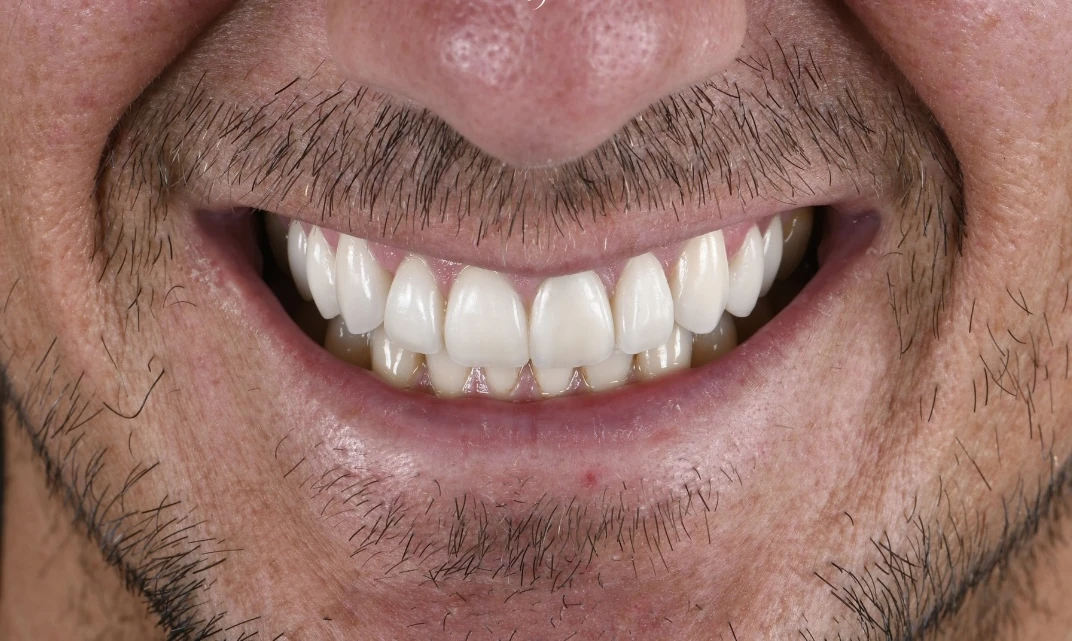
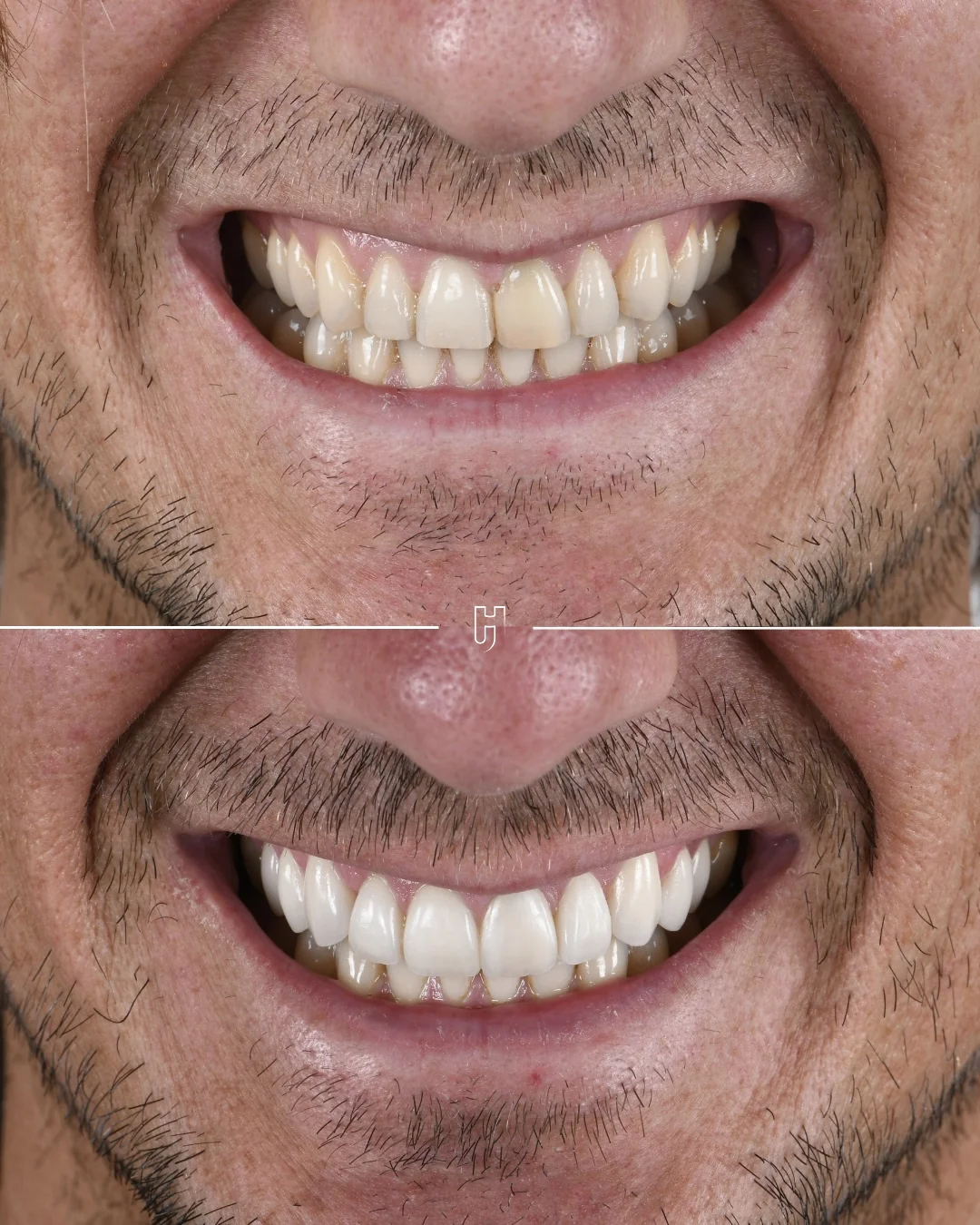
Before and after ten ceramic veneers: the smile from the front, the teeth yellower and irregular, then lighter and regular.
01

Straight teeth, but a smile that did not feel like his own

At the end of his orthodontic treatment, this patient was still self-conscious about the colour and shape of his teeth. His wish was precise: a much brighter smile, with more harmonious proportions.

Orthodontics moves the teeth; it changes neither their shade nor their shape. Both questions remained unresolved once the teeth were aligned.

02

Whitening first: external, then internal

Before veneers were considered, the colour was addressed with external whitening, complemented by internal bleaching on the teeth concerned. The response fell short of the desired result.

Attention then turned to another option: meeting this request while preserving as much tooth tissue as possible.

03

Ten feldspathic veneers, with minimal preparation

The large amount of enamel available was a central factor in the choice of ten feldspathic ceramic veneers. The plan made it possible to work with very thin ceramic and minimal preparation, in a “minimal-prep” approach. The challenge: to reconcile the desired brightness, the management of the underlying colour and the preservation of enamel.

Before any preparation, digital planning was used to design the future veneers and to discuss their shapes and proportions with the patient. This step served to clarify his expectations and to agree together on the direction the plan would take.

The digital plan: the future veneers drawn on the photograph of the smile, then on the model, from several angles. A plan, not a result.
04

The result: ten veneers made on the basis of the plan

The ten veneers were then made on the basis of this design. In the photographs, the shade is brighter and consistent from one tooth to the next, and the shapes follow the proportions agreed with the patient on the plan.

An individual result: it depends on the enamel available, the starting colour and maintenance. The treatment is described on the ceramic veneers page.
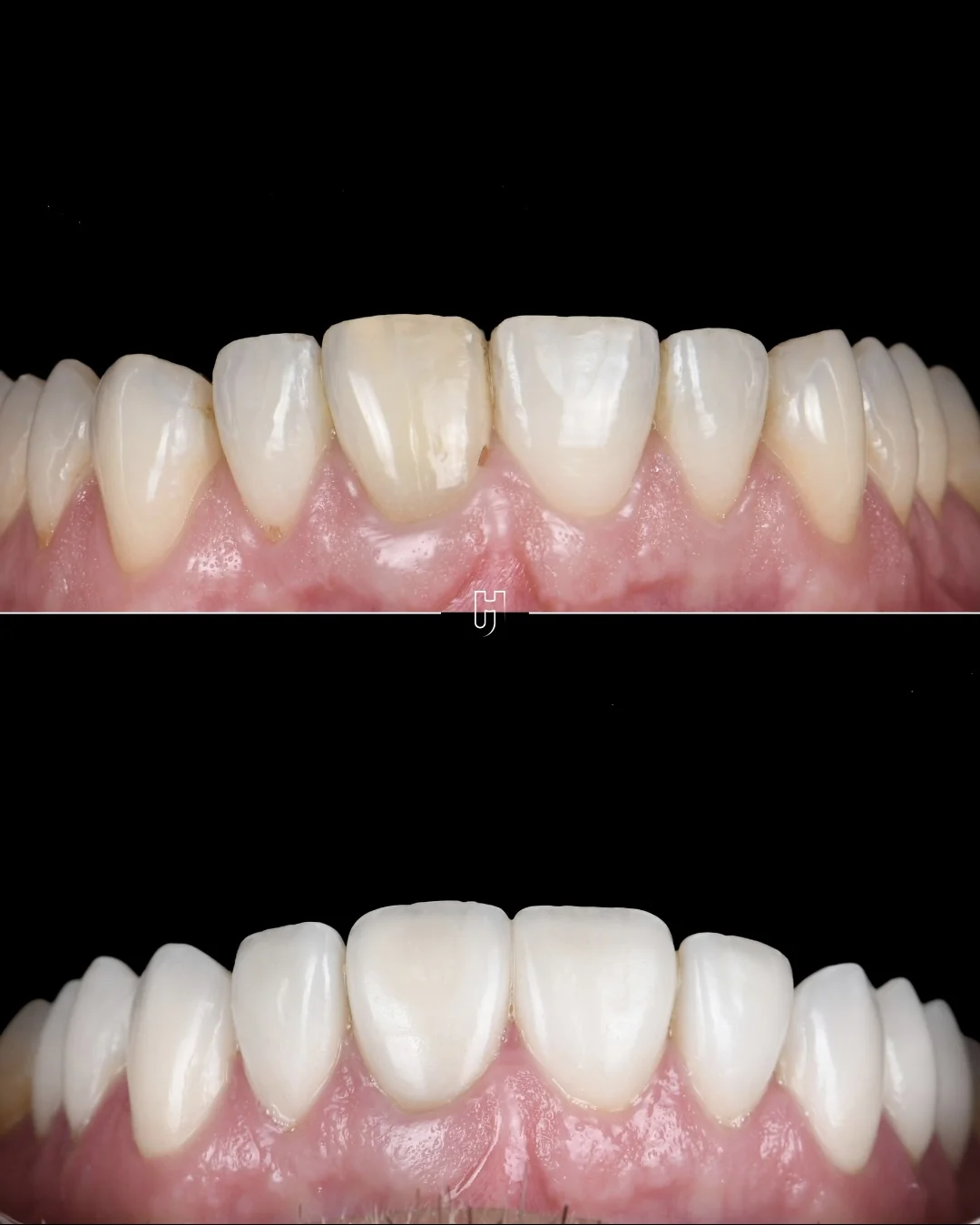
Against a black background, the upper teeth close up: at the top, before treatment, one incisor darker than its neighbours; at the bottom, after the veneers were fitted, an even shade.
With a black contrastor, close up: at the top, the starting situation; at the bottom, the result after the veneers were fitted.
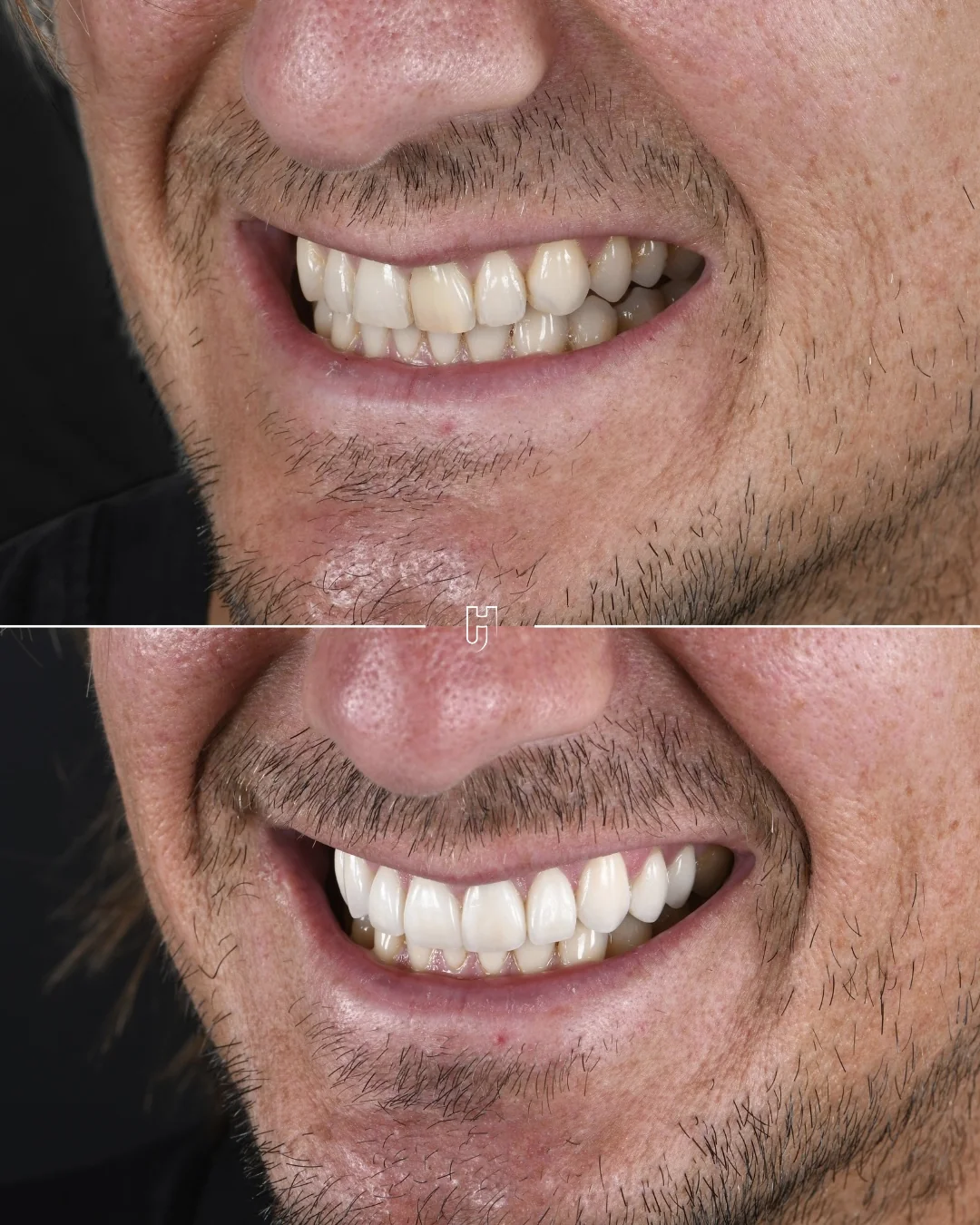
The smile in three-quarter view, before at the top and after at the bottom: lighter teeth and more regular shapes after the veneers.
The same smile, in three-quarter view, before and after the ten veneers. An individual result.
The smile from the front before treatment: yellower teeth, irregular in shape.
The same smile after the ten veneers were fitted.
BeforeAfter
The smile from the front, before and after the ten veneers: the slider moves from one to the other.

Other similar cases.

Ceramic veneers.

A thin piece of ceramic bonded to the visible surface of a tooth, to correct shape, shade or proportion.

Message us