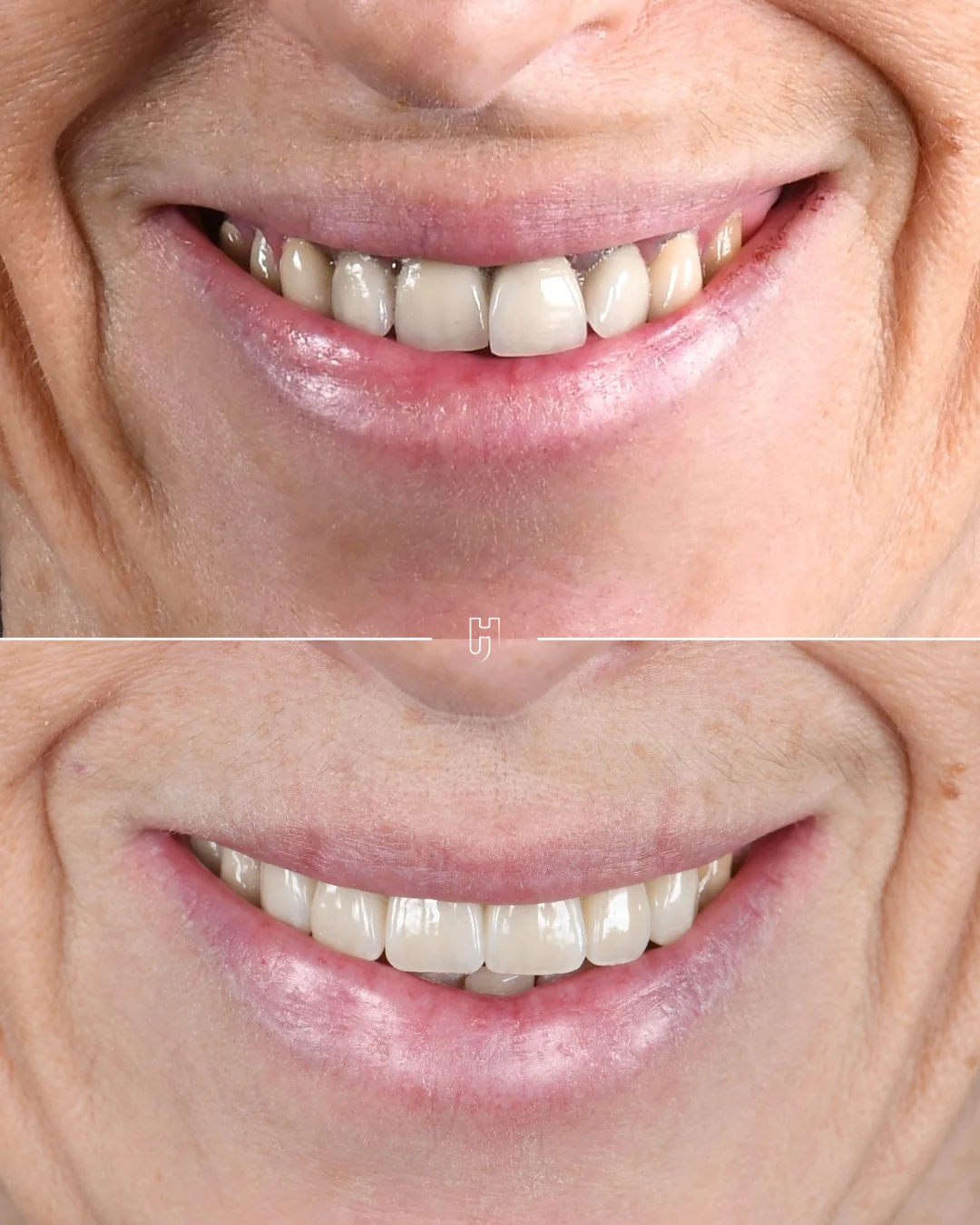
Crowns placed fifteen years ago
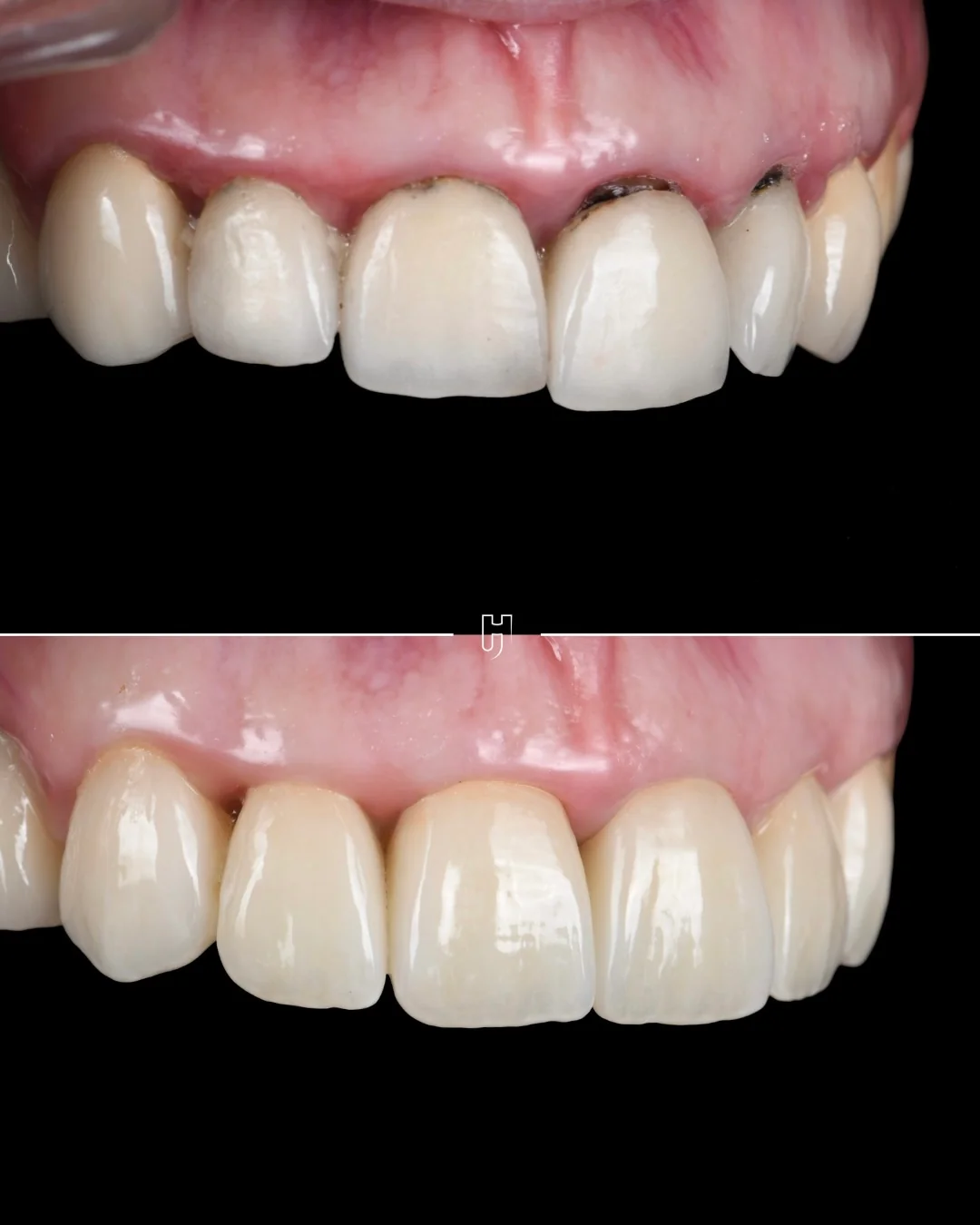
This patient had worn crowns on her six upper front teeth, from canine to canine, for about fifteen years. She wanted a new smile, more harmonious, with rethought shapes and proportions.
Close up, the photographs show what was troubling aesthetically: shapes that had become uneven and the edge of the old crowns marked at the gum line. Crowns placed fifteen years ago can still hold, and no longer suit the smile one wants.
Before the ceramic: the gum, the roots, the teeth
Replacing old crowns on the front teeth is not just a matter of fitting new ones. An aesthetic, lasting result depends first on what supports them: a healthy gum, well-treated roots and teeth rebuilt on a solid base. That is what lets the gum line stay stable and the new crowns keep their natural look over time.
Three stages were devoted to this, behind the scenes of the new smile: Periodontal treatment, that is, a deep cleaning of the gum and roots; redoing the existing root canal treatments (endodontic retreatments) on the root-treated teeth; and the build-ups, the reconstructions that give each tooth back the base that will carry its crown.
A design drawn up, worn for six weeks, then made
Treatment took place in several stages.
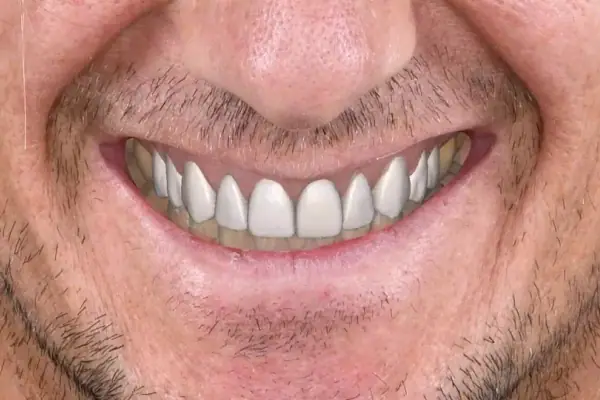
A digital wax-up, the aesthetic design of the smile: drawing the new shapes and proportions, designed with the patient, before touching the teeth.
Periodontal treatment.
Six weeks of provisional crowns: provisionals give time to live with the new shapes, to see them in the mirror and in photographs, and to adjust them if needed before the final crowns.
The endodontic retreatments and the build-ups.
Six monolithic zirconia crowns on 13, 12, 11, 21, 22 and 23: a very strong ceramic, milled from a single block, for thin crowns with a natural shade on the front teeth.
Six monolithic zirconia crowns
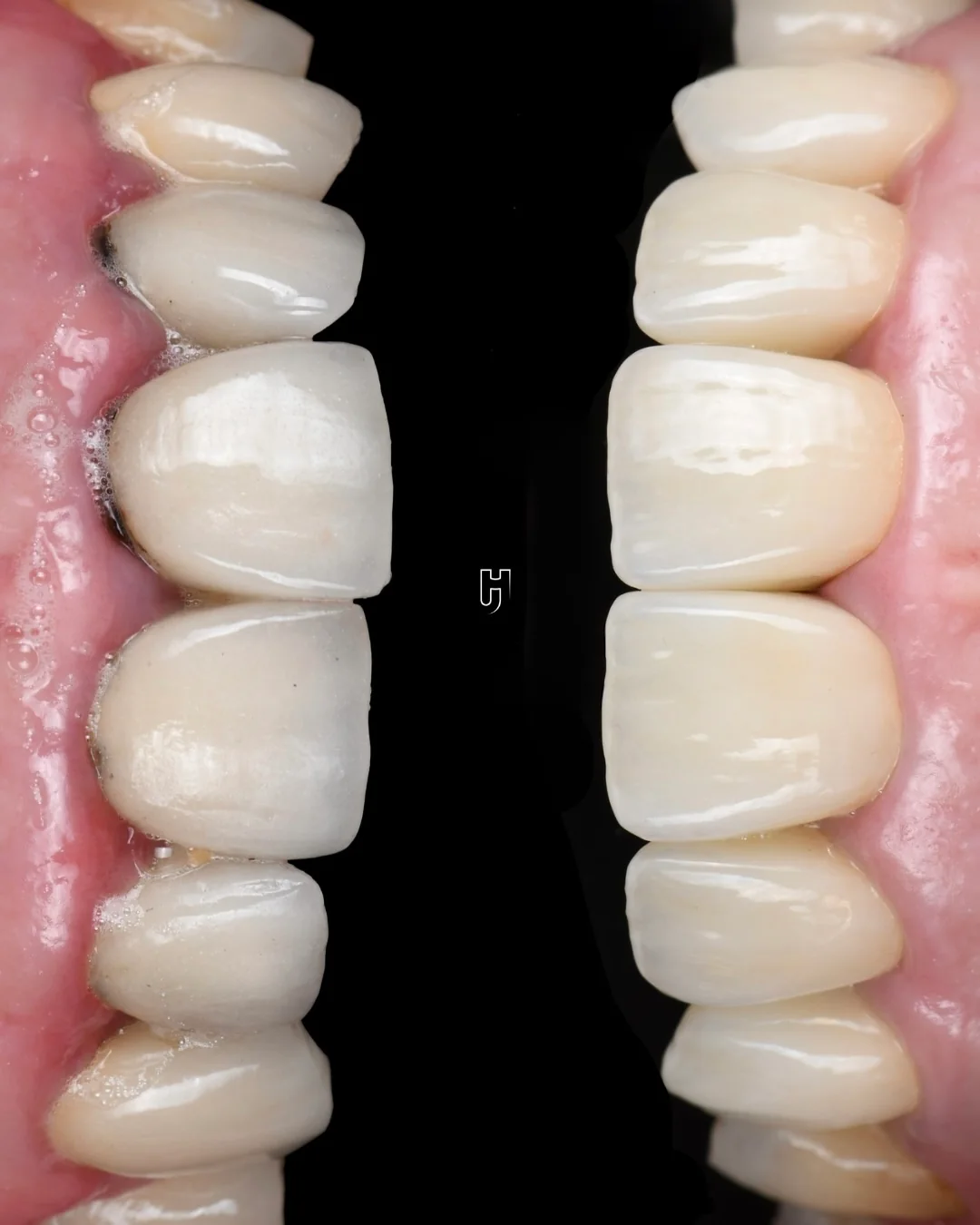
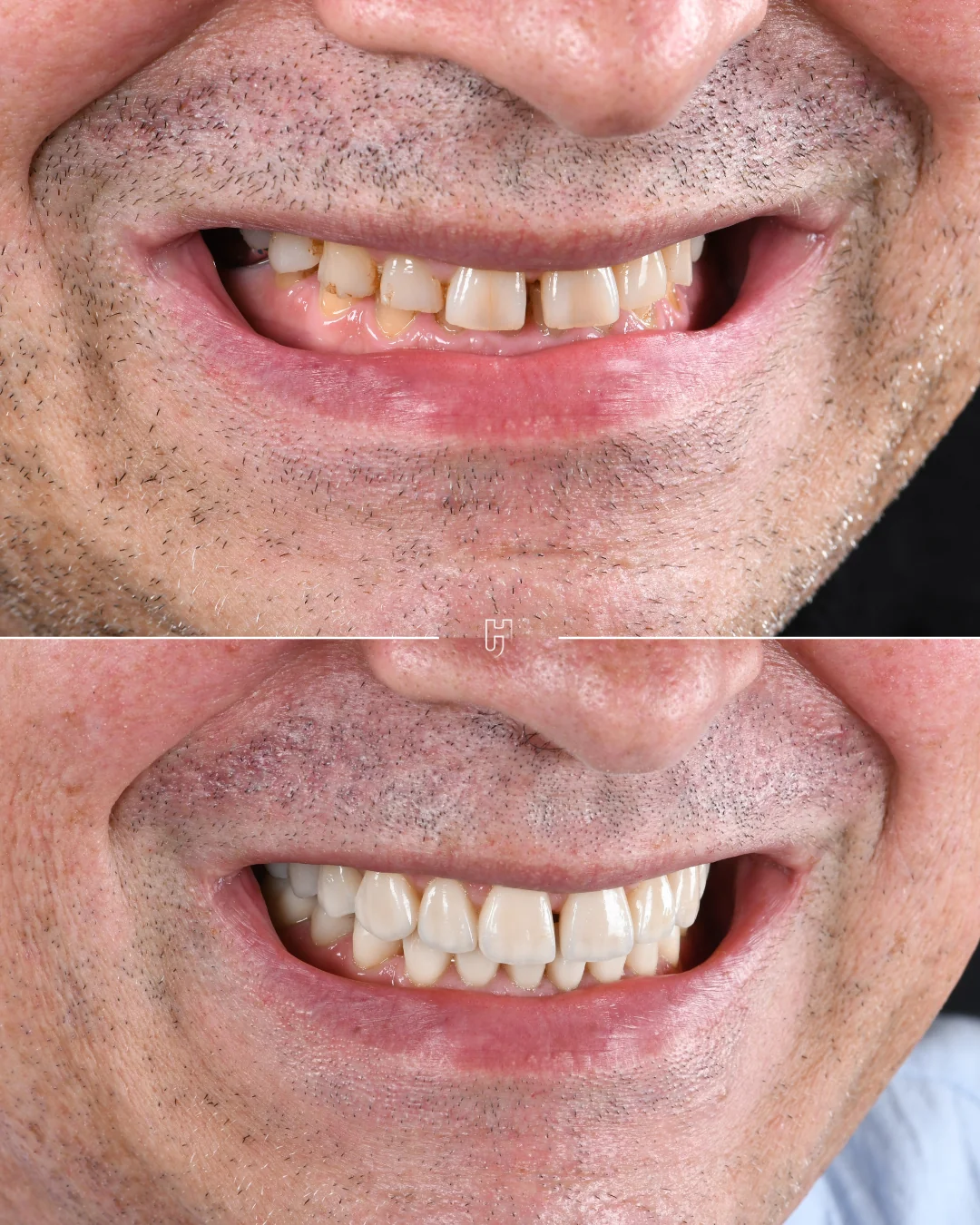
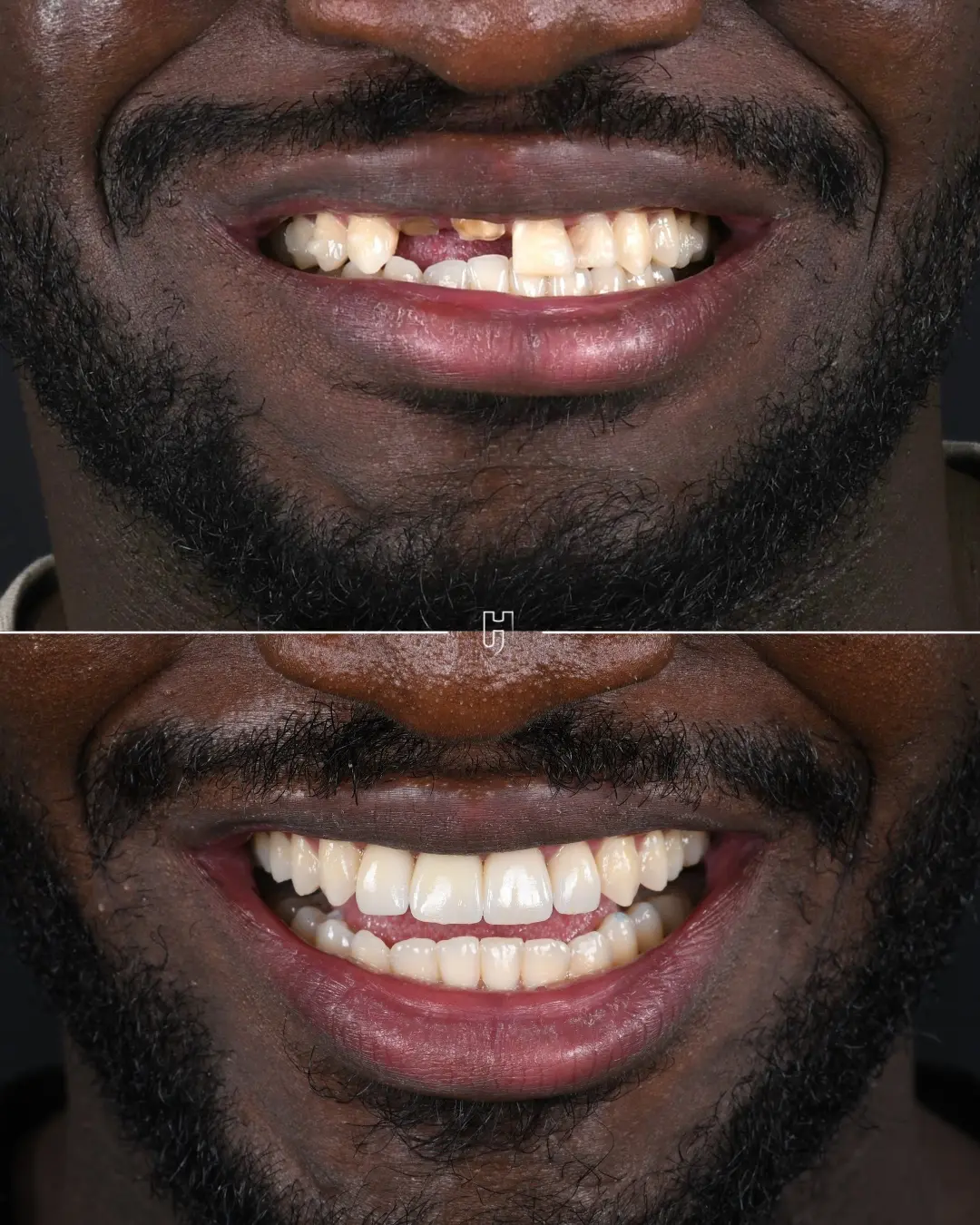
The six monolithic zirconia crowns, from one canine to the other, replaced the old crowns, with shapes and proportions designed with the patient: a more harmonious smile, with regular, natural-looking front teeth.
This case shows what an aesthetic rehabilitation of the front teeth requires behind the scenes: a design drawn up first, a treated gum, redone roots and rebuilt teeth, before the ceramic. This is how aesthetic dentistry is practised at the practice in Levallois-Perret: the visible result rests on what cannot be seen. A team effort, from the first drawing to the final finishing, with the dental laboratory.
Individual result: another case of metal-ceramic crowns redone in layered zirconia is presented among the complex rehabilitations.