An aesthetic request, a functional problem
The patient initially came for aesthetic reasons, with no pain and no particular symptoms.
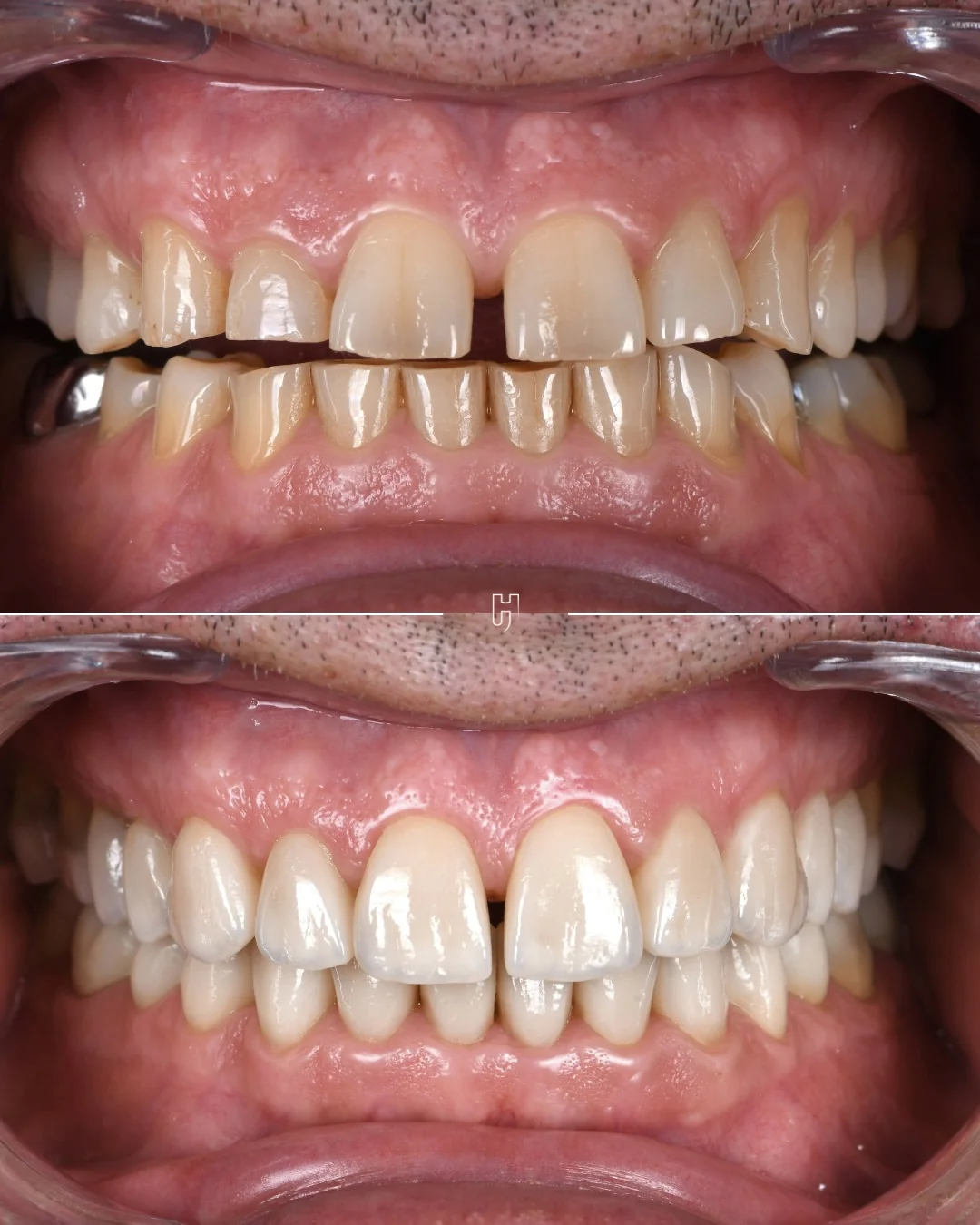
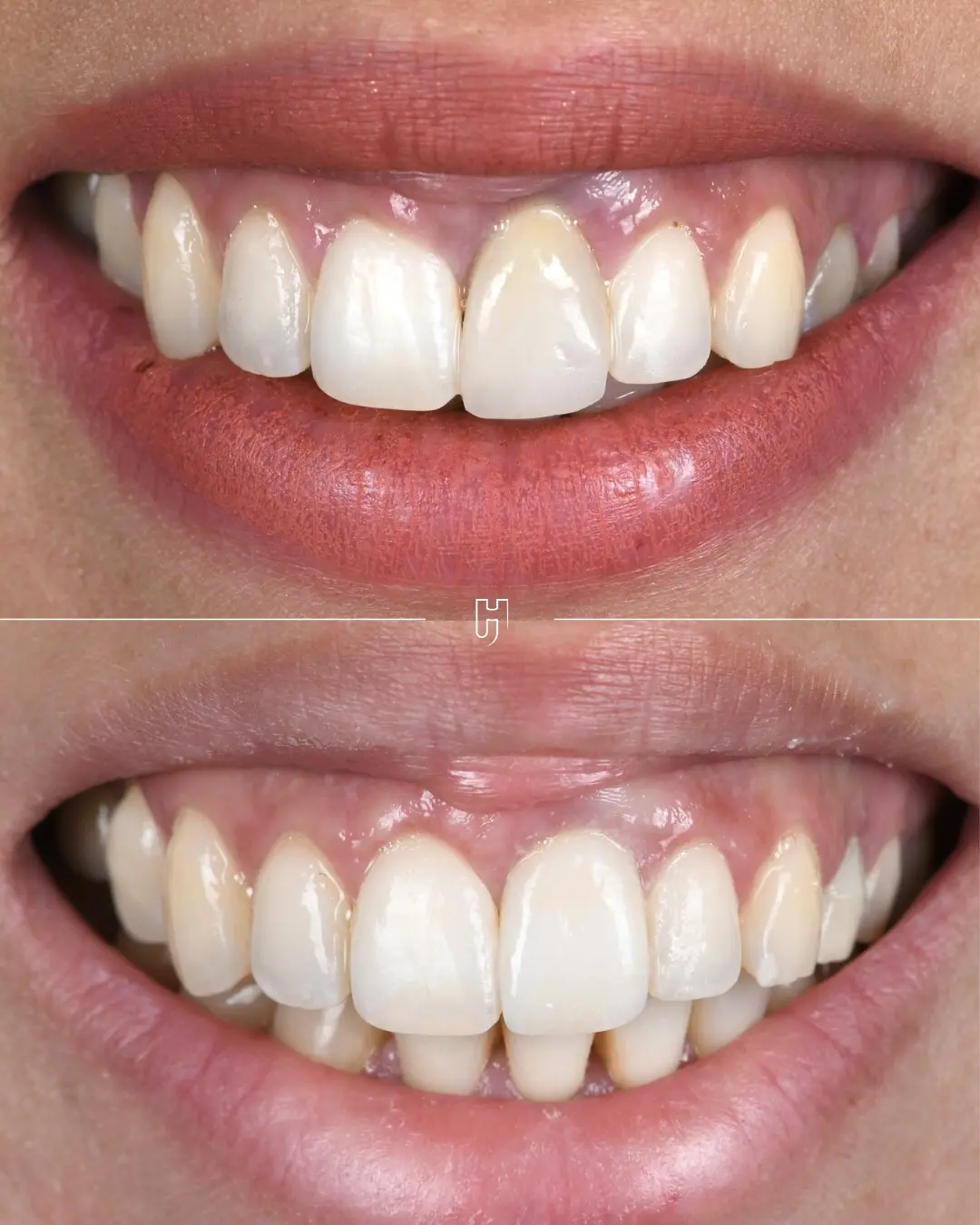
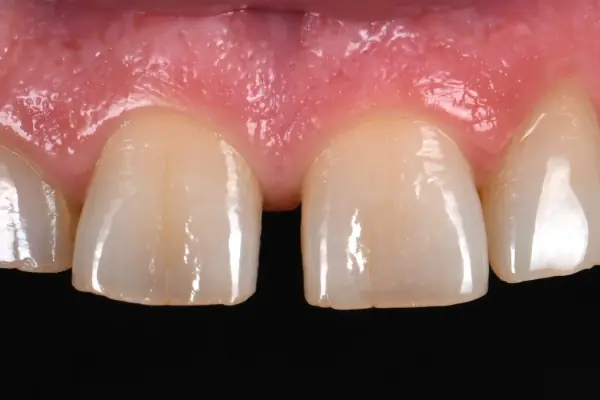
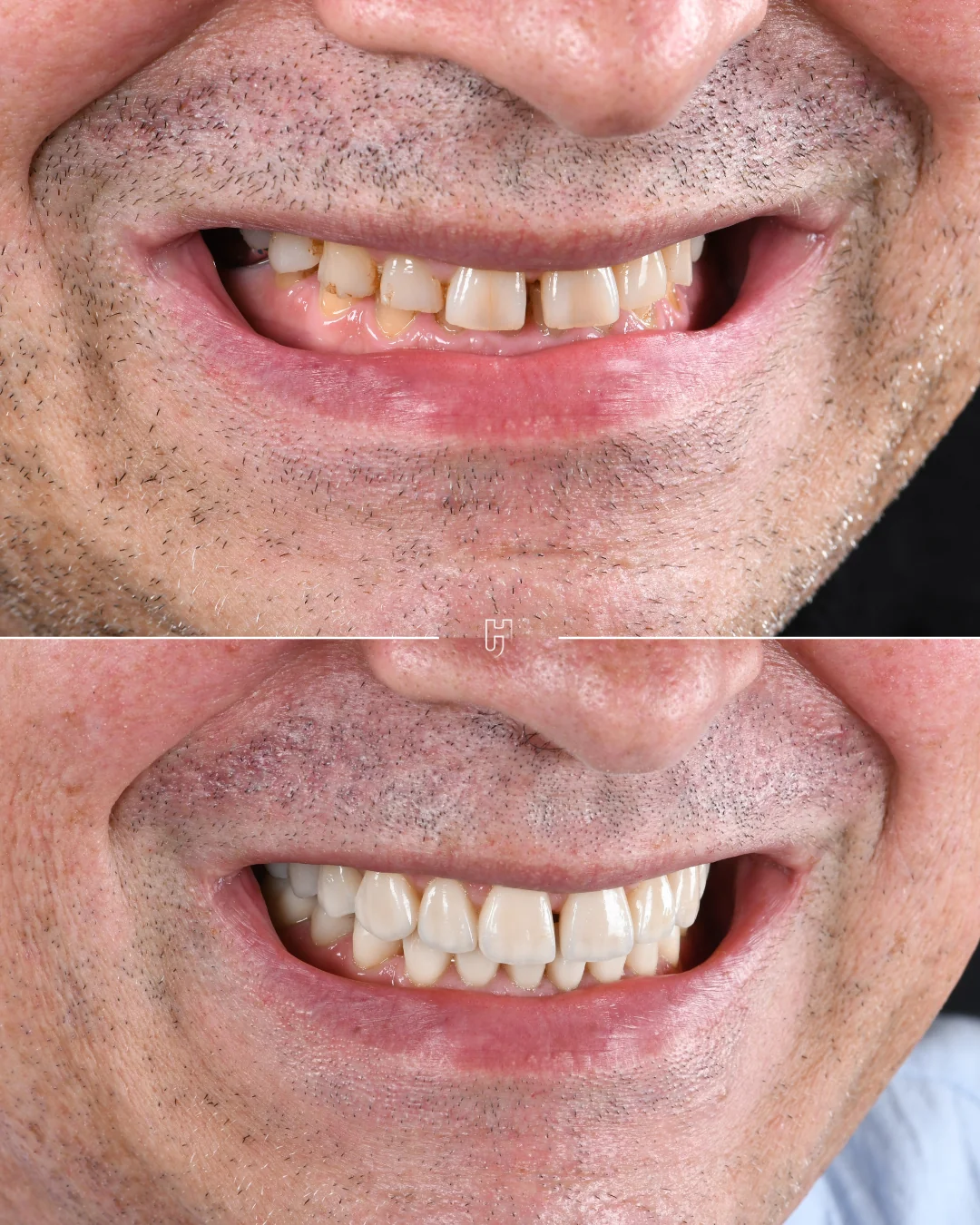
The clinical analysis, however, revealed generalised tooth wear linked to severe bruxism. This typical pattern of wear, called attrition, had gradually shortened the teeth at their biting edges and, above all, reduced the vertical dimension of occlusion, that is, the distance between the jaws when the upper and lower teeth meet with the mouth closed.
So the problem was not only aesthetic. It was functional.
Analysing and planning before rebuilding
A digital impression, photographs and a virtual smile design were used to analyse the starting situation and plan the reconstruction.
Given the severe bruxism, a Kois deprogrammer was then made to validate a more reliable position of the lower jaw, at the vertical dimension set for the plan.
Once the new vertical dimension had been set, a complete digital wax-up was transferred to the mouth in bis-acryl resin and worn for three weeks. The aim: to validate the aesthetics, but above all function, comfort, speech and how well the patient adapted.
The treatment, segment by segment, through the mock-up
Once the mock-up had been approved, a guided gingivectomy was carried out on the four front teeth, to even out the position of the gum margins.
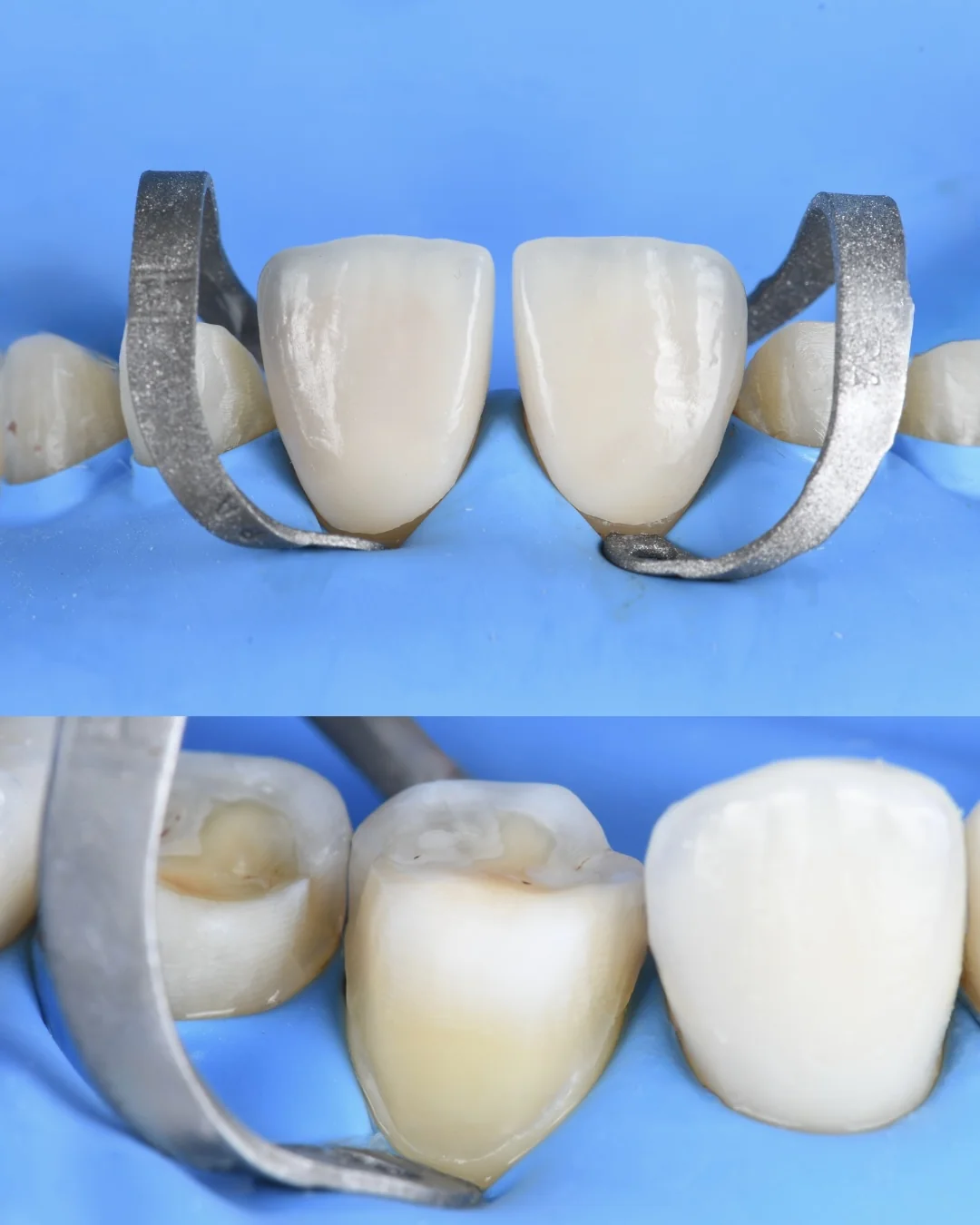
Treatment then proceeded segment by segment, through the mock-up: the lower arch, the upper back segments, then the upper aesthetic zone.
Given the heavy forces involved, stained monolithic ceramic restorations were chosen, to limit the risk of chipping and help secure the result over time.
A night guard was made at the end of treatment, together with injections of botulinum toxin into the masseter (jaw) muscles, performed by a cosmetic surgeon.
Total treatment time: six months.
The result, and what protects it
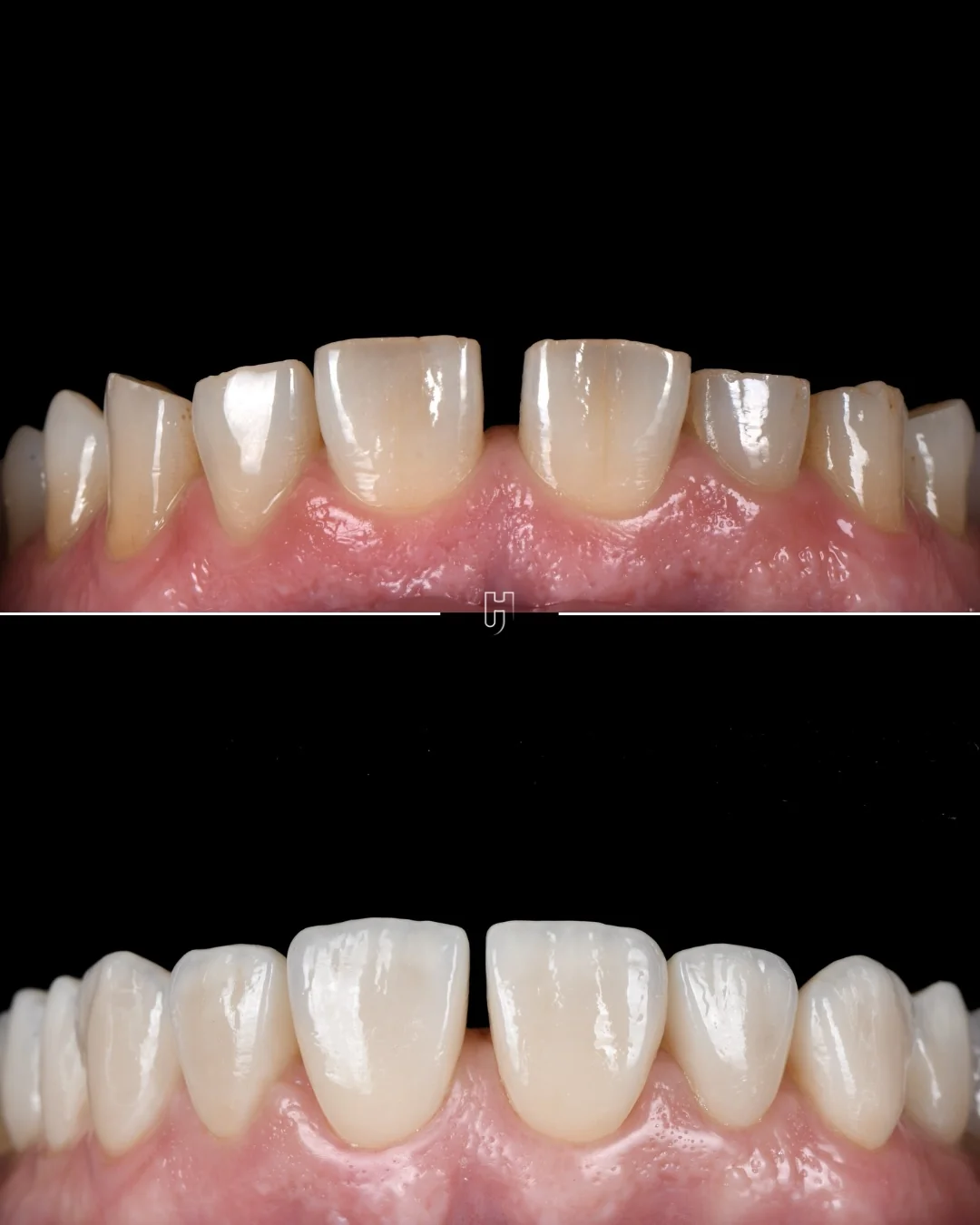
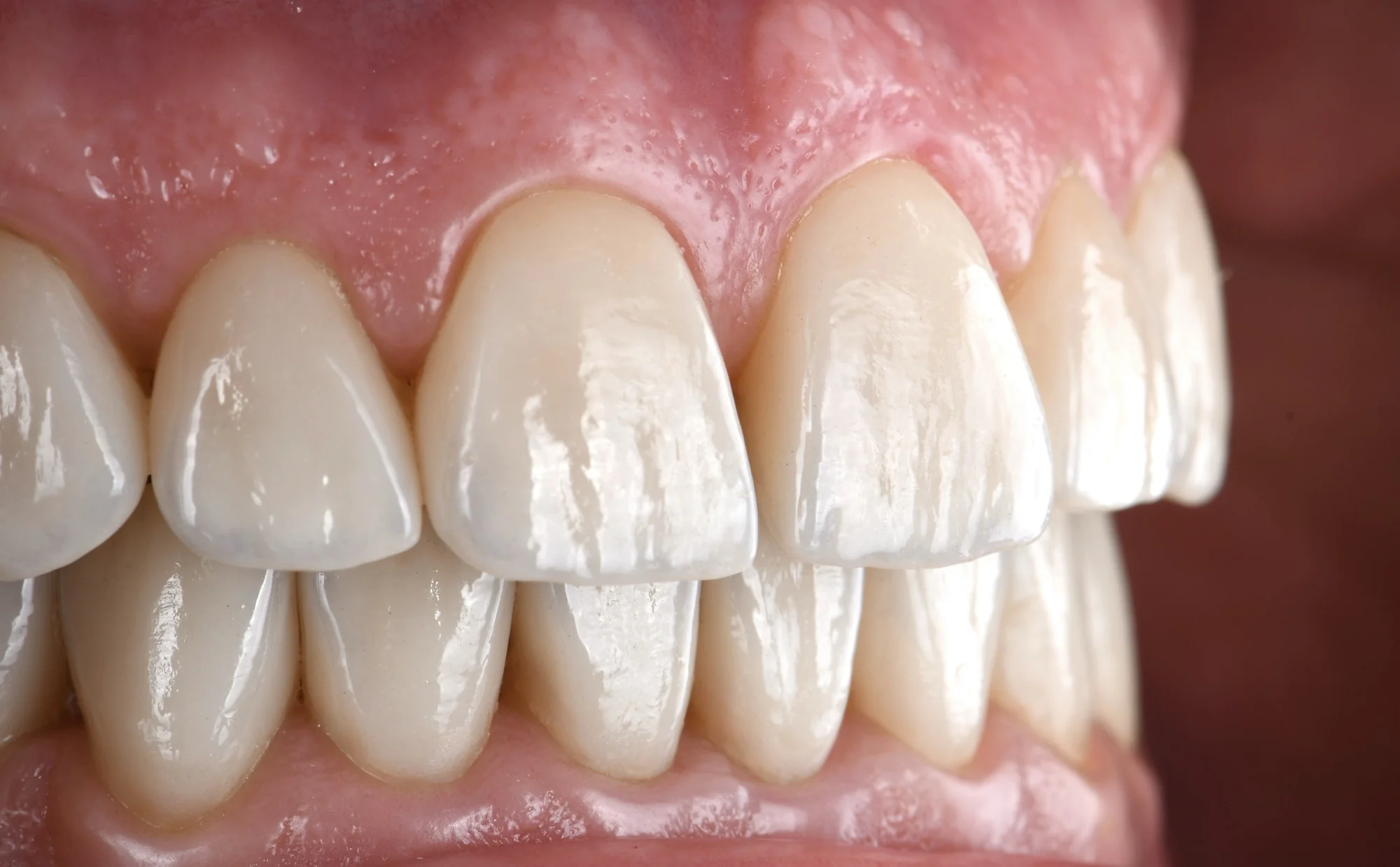
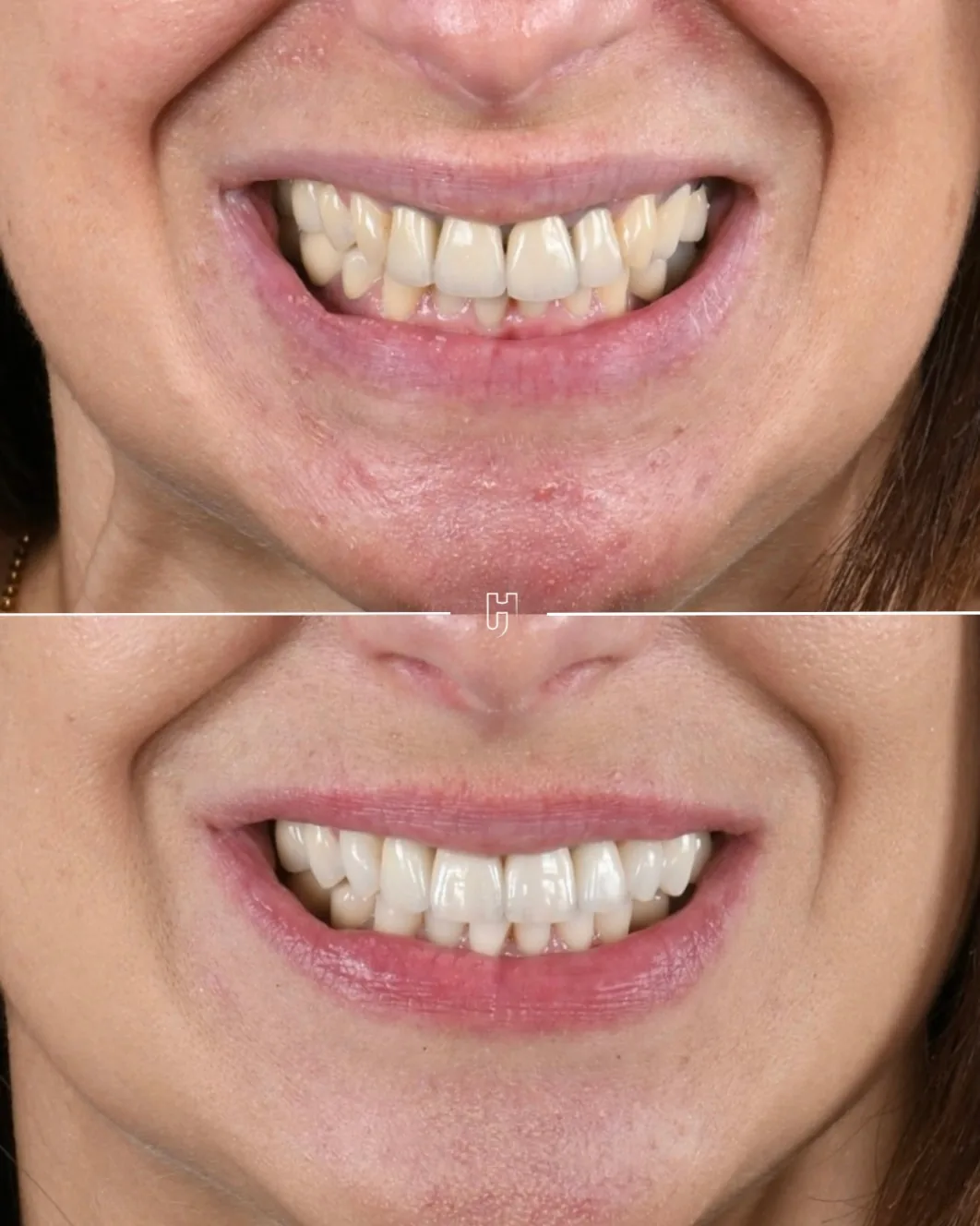
The before and after photographs show the smile, both arches and the edges of the upper teeth: the height of the teeth regained, the vertical dimension restored, shapes that are consistent from one tooth to the next.
This case is a reminder that a full-mouth rehabilitation never begins with ceramic. It begins with diagnosis, function and biology, and only then reconstruction. In the case of worn teeth, a reconstruction can only be expected to hold if the cause is under control: here, the night guard and the injections into the masseter muscles help protect the restorations, and regular check-ups monitor their stability and the bite.