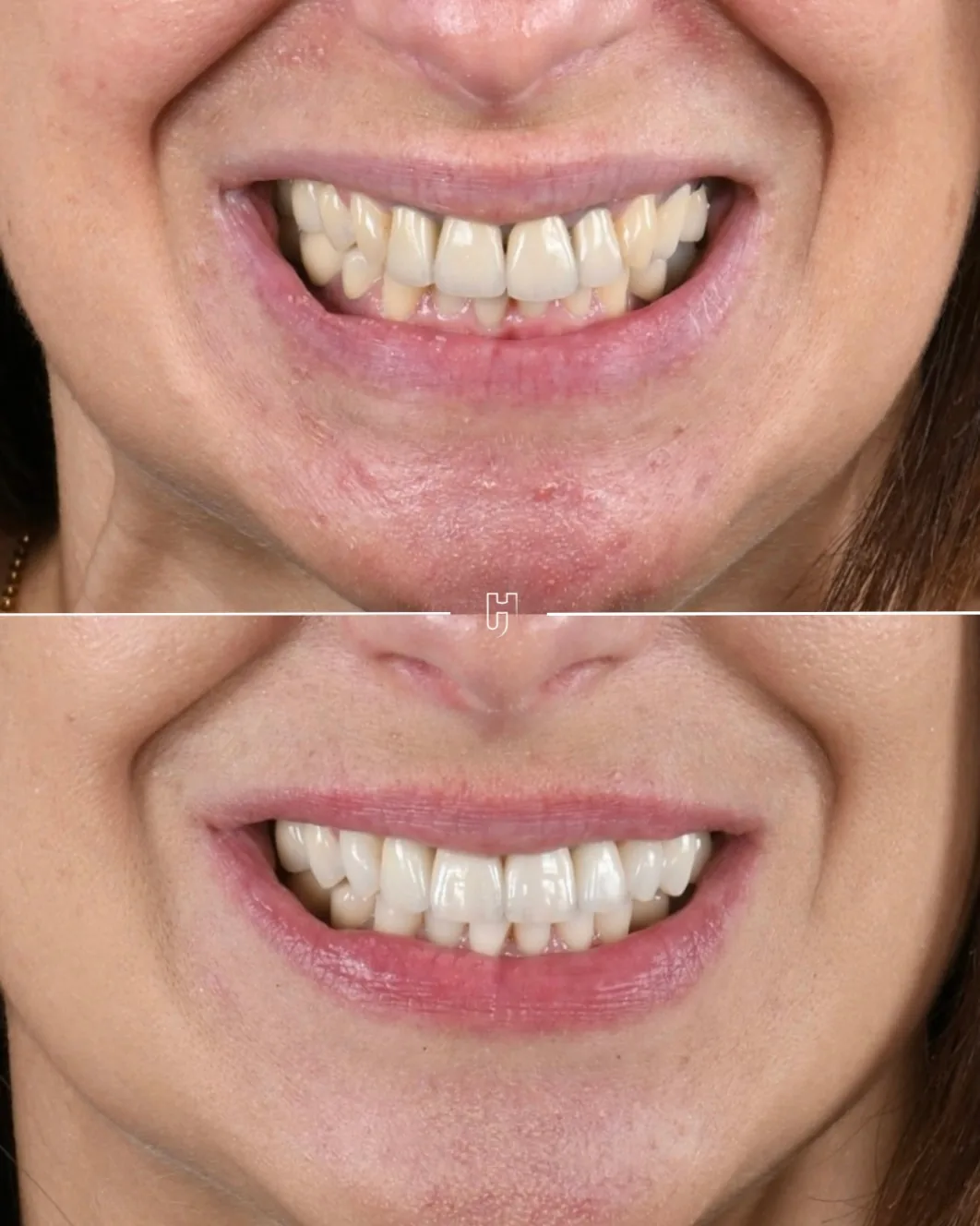
Recent crowns, judged too long and opaque
This patient came in because she was unhappy with the appearance of metal-ceramic crowns placed less than two years earlier on 12, 11, 21, 22 and 24, that is, the four upper incisors and the upper left first premolar.
Three things bothered her: incisors she found too long, an opaque appearance and a lack of brightness.
Under the crowns, four metal post-and-cores
Four metal post-and-cores in the front teeth, metal anchors fixed in the root of root-treated teeth to hold the crown, were a major optical constraint in designing the new restorations.
The root canal treatments had been carried out recently by a specialist. Removing the post-and-cores carried an unfavourable benefit/risk ratio, because of the considerable length of the posts and the mechanical risk: keeping them was the preferred option.
Masking the metal, rethinking the proportions
Treatment took place in several stages.
Three weeks of at-home whitening beforehand, to lighten the natural teeth and set the target shade for the rehabilitation.
Removal of the front crowns, keeping the post-and-cores.
Management of the substrate, that is, of what lies under the crown: Masking Liner injected through a clear silicone key made at the start of the appointment, to mask the metal frameworks and limit their influence on the optical result of the final crowns.
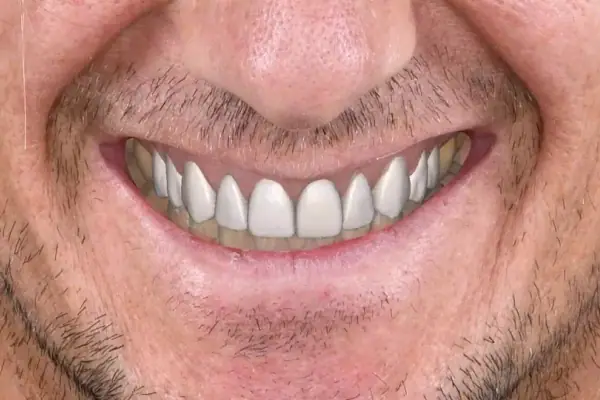
A digital wax-up, to rethink the tooth proportions.
Five layered zirconia crowns on 12, 11, 21, 22 and 24, with work on brightness and surface characterisation.
Five layered zirconia crowns
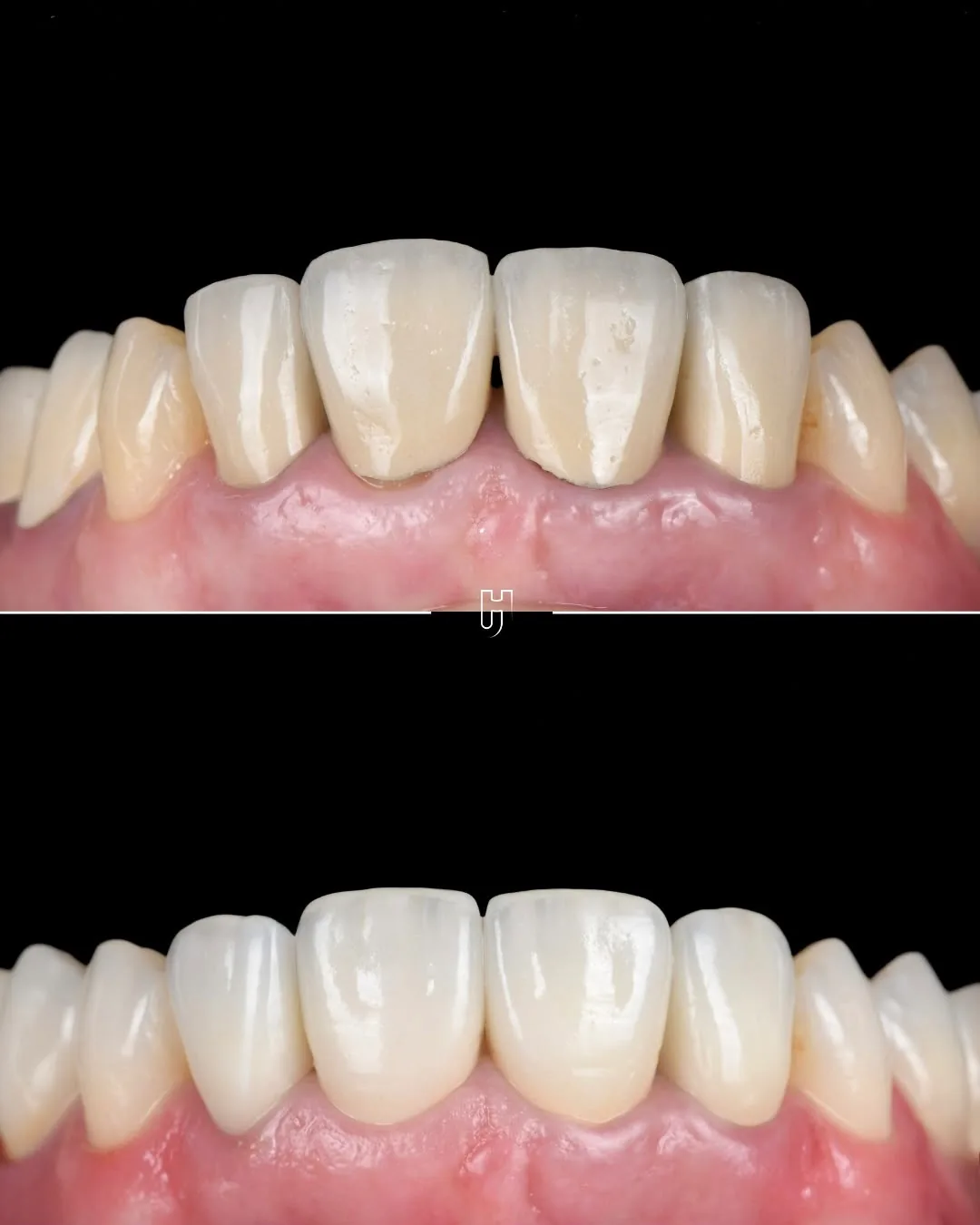
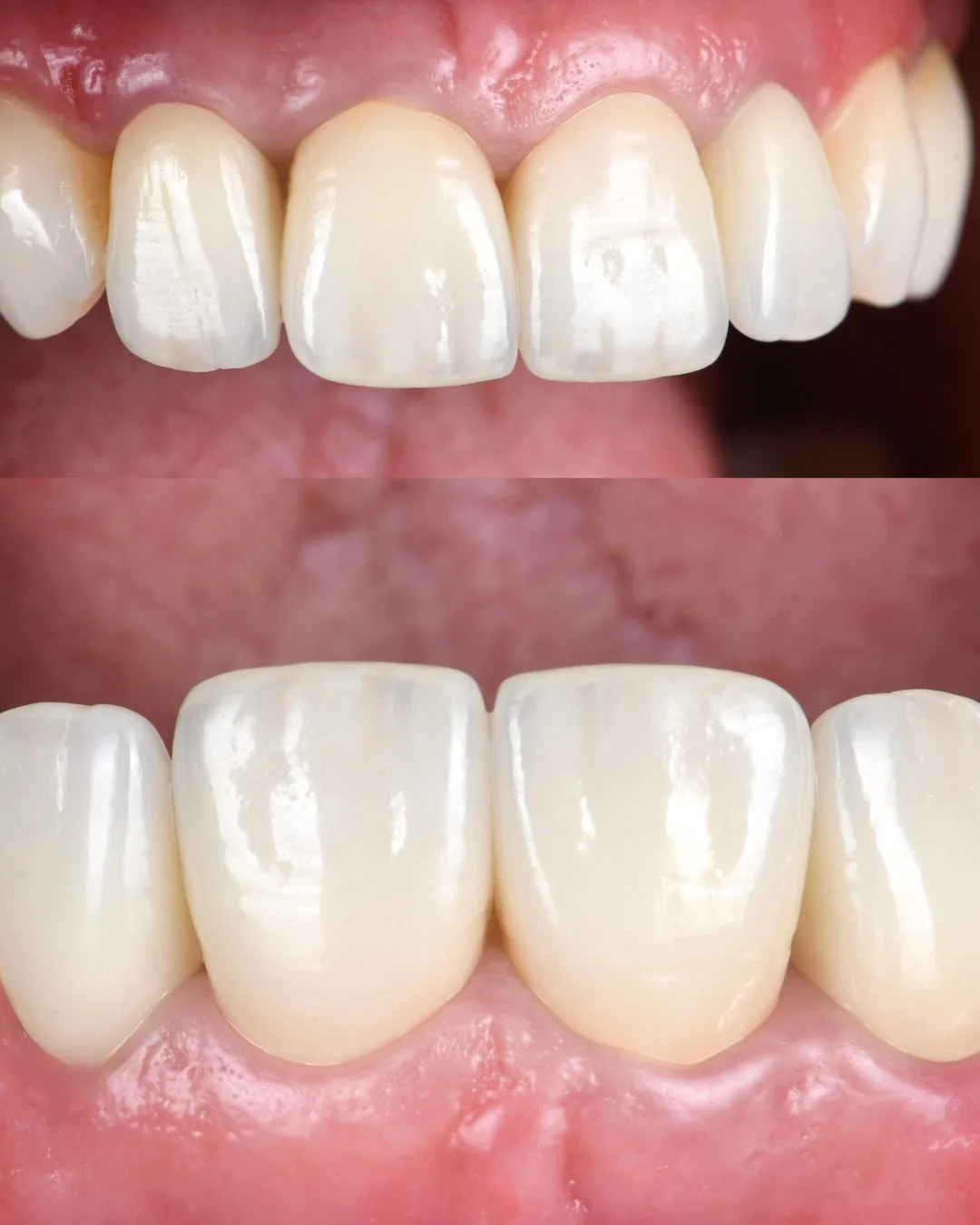
The five layered zirconia crowns replaced the metal-ceramic crowns, with rethought proportions and the post-and-cores kept.
This case shows the importance of managing the substrate, the framework and the ceramic together, in a strategy of keeping the anchors based on the benefit/risk ratio of removing them.
Individual result: another case of a ceramic crown on a central incisor is presented among the complex rehabilitations.