When fear of the dentist means putting off care
Fear of the dentist can sometimes set up a difficult cycle: the appointment is put off, the situation gets worse and, gradually, the fear of treatment also gives way to the fear of being judged.
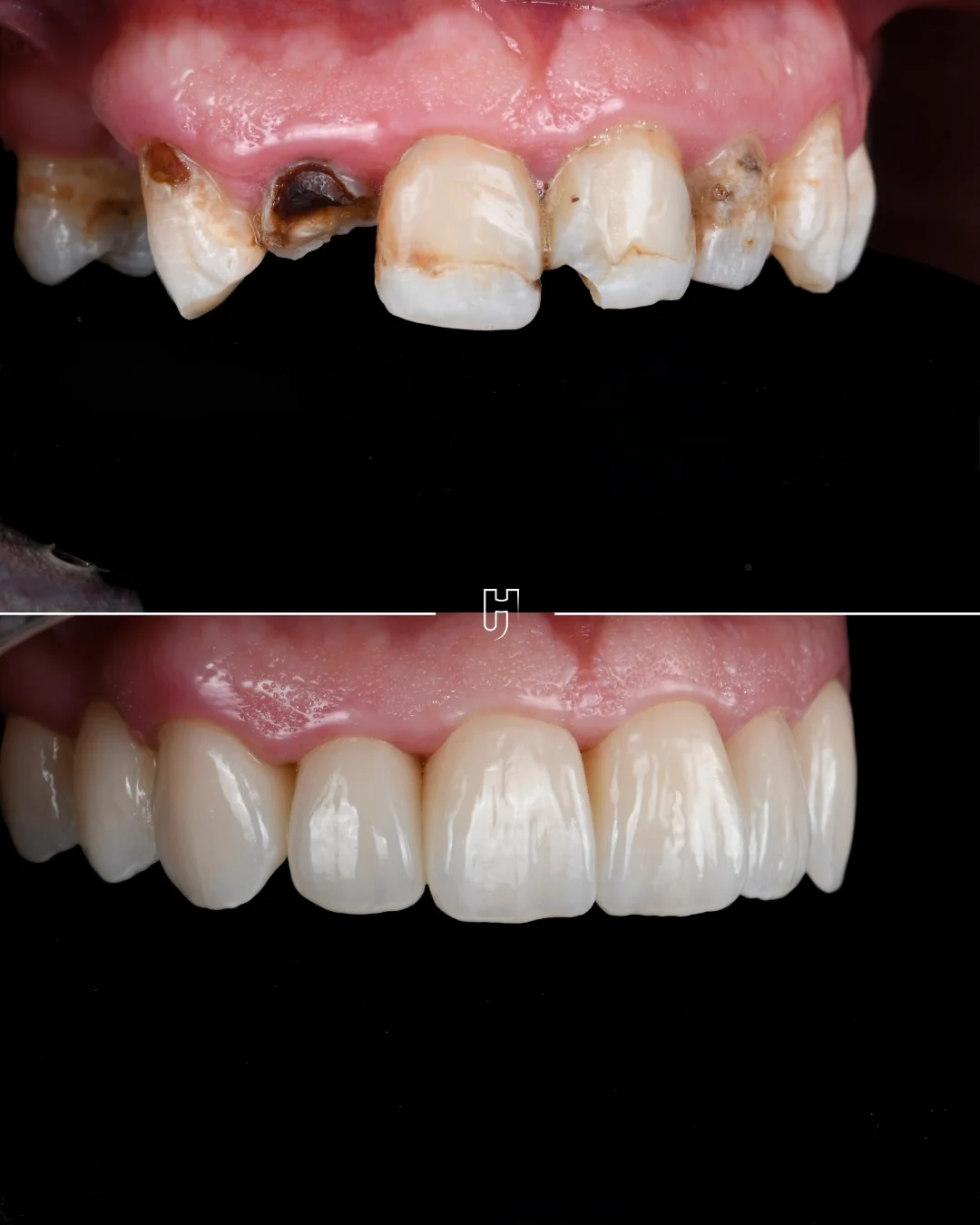
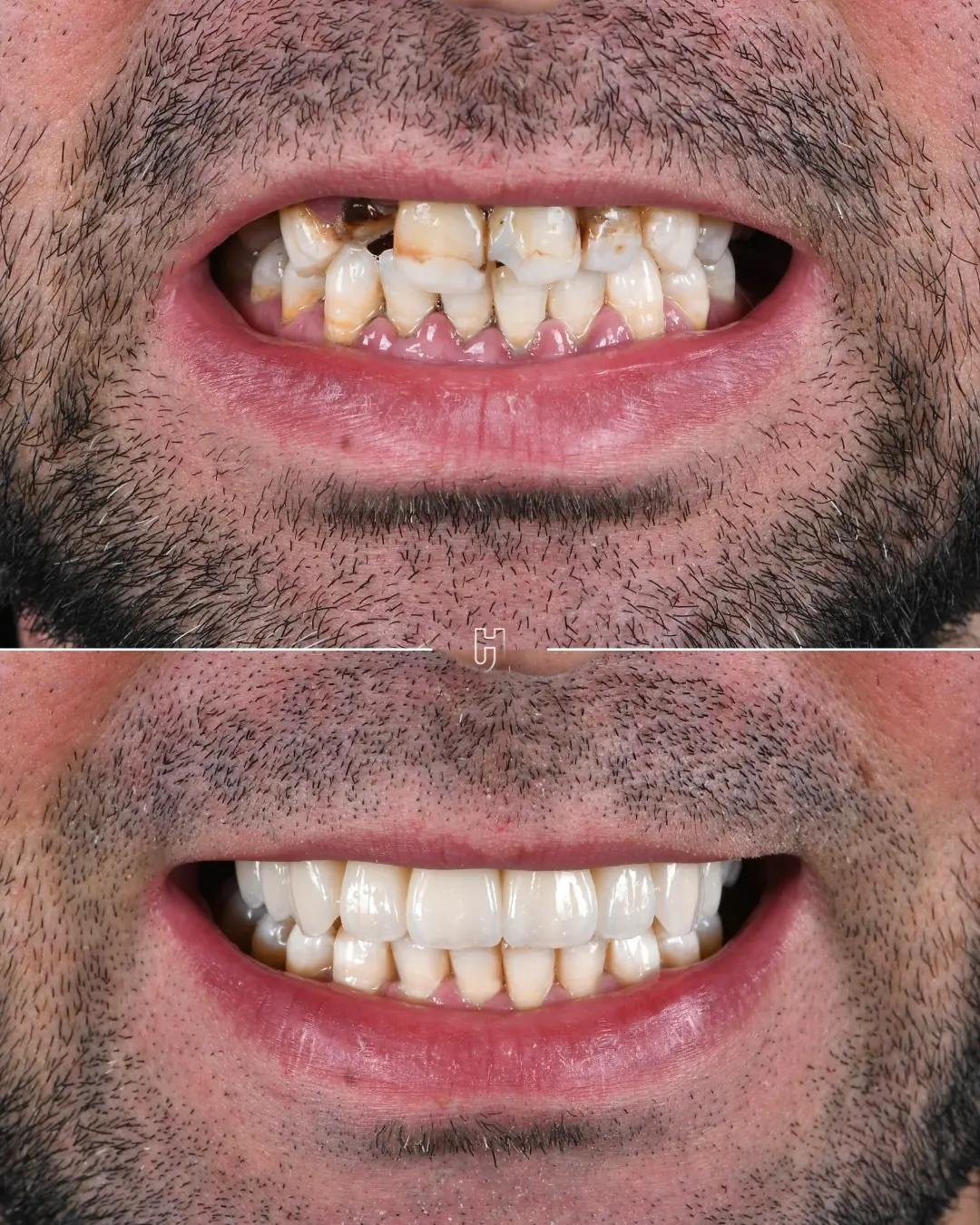
That was the case for this patient. The starting photographs show upper teeth damaged by caries, including a lateral incisor, 12, that was particularly broken down.
Restoring health before talking about aesthetics
At the first meeting, the aim was therefore not to “redo a smile”. Health had to be restored first, confidence regained, and progress made step by step.
The first phase was devoted to periodontal treatment, oral hygiene support and treatment of the various carious lesions. Only once the situation was sufficiently stable was the next step considered.
Clinical and radiographic analysis made an important choice possible: keeping 12, despite a particularly compromised initial situation. The tooth, which was necrotic, received root canal treatment, then a rebuild, to create a suitable support for the future restoration.
A digital design, then ten monolithic zirconia crowns
Only at that point were aesthetics addressed.
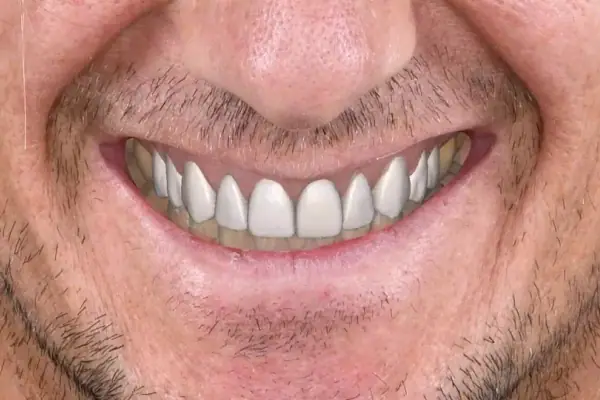
A digital wax-up made it possible to define the proportions, the volumes and the integration of the future smile before any restorative step.
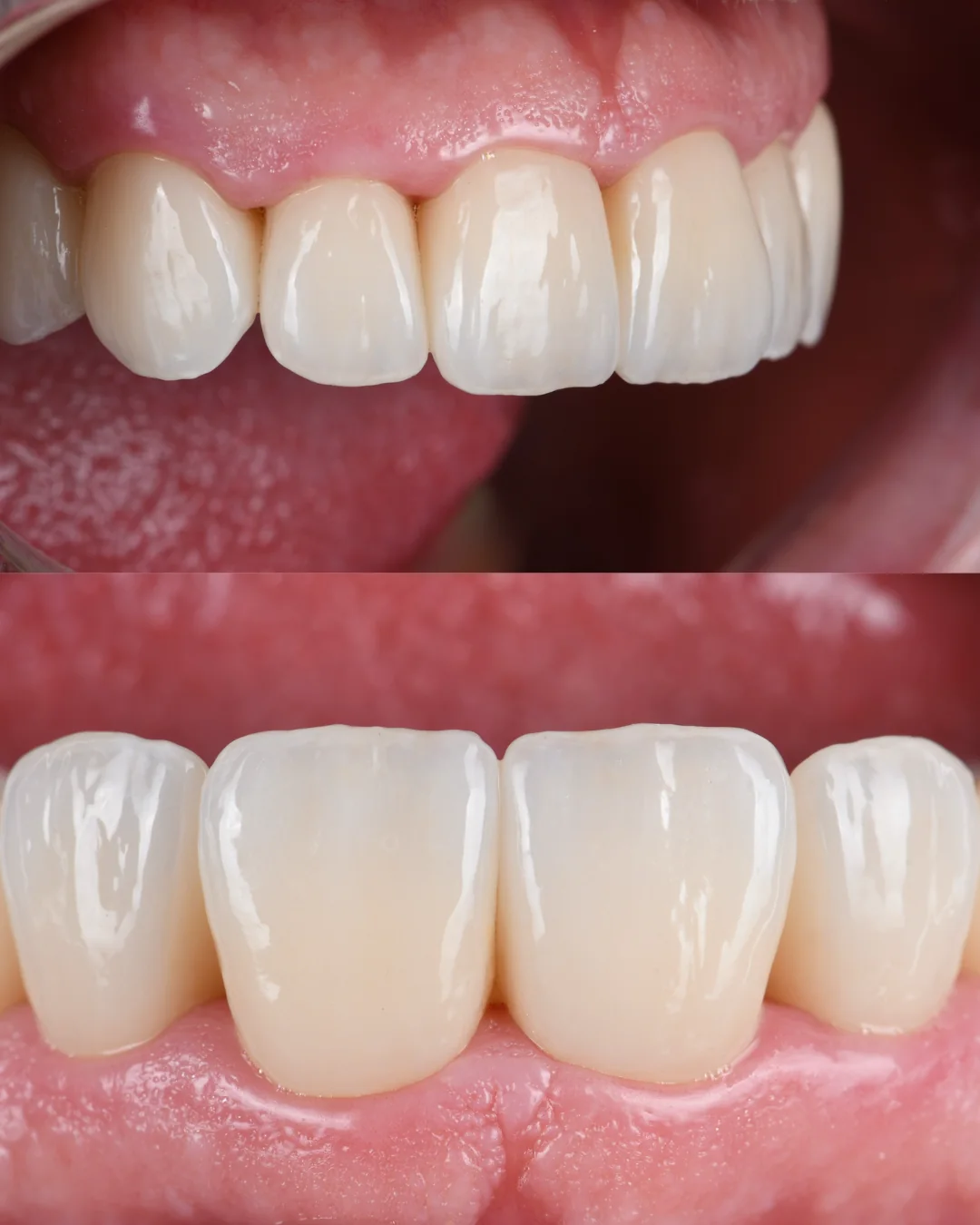
The maxillary rehabilitation, that is, of the upper teeth, was then carried out with ten monolithic zirconia crowns, a very strong ceramic milled from a single block, made with great finesse by the dental laboratory.
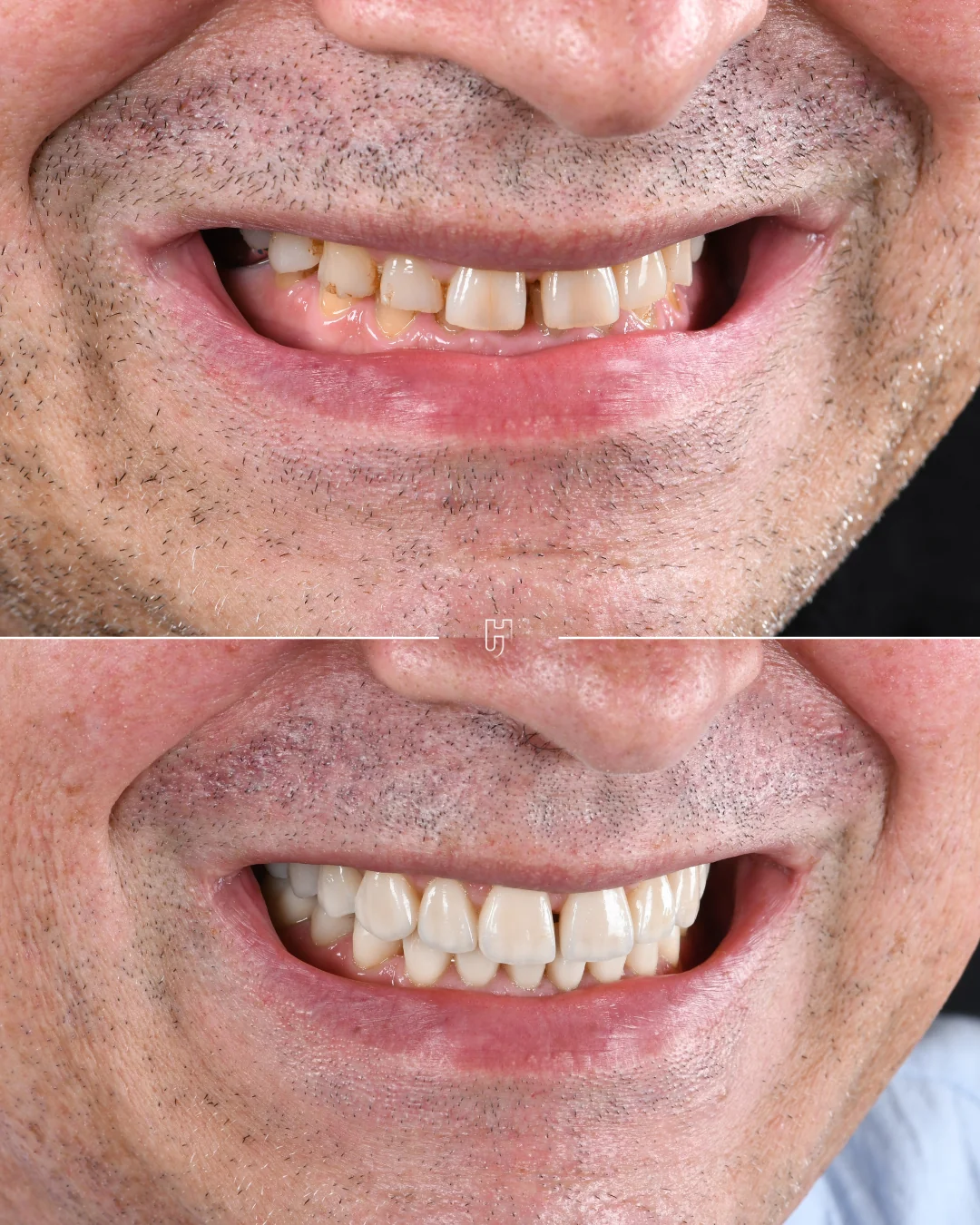
Whitening of the lower teeth also brought better harmony between the two arches.
A rehabilitated smile, a patient smiling again
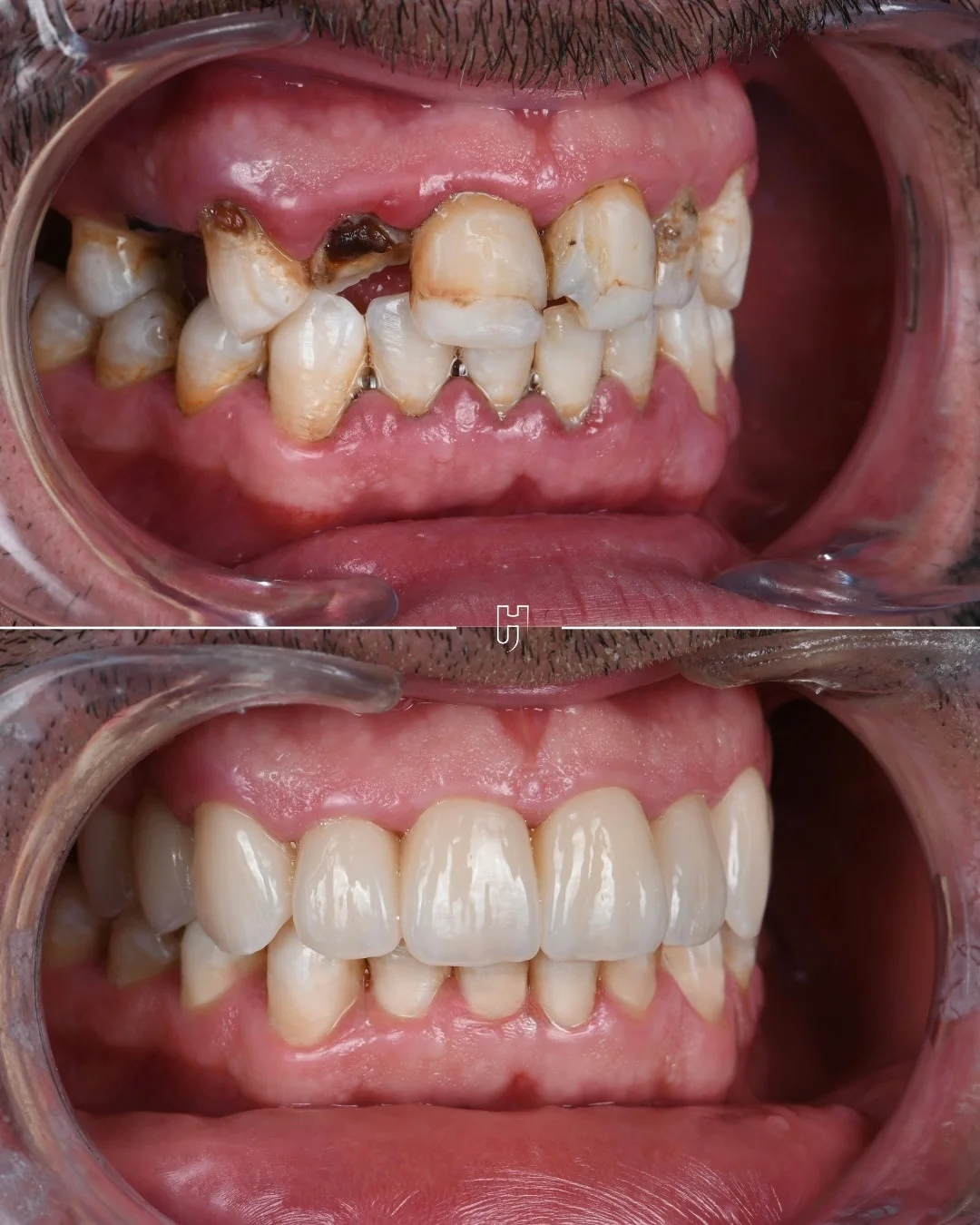
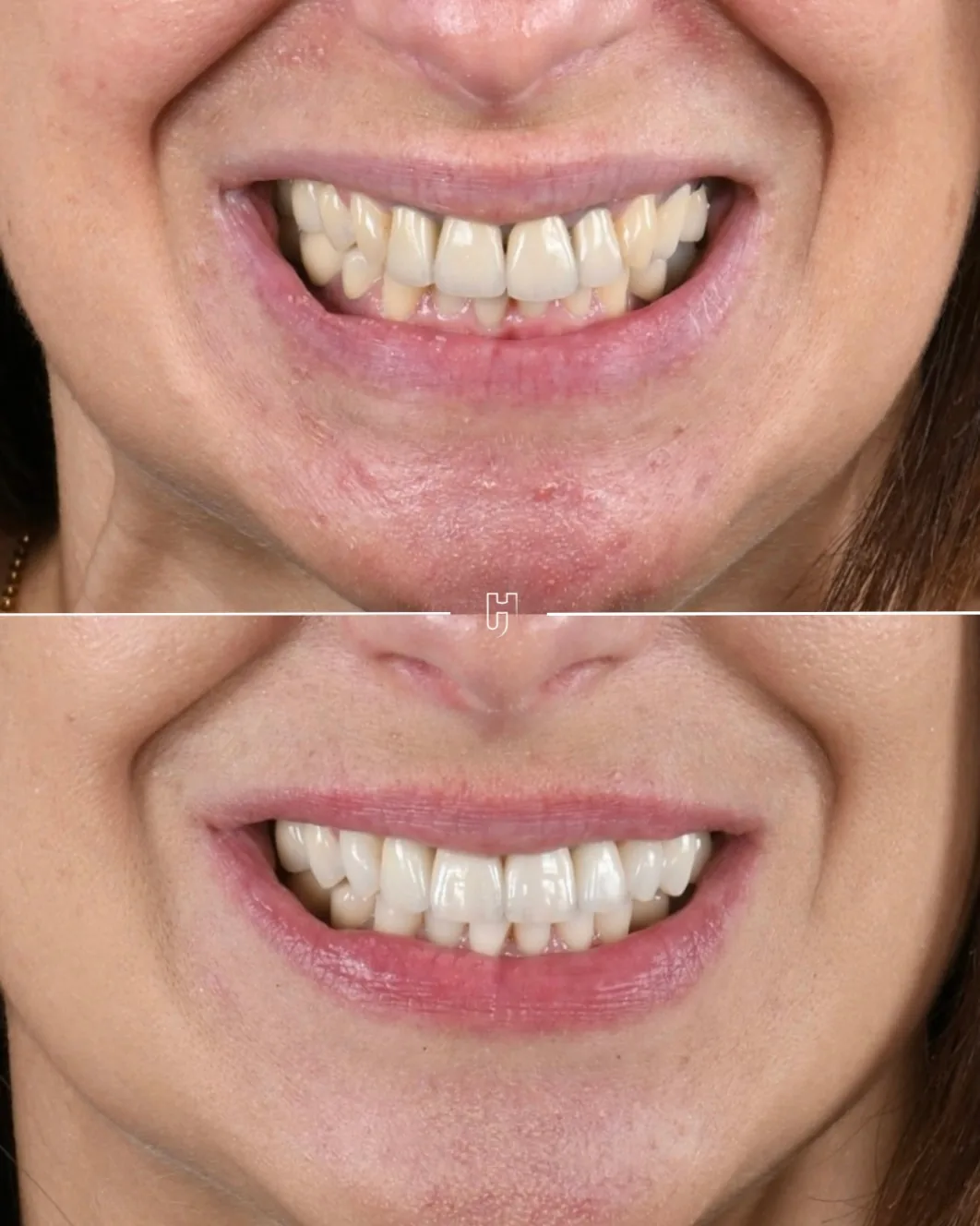
The ten monolithic zirconia crowns gave the upper teeth harmonious shapes and proportions, in keeping with the whitened lower teeth.
This case, treated at the practice in Levallois-Perret, shows the order of a complex rehabilitation: the health of the gum and teeth first, keeping what can be kept, then the aesthetic design. And sometimes the most important result is not only the one seen in the mouth: it is seeing a patient smile again.
Individual result: another case of six monolithic zirconia crowns is presented among the complex rehabilitations.