
Key points
- A ceramic veneer, feldspathic or e.max, costs €1,100 to €1,400 per tooth; this per-tooth amount covers the preliminary study, the plan, the trial in the mouth, the laboratory work, the fitting and the check-up.
- The cost varies with the number of teeth, the shade to be masked, any old restorations and the enamel available; preliminary treatments, such as whitening or gum correction, are priced separately.
- Aesthetic treatment is not reimbursed by the French national health insurance (Assurance Maladie); a detailed written quote is provided after the examination, before any decision.
How much does a dental veneer cost?
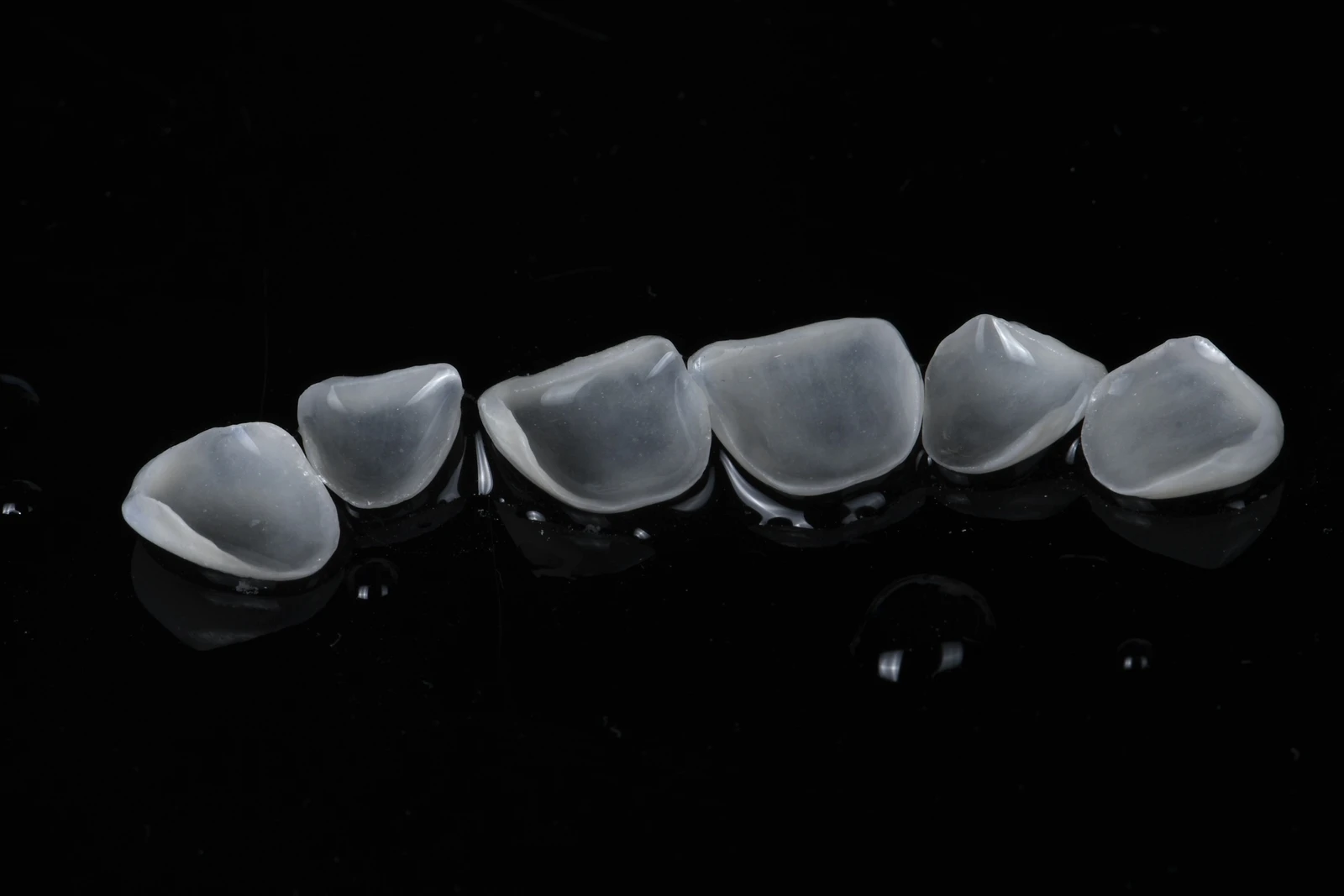
At the practice, a ceramic veneer costs €1,100 to €1,400 per tooth, depending on the complexity of the case, whether it is made of feldspathic ceramic or lithium disilicate (e.max). The amount is per tooth: for six veneers, from canine to canine, it applies six times, each within this range; for two incisors, twice.
The consultation that comes before any plan costs €23 to €60. These ranges are the ones published on the practice’s Doctolib page and on the fees page; no amount is set before the examination.
What does this amount include?
It pays for more than the ceramic. It covers the study of your case, with the examination, the photographs and the digital impression; the aesthetic plan, designed tooth by tooth, and its trial in the mouth with a mock-up; the temporaries; the making of the veneer in the laboratory; the bonding appointment; the check-up after fitting.
Treatment takes place in separate stages, over several appointments. Up to the preparation of the tooth, it is still possible to stop or to change the plan.
Why a range, and what makes the price vary?
Because no two veneers involve the same work. The number of teeth is the simplest factor. Then comes the starting situation: a dark shade to mask, old restorations to remove, reduced enamel that makes bonding more difficult, a poorly positioned tooth whose position the veneer has to compensate for.
The treatments that sometimes come before veneers are separate procedures, priced separately on the quote: whitening (€600 to €800 depending on the length of treatment), to start from a lighter shade; a gum correction when the gum margins are irregular; treatment of a tooth that needs to be dealt with first.
The range is the same for both ceramics, feldspathic or lithium disilicate (e.max): the choice between feldspathic and lithium disilicate depends on the situation, not on the price, and the quote specifies the ceramic chosen.
Are veneers reimbursed?
No. Treatment carried out for aesthetic reasons is not covered by the French national health insurance (Assurance Maladie), and the Carte Vitale is not used. Some top-up health insurance policies (mutuelles) include a fixed allowance for treatment that is not reimbursed: check with yours, using the quote, which details each procedure and its cost.
Composite or ceramic: what is the difference in price?
An aesthetic composite on a front tooth costs €63 to €1,500, depending on the number of teeth and the complexity: the range is wide because it runs from a localised touch-up to a plan involving six teeth.
For the same number of teeth, composite costs less than ceramic, and it is usually added without preparing the tooth. On the other hand, it gradually stains and is touched up at check-ups; ceramic keeps its shade, but cannot be reworked in the same way. The two do not correct the same things: it is not the price that decides between the two, but what the tooth needs.
Are there less expensive options?
Yes, when they are enough. Whitening (€600 to €800), when colour is the only issue. Composite, to lengthen an edge or close a small gap. Sometimes, doing nothing: a slightly irregular tooth is not an indication in itself.
Two veneers may also be enough where you had imagined six: when this is possible, and when it is not.
How does the quote work?
After the examination and, in most cases, once the plan has been tried in the mouth, a written quote sets out each procedure and its cost. You have the time you need to look it over, send it to your top-up insurer and ask your questions. Nothing begins until you have agreed.
Payment can be made by cheque, in cash or by bank card.
A price to weigh against lifespan
No lifespan can be promised, but a well-indicated, well-bonded veneer lasts for years, and it is looked after like a natural tooth: brushing, cleaning between the teeth, regular check-ups. The journal article on how long veneers last sets out what is known and what can weaken a veneer over time.
Frequently asked questions
Is the price the same for two veneers as for six?
The amount is per tooth, within the range given; complexity can vary from one tooth to another.
Does a veneer without preparation cost less?
No: the laboratory work and the planning stages are the same. See in which cases a veneer without preparation is possible.
Is there a charge for the consultation?
Yes, it costs €23 to €60. It comes before any plan and commits you to nothing: it is there to examine, to listen and to say what is indicated, or what is not.
Which methods of payment are accepted?
Cheques, cash and bank cards.