Getting her smile back, not changing it
She did not want a new smile. She wanted her own back: what time had gradually worn away.
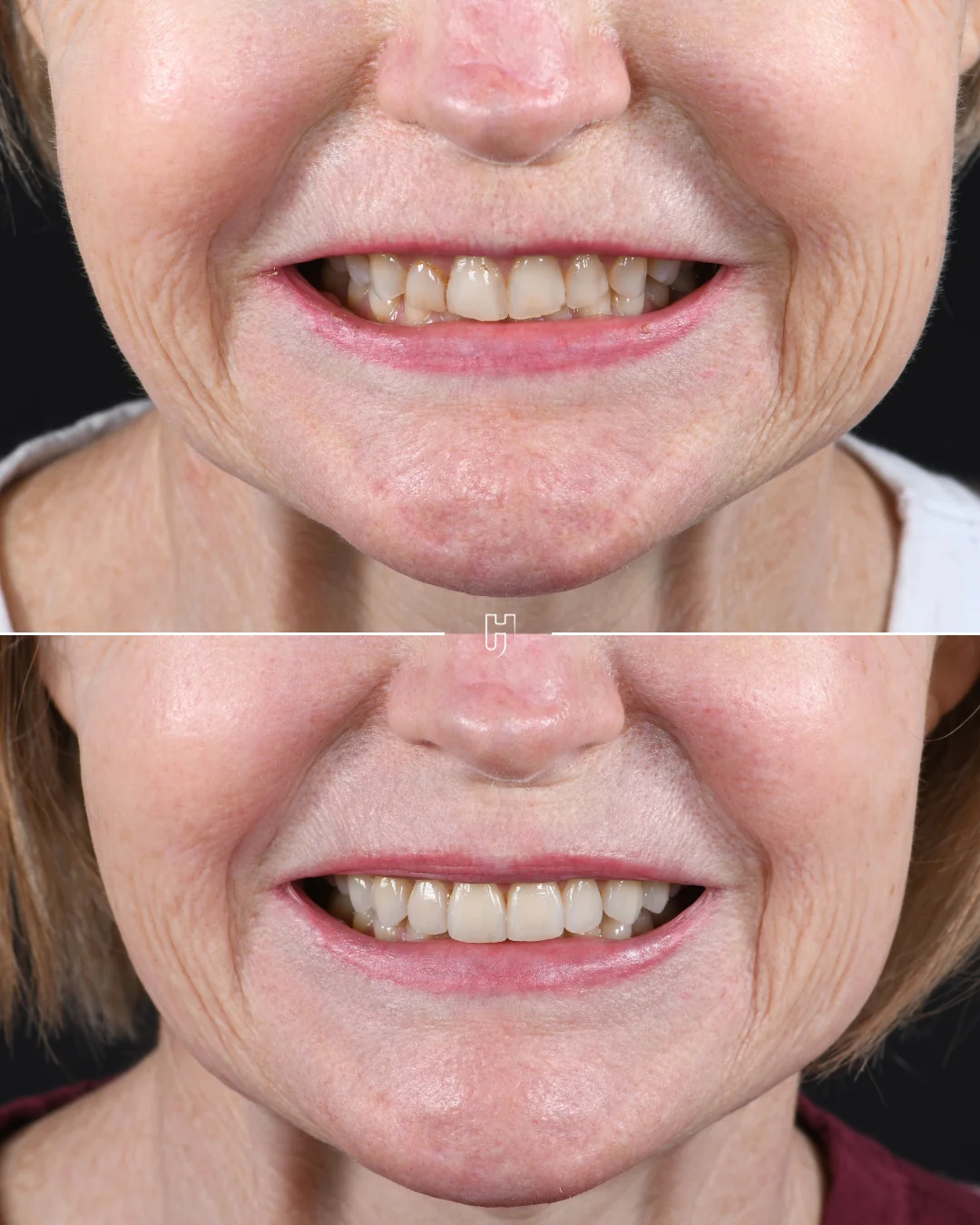
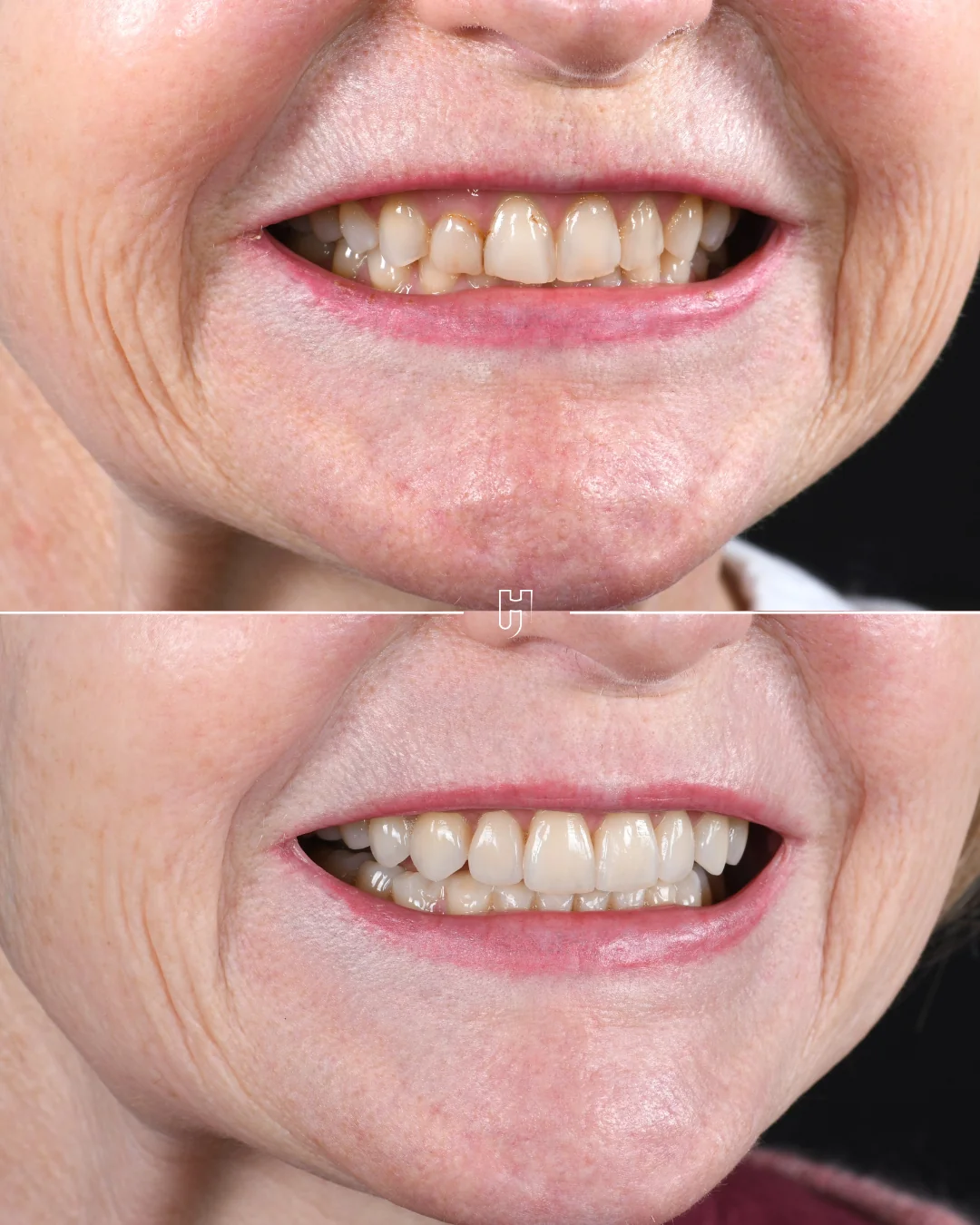
Years of bruxism and nail biting (onychophagia) had changed the shape of her teeth: marked wear by attrition, that is, by the teeth rubbing against each other, a loss of brightness, and a slight asymmetry of the gums between 12 and 22. She was considering veneers, with a very clear requirement: a discreet, natural result, true to who she is.
Rebuilding the original shapes, not a standard smile
Everything began with digital planning on SmileCloud. Not to project an idealised, standardised smile, but to rebuild the shapes her teeth had before the wear.
This starting point guided the whole treatment.
From the digital plan to the eight veneers
Treatment followed the plan, step by step.
A diagnostic wax-up, reproducing the recovered shapes in wax.
A gingivectomy guide, to even out the gum line at 12 and 22.
A targeted gingivectomy, performed with this guide.
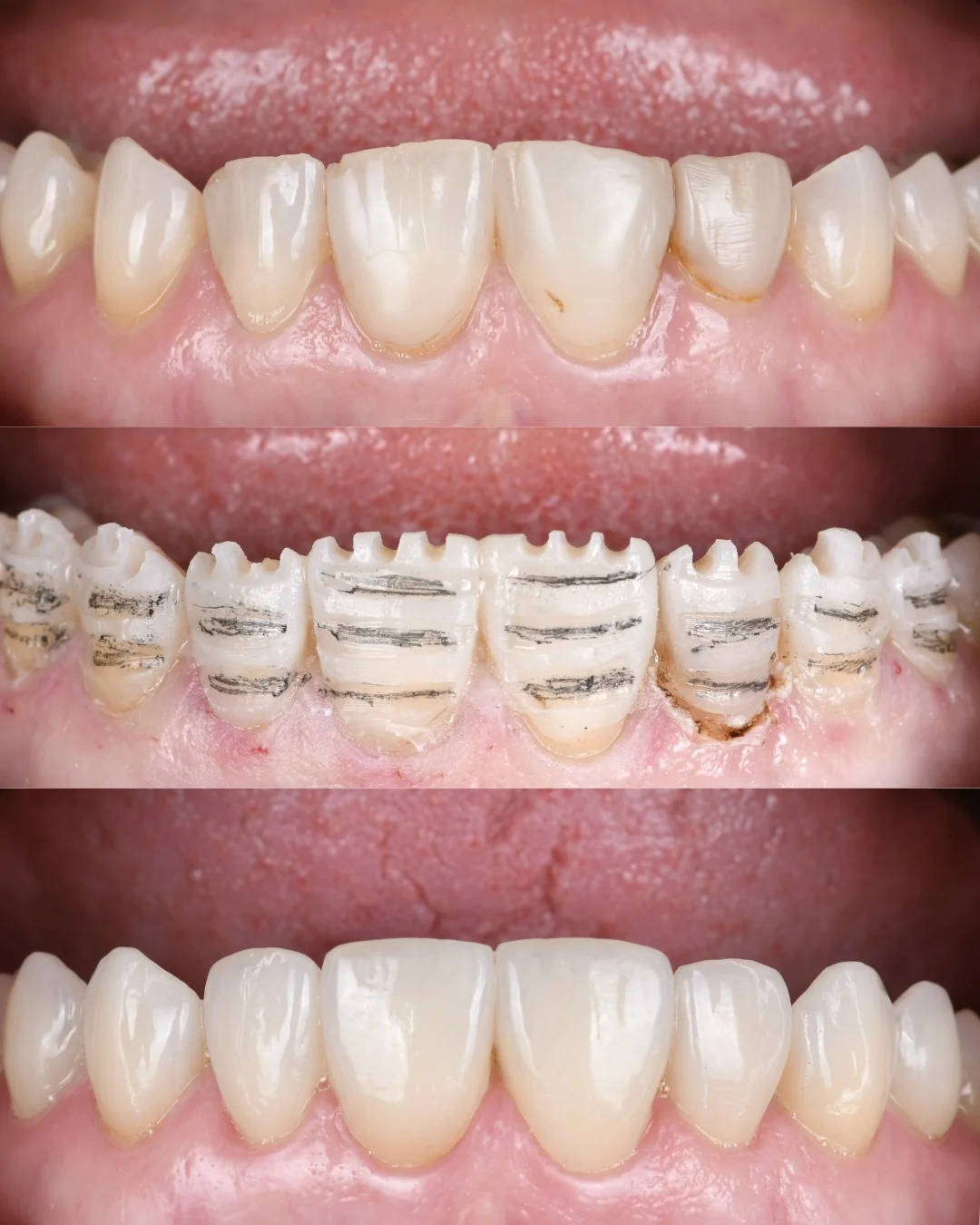
A mock-up, to calibrate the preparations and stay as conservative as possible.
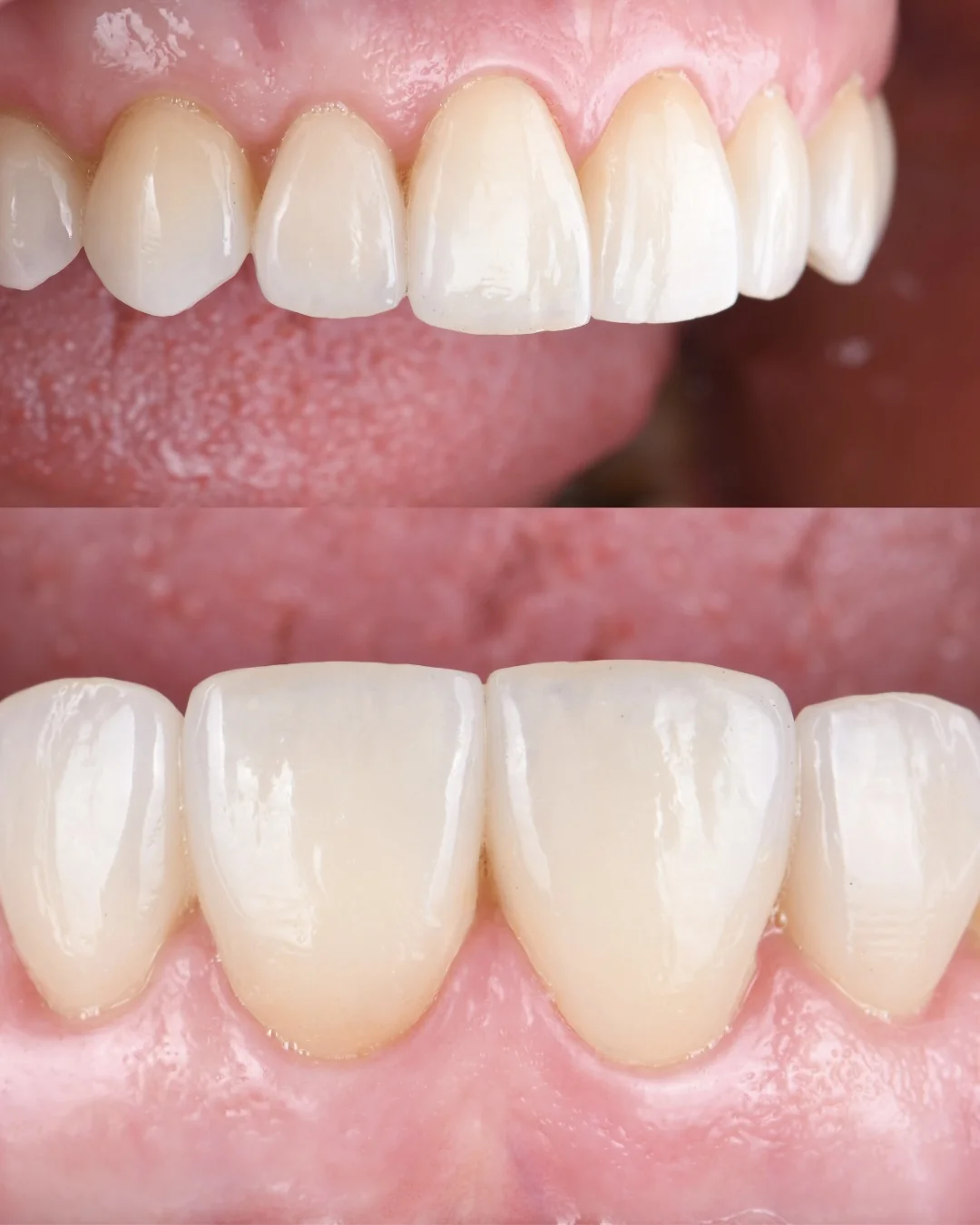
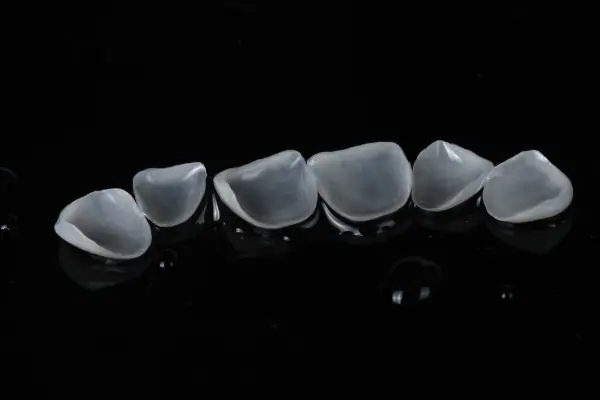
Eight veneers in lithium disilicate, from 14 to 24: from the upper right first premolar to the upper left first premolar.
A smile that is hers again
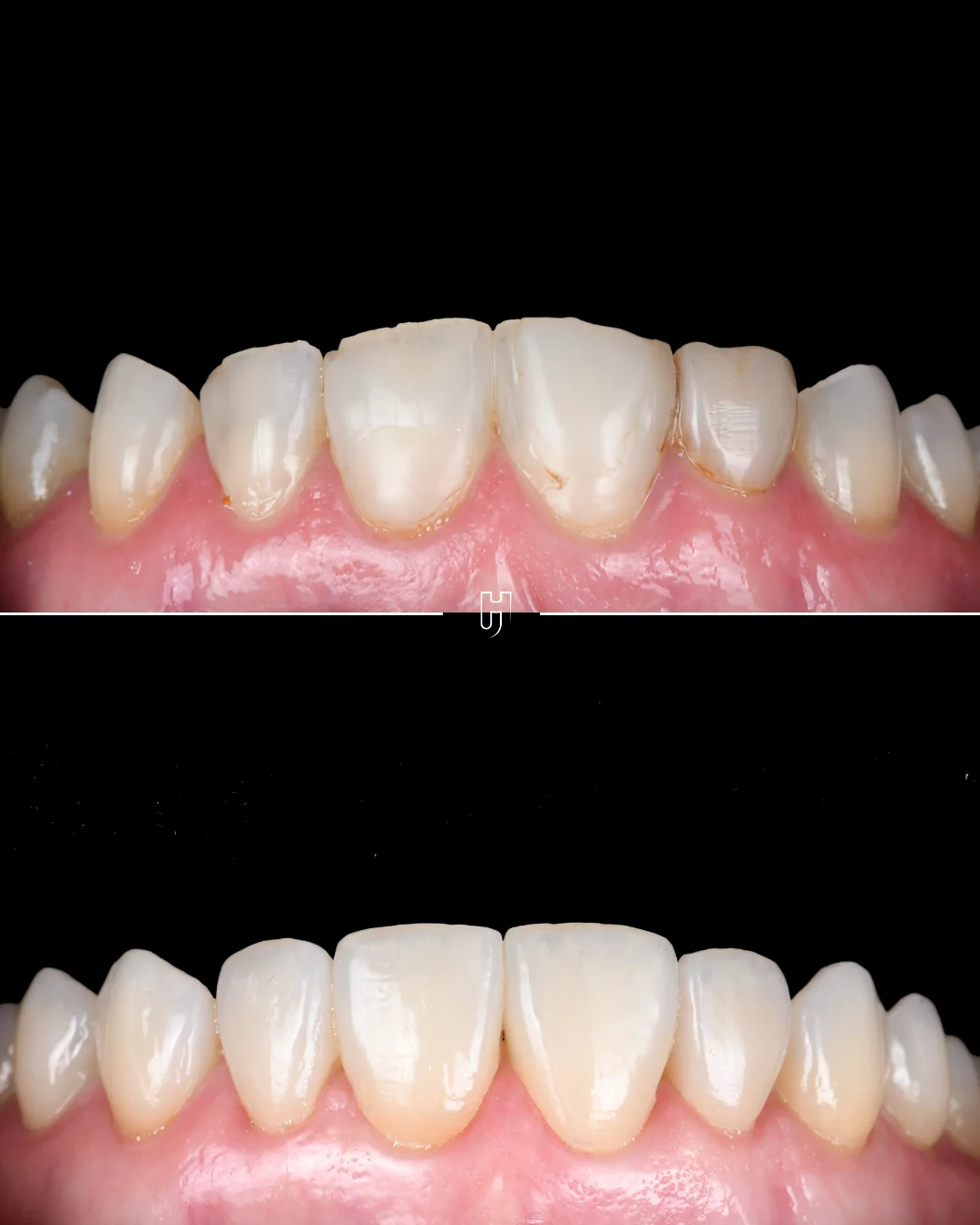
The eight veneers gave the teeth back their shape and brightness, and the gum line at 12 and 22 is now even. The smile obtained is still hers: that was her request.
Individual result: what makes veneers look natural is covered in “How do you get veneers that look natural?”, and the management of tooth wear in the page on tooth wear.