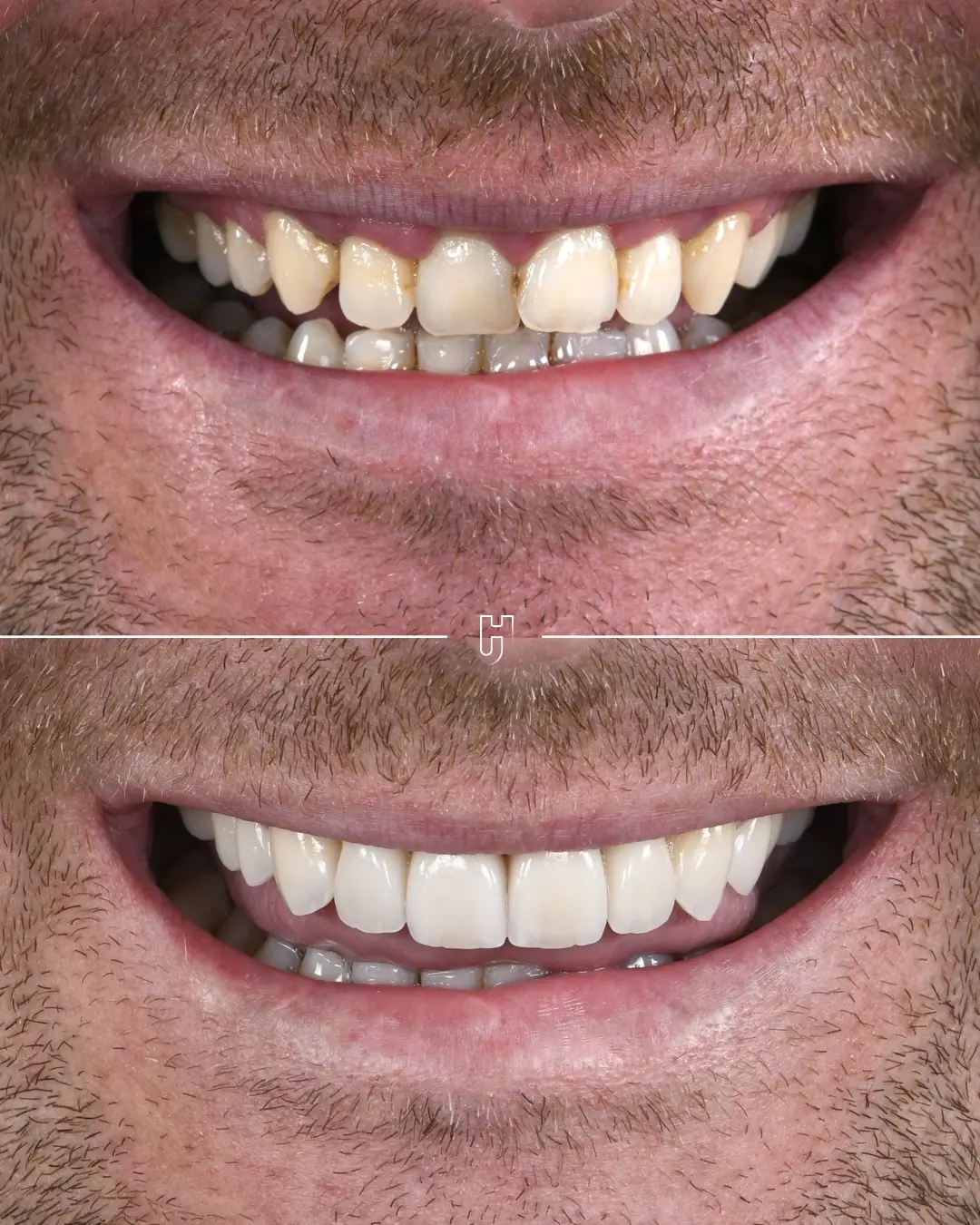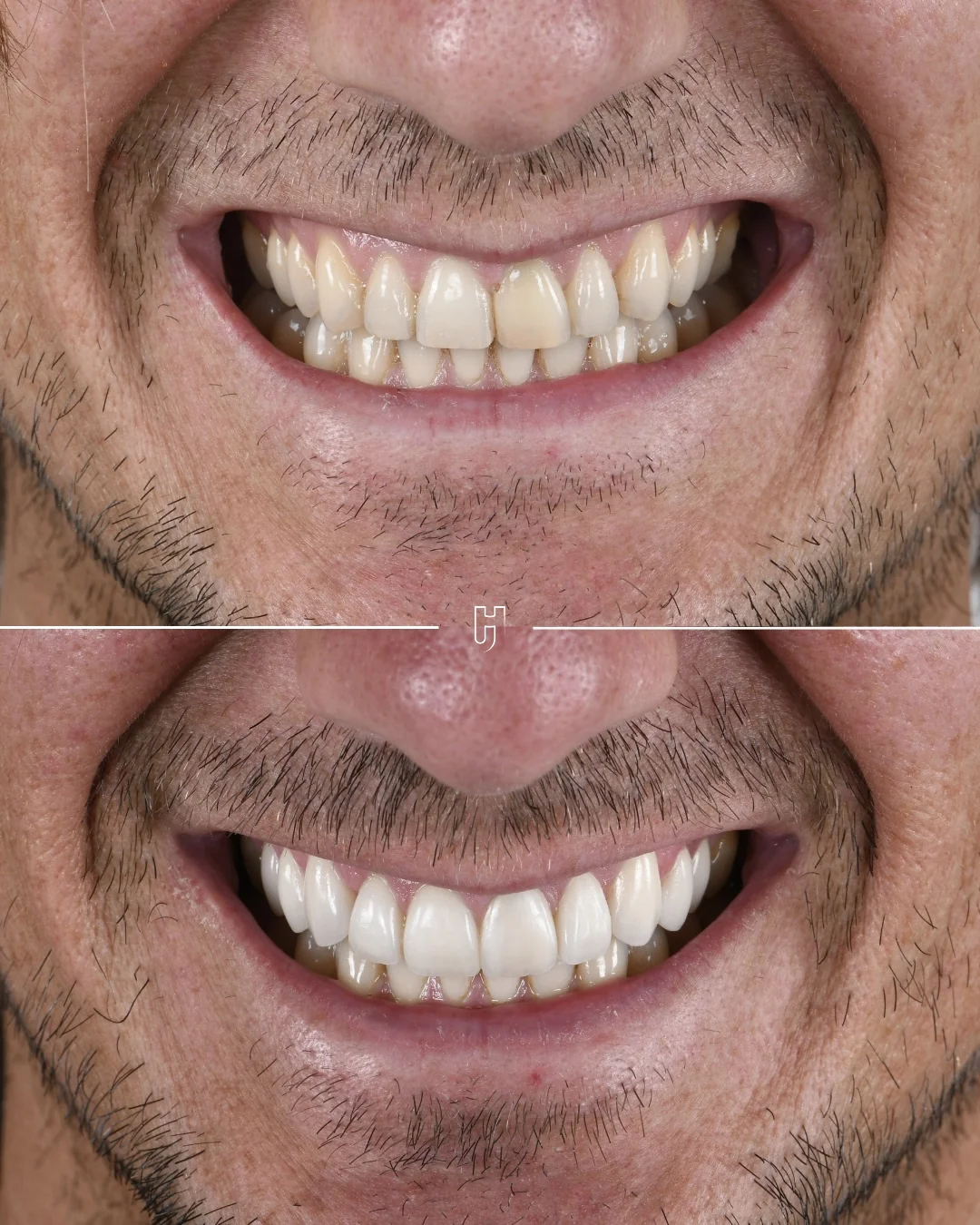
Starting point
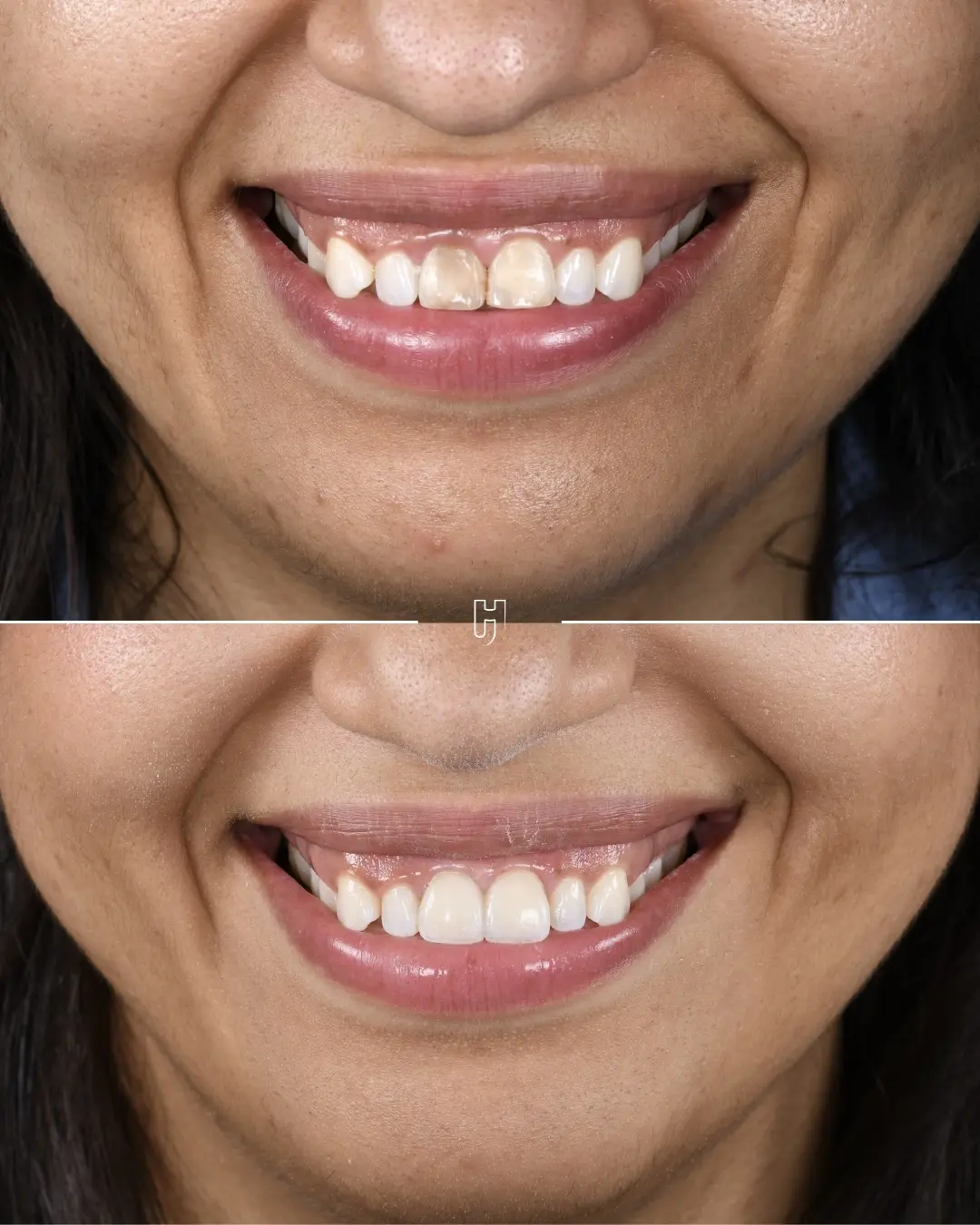
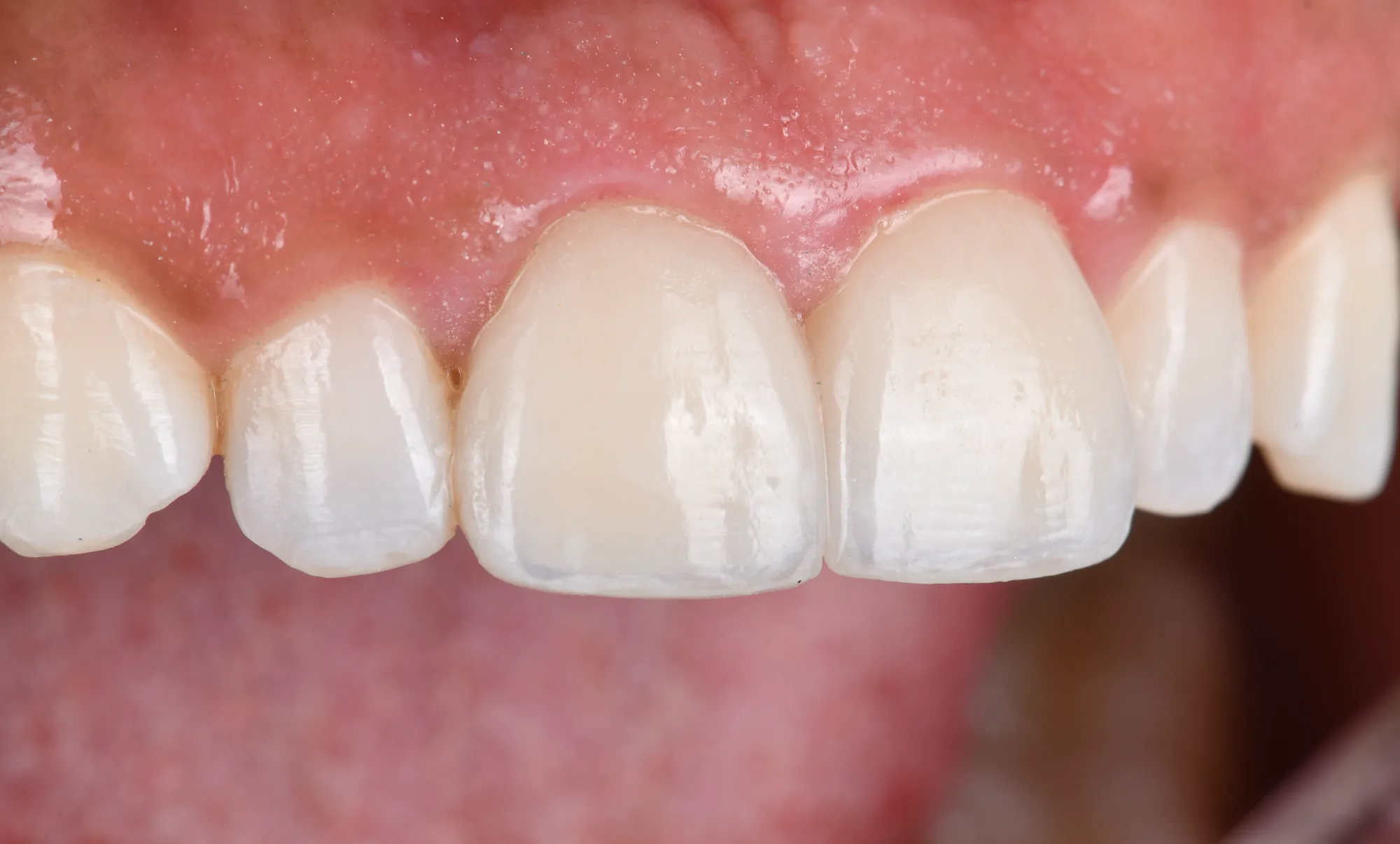
The request mainly concerned the colour and proportions of the two central incisors, which were felt to lack presence in the smile. One of them, which was root-treated, showed marked discolouration.
The aim was to harmonise these two teeth while limiting the restorations to the central incisors.
Diagnosis
The two incisors had different starting shades. This difference had to be taken into account to avoid relying entirely on the masking ability of the ceramic to correct the colour.
The photographic analysis and the aesthetic plan also revealed proportions that needed rebalancing and a localised asymmetry of the gum line.
The chosen strategy therefore combined prior correction of the colour and the gum line with a preparation guided by the desired final volume.
Treatment approach
Internal bleaching of the root-treated incisor first brought its shade closer to that of the neighbouring incisor.
The aesthetic plan was then tried in the mouth with a mock-up, a temporary model for assessing the new proportions and how they blend into the smile before preparation.
A localised gingivectomy on the upper right central incisor (tooth 11) completed the harmonisation of the gum line.
The preparations were made through the mock-up, to calibrate them against the desired final volume and to preserve as much enamel as possible.
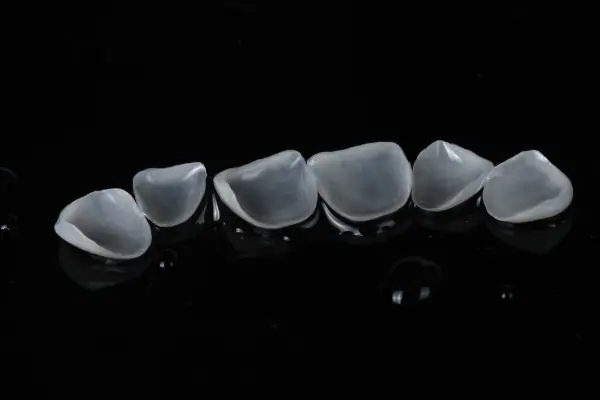
Two ceramic veneers in lithium disilicate were then made and bonded to complete the correction of the shape, proportions and colour.
Follow-up
Follow-up for this type of treatment covers the aesthetic and functional integration of the veneers, the condition of the gums, the bond between the veneers and the teeth, and the bite.
Check-ups make it possible to monitor these elements over time and to adapt maintenance if necessary.