A root-treated incisor, darker than its neighbours
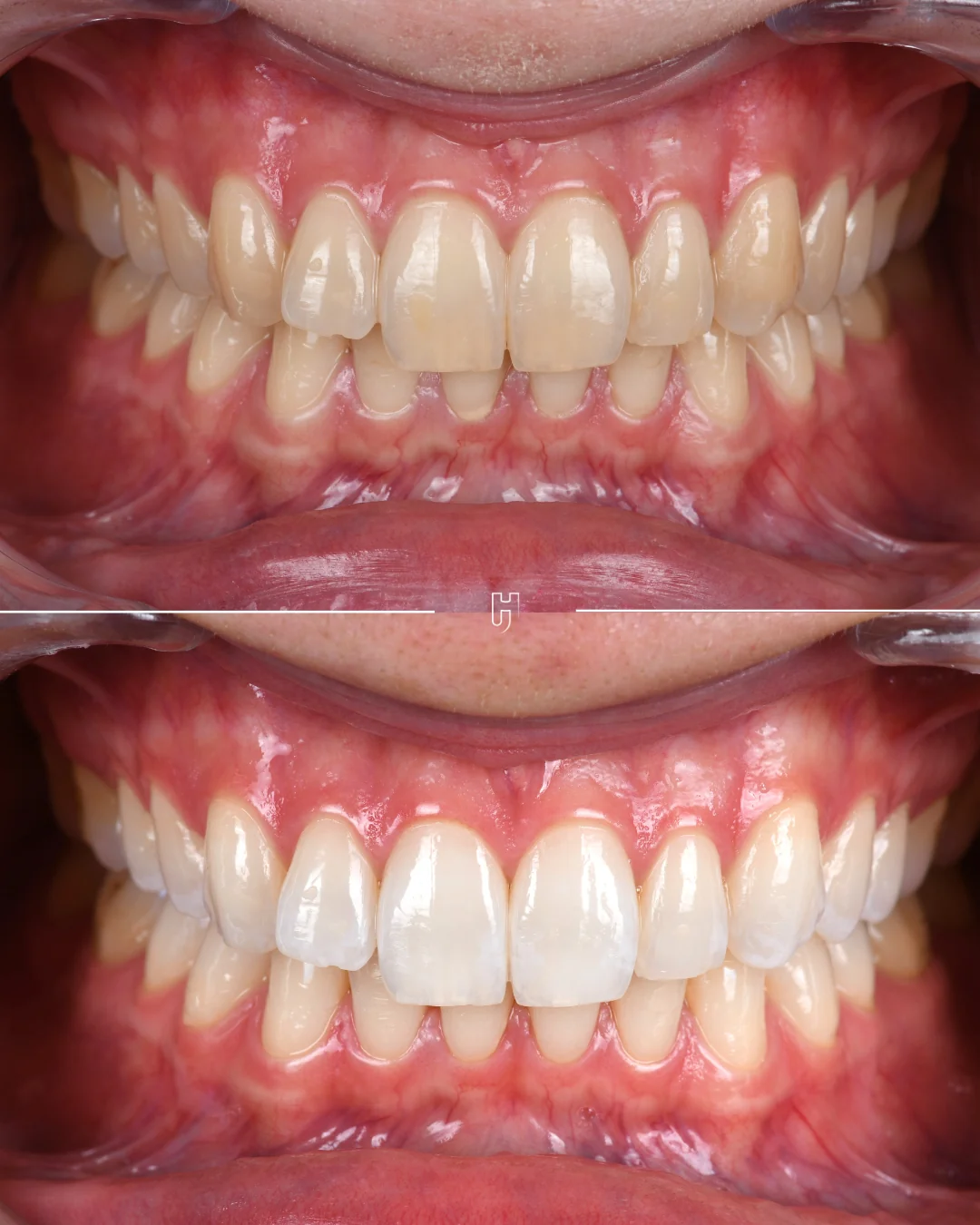
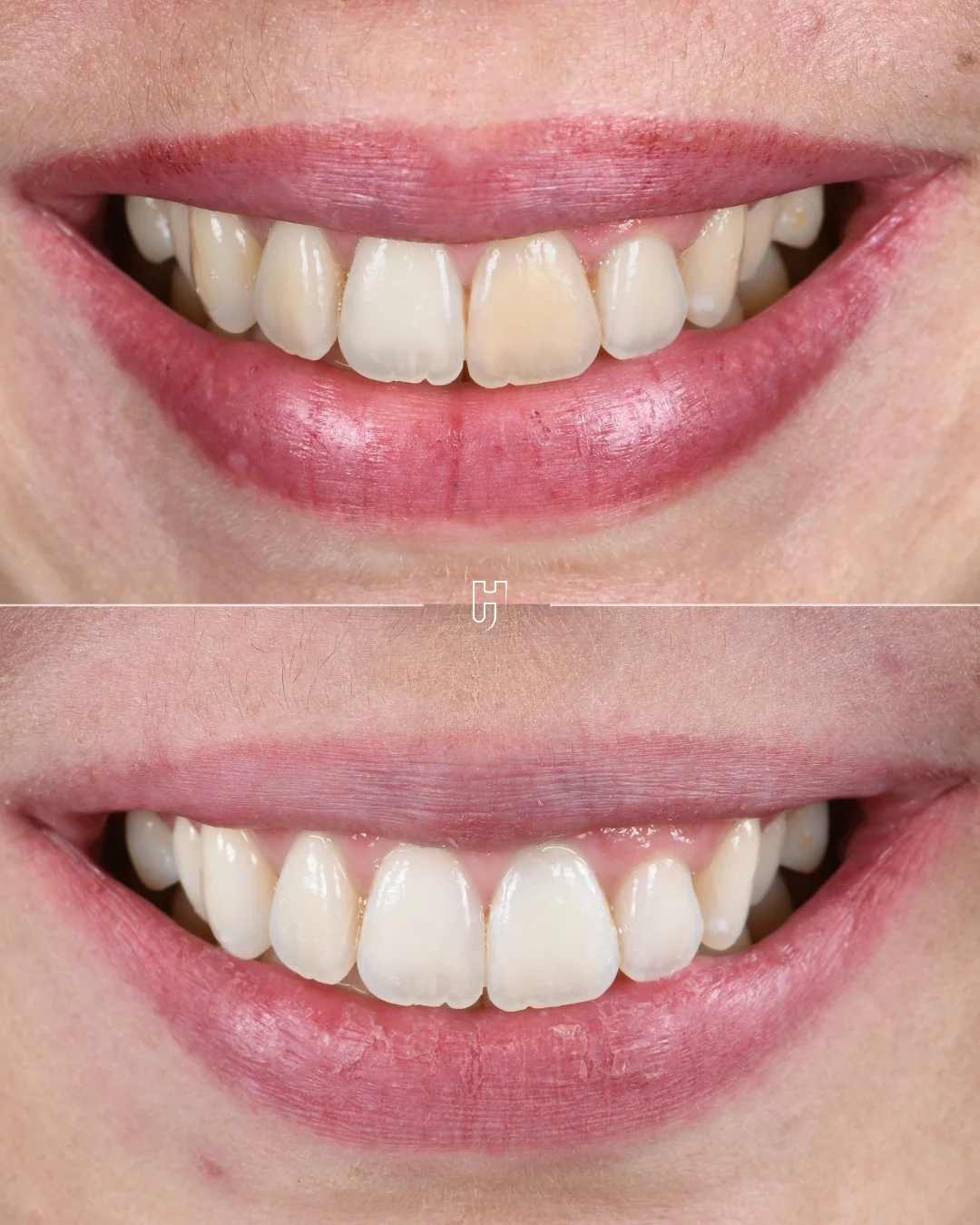
This patient came in because the shade of her teeth looked uneven. Tooth 21, the upper left central incisor, had been root-treated: it showed marked discolouration, clearly darker than the neighbouring teeth.
The shade of the smile as a whole was also uneven.
Stabilising the gums before any cosmetic treatment
Two colour problems overlapped: an overall shade to lighten, and the discolouration specific to tooth 21, coming from inside the tooth after its root canal treatment. Discolouration of this kind responds less well to whitening applied to the outside alone.
Treatment followed a step-by-step approach. The first step was a full clean-up, periodontal care and oral hygiene instruction, to stabilise the health of the gums before considering any cosmetic treatment.
Whitening the whole smile, then tooth 21 from the inside
The cosmetic strategy followed two steps, in this order.
External whitening with 10% carbamide peroxide, in trays at home for three weeks: to improve the brightness of the whole smile and set a uniform reference shade.
Internal bleaching of tooth 21, renewed three times: to reduce the discolouration that appeared after the root canal treatment, and bring the tooth closer to the shade obtained with external whitening.
A harmonised shade, without any restoration
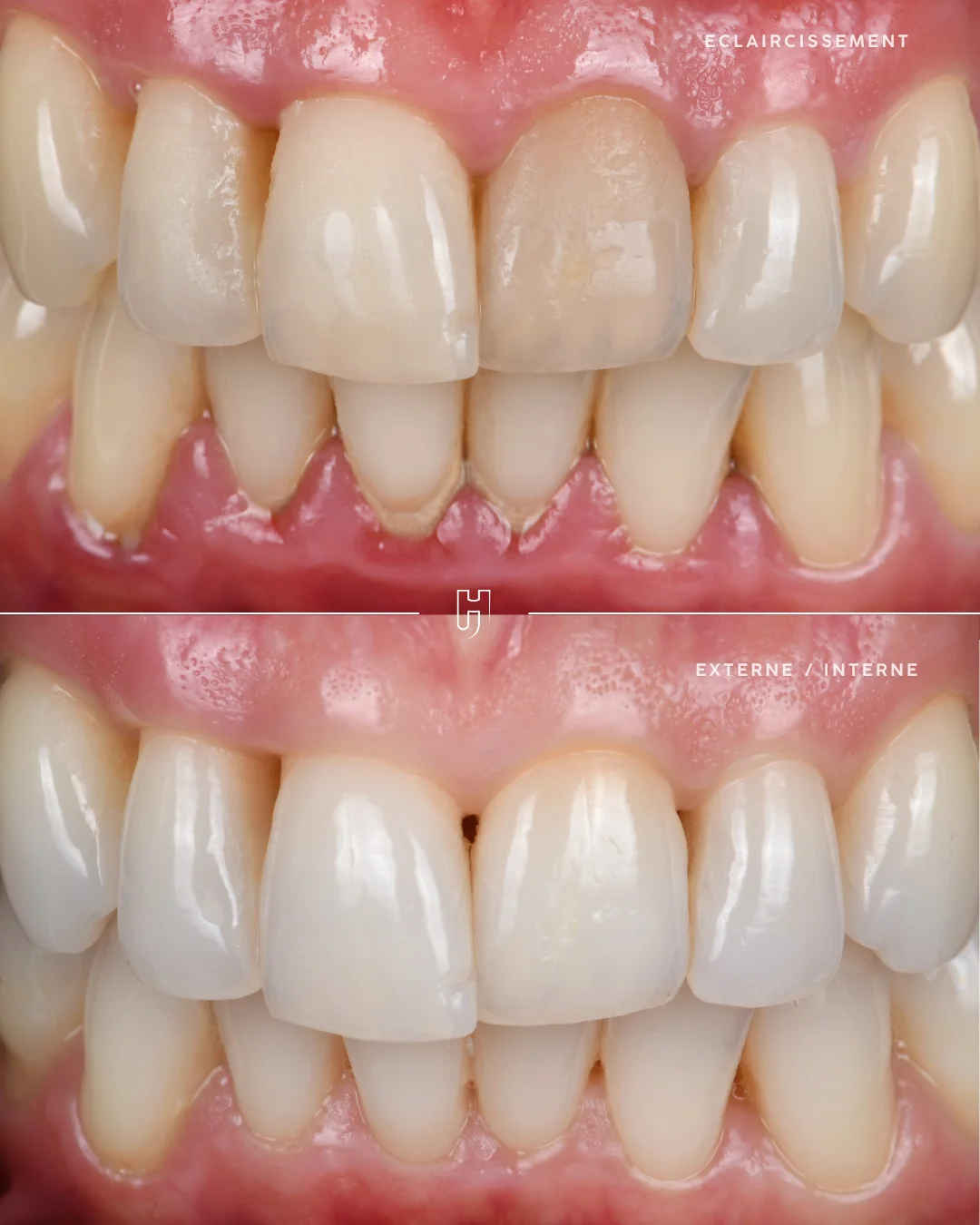
Tooth 21 came closer to the shade of the neighbouring teeth, and the smile regained a more uniform colour, without a veneer or a crown.
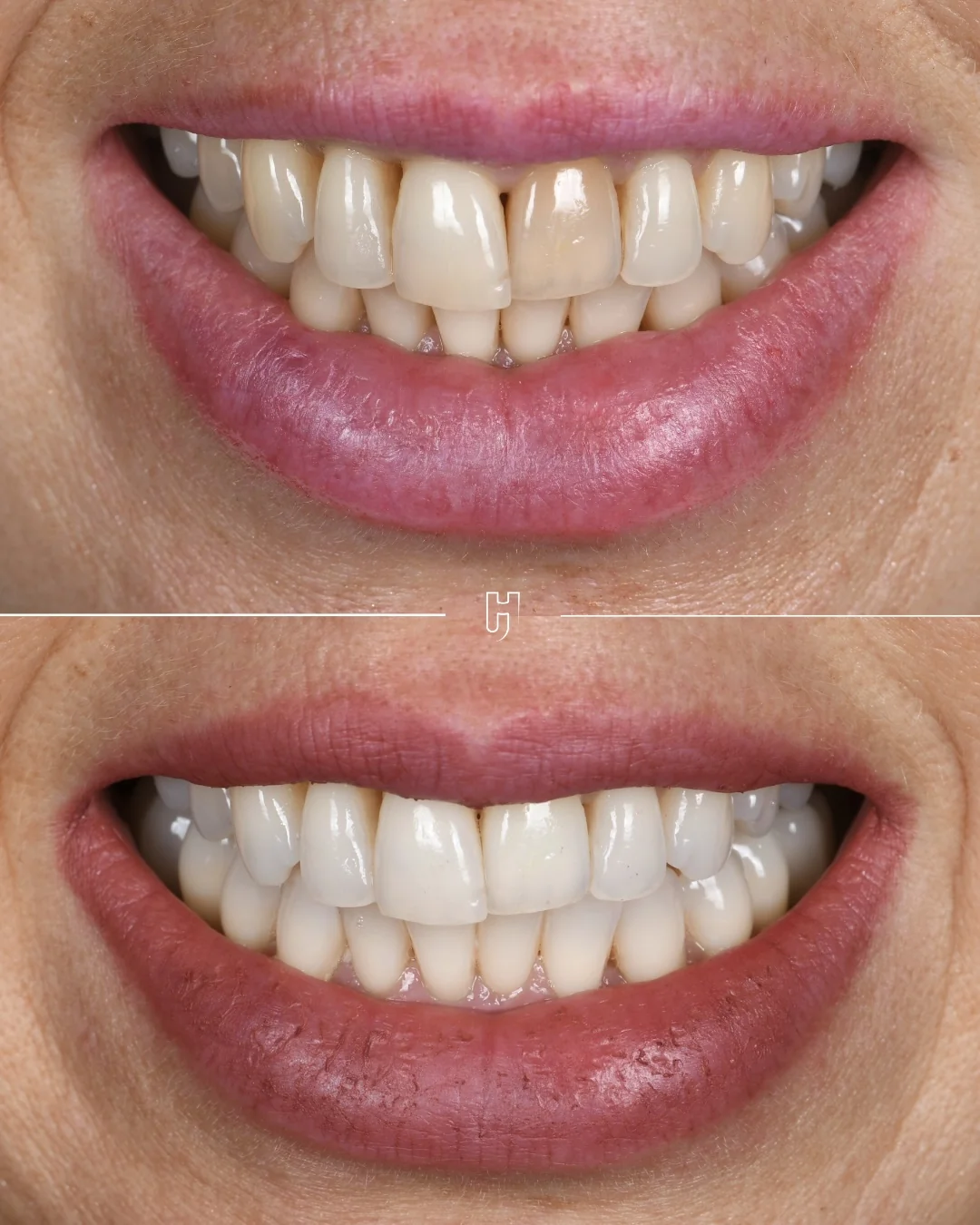
This gradual sequence often makes it possible to avoid more invasive restorations while harmonising the shade of the whole smile. What is commonly called teeth whitening, and what dentists call bleaching, was done here in two stages: from the outside for the whole smile, from the inside for the root-treated tooth alone. The effects on enamel and sensitivity are covered in “Does whitening damage the teeth?”; the case of internal bleaching of another root-treated incisor shows a similar situation.