A root-treated incisor that had darkened
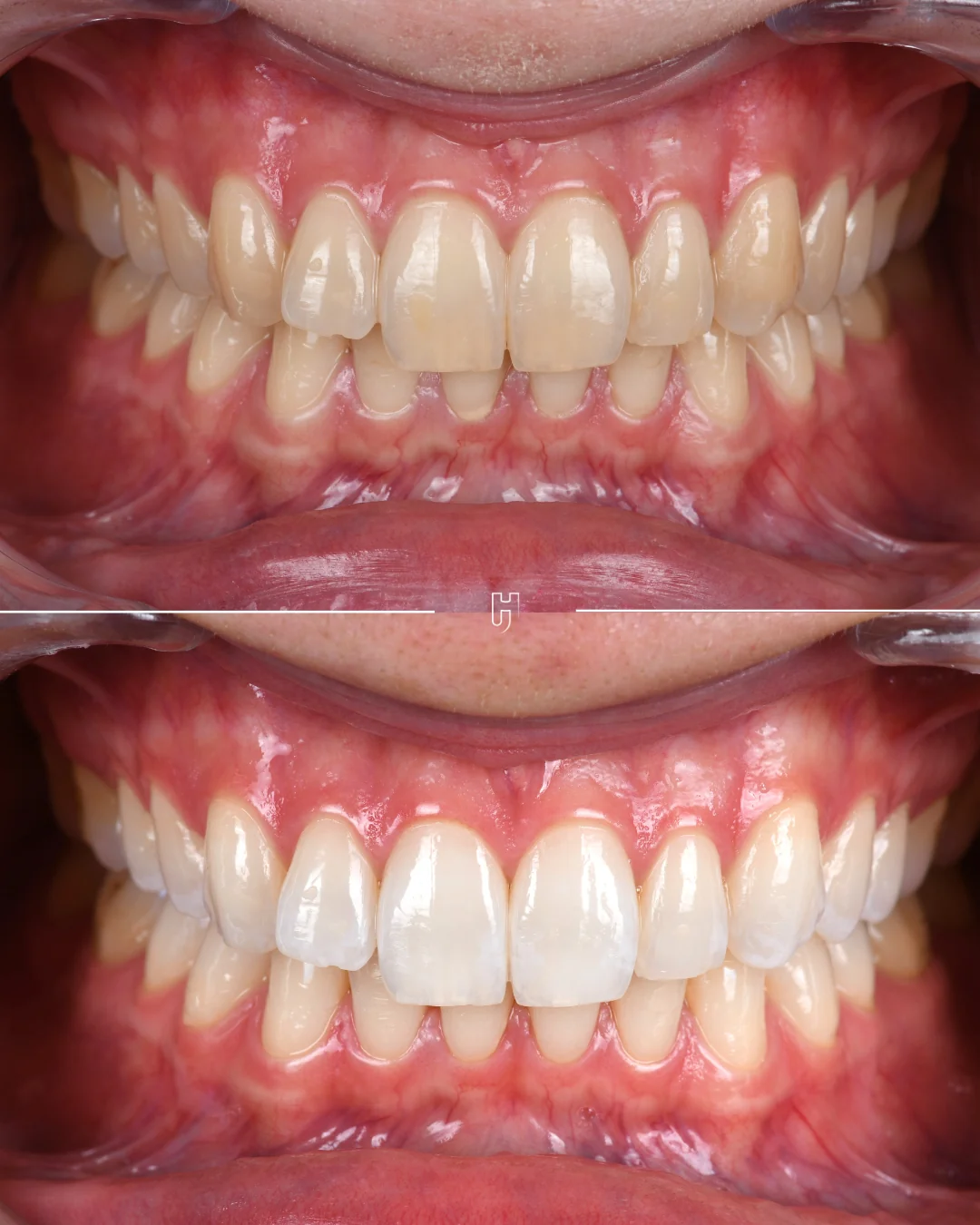
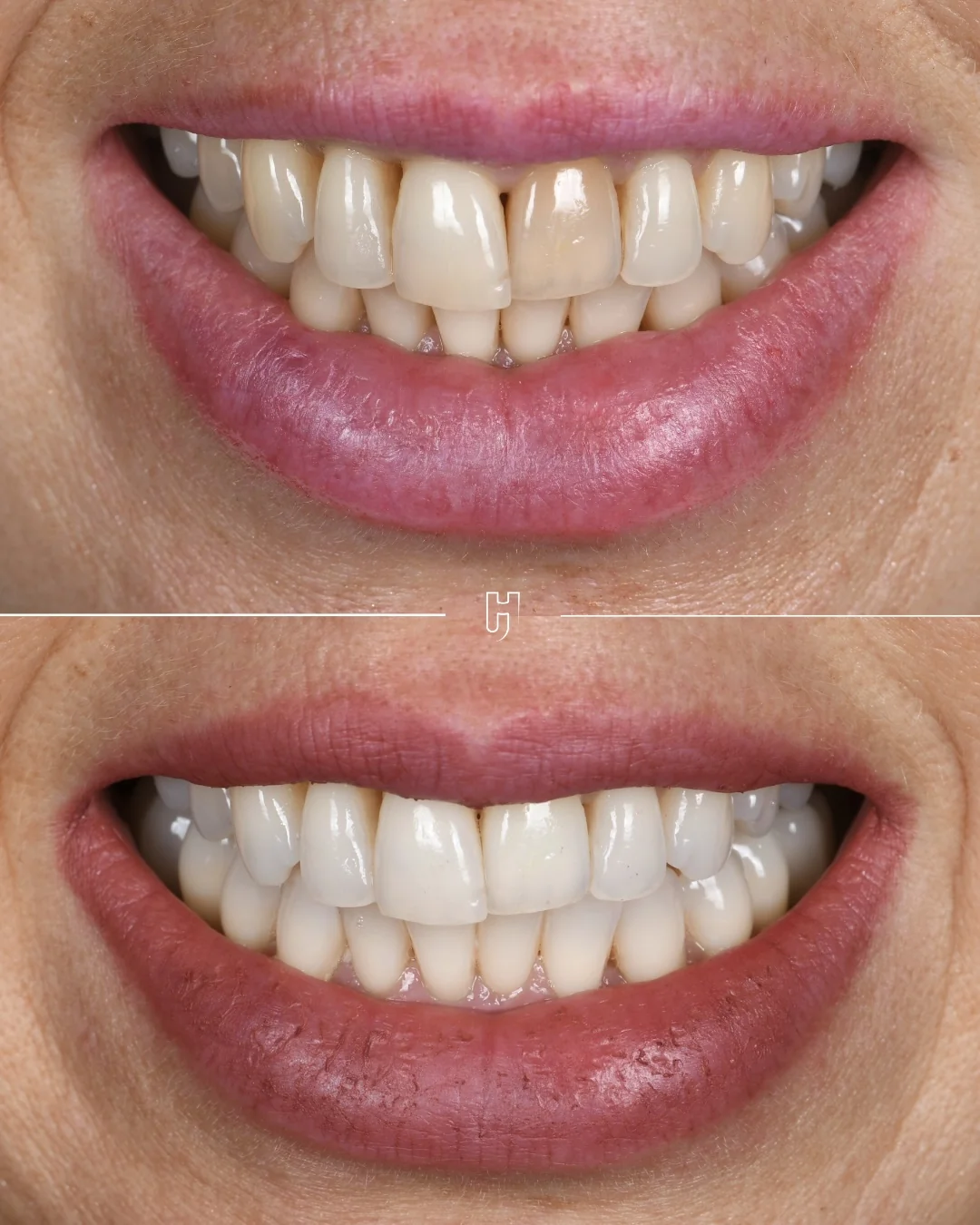
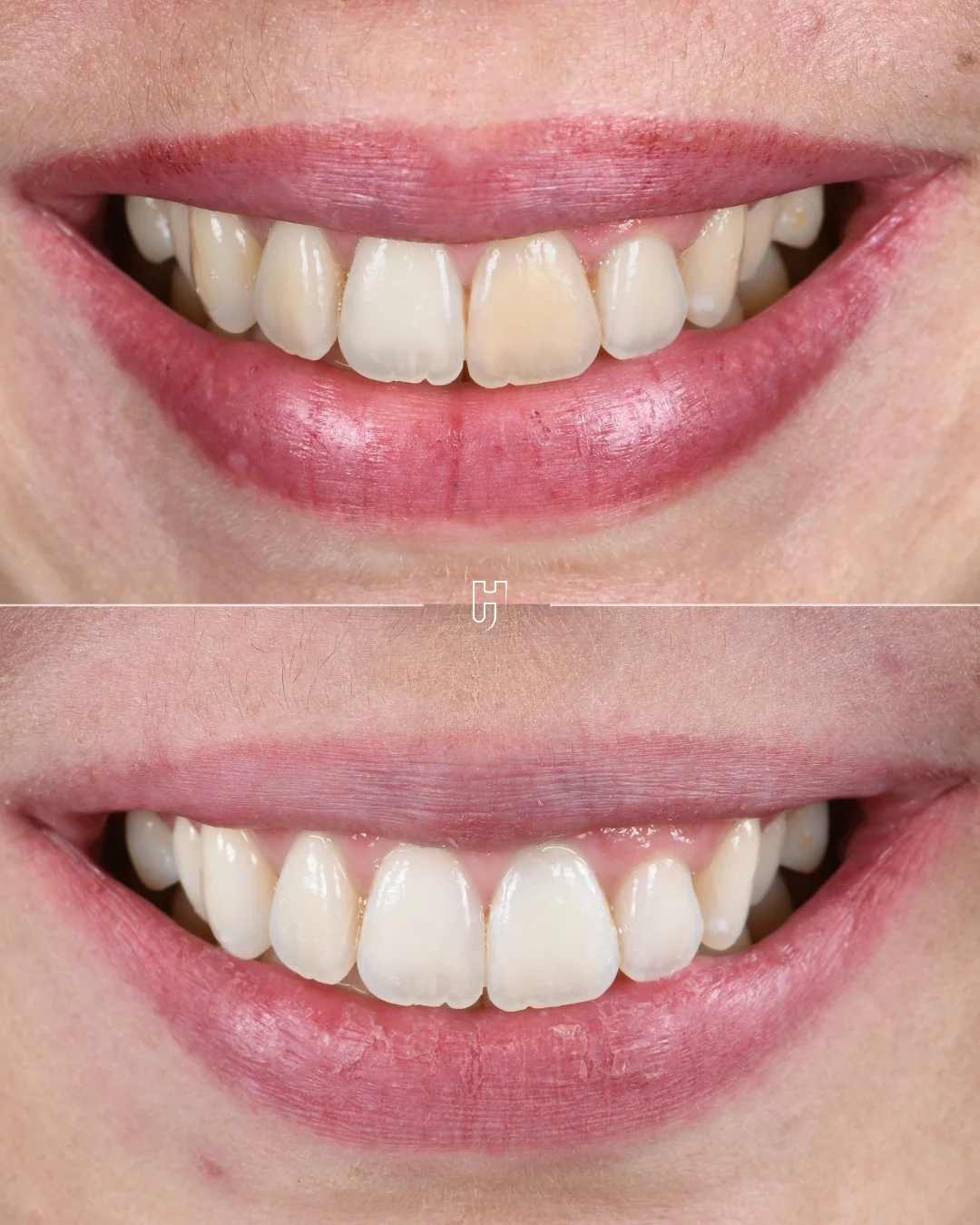
The upper left central incisor (tooth 21) was a non-vital tooth, in other words it had been root-treated, and it had gradually darkened: the difference in colour from its neighbour was clearly visible.
Beyond this localised discolouration, the colour of the smile as a whole was uneven. A real aesthetic imbalance: sometimes barely noticeable to others, but often very much on the patient’s mind.
Two colour problems, two treatments
Two problems overlapped: an uneven overall shade, and a discolouration specific to the upper left central incisor (tooth 21), coming from inside the tooth. Discolouration of this kind responds less well to whitening applied to the outside alone: it is better treated from the inside, with internal bleaching.
This kind of situation can seem simple. Yet everything rests on getting the indication right: knowing how to analyse the situation, choosing the most appropriate treatment and not doing more when it is not needed. Here, no veneer or crown was necessary.
Two stages: external whitening, then internal bleaching
External whitening: trays worn at night for three weeks, with a 10% carbamide peroxide gel. The aim: to even out the overall colour, soften the contrasts and get back to a more harmonious base.
Internal bleaching of the upper left central incisor (tooth 21): as a second step, carbamide peroxide was placed in the access cavity, inside the tooth. This internal bleaching was repeated four times, until a stable, balanced and natural-looking result was obtained.
A consistent colour again
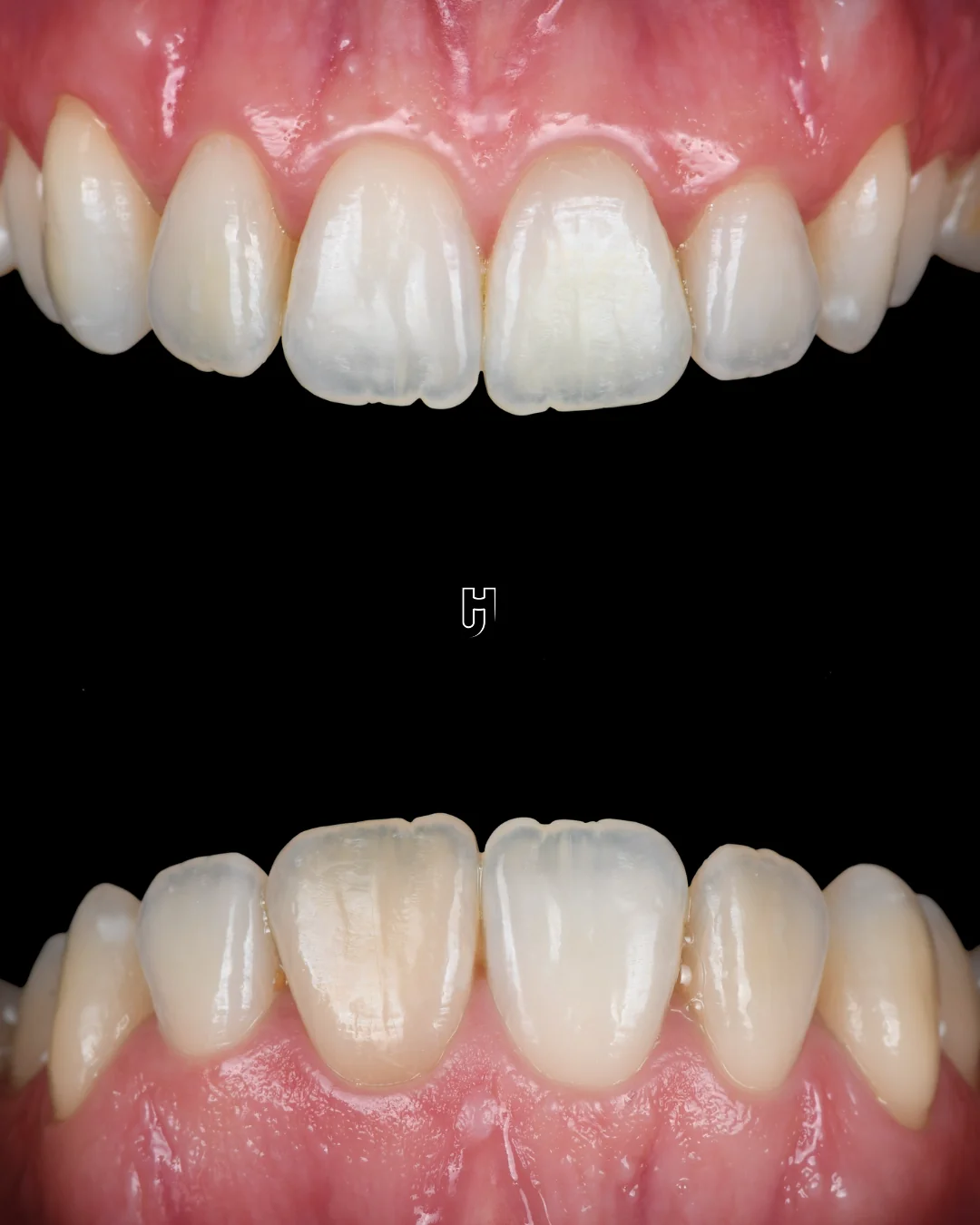
The upper left central incisor (tooth 21) regained a shade close to that of its neighbour, and the smile a more even colour: the photographs show the same teeth, before and after the protocol.
In aesthetic dentistry, sophistication does not always lie in the complexity of the treatment. It often lies in an accurate diagnosis and the right choice of treatment. The article “How can a darkened root-treated tooth be lightened?” describes in detail how internal bleaching is carried out, what can be expected from it and what its risks are. A different situation, with no root-treated tooth: the case of whitening with trays, where whitening alone was enough.