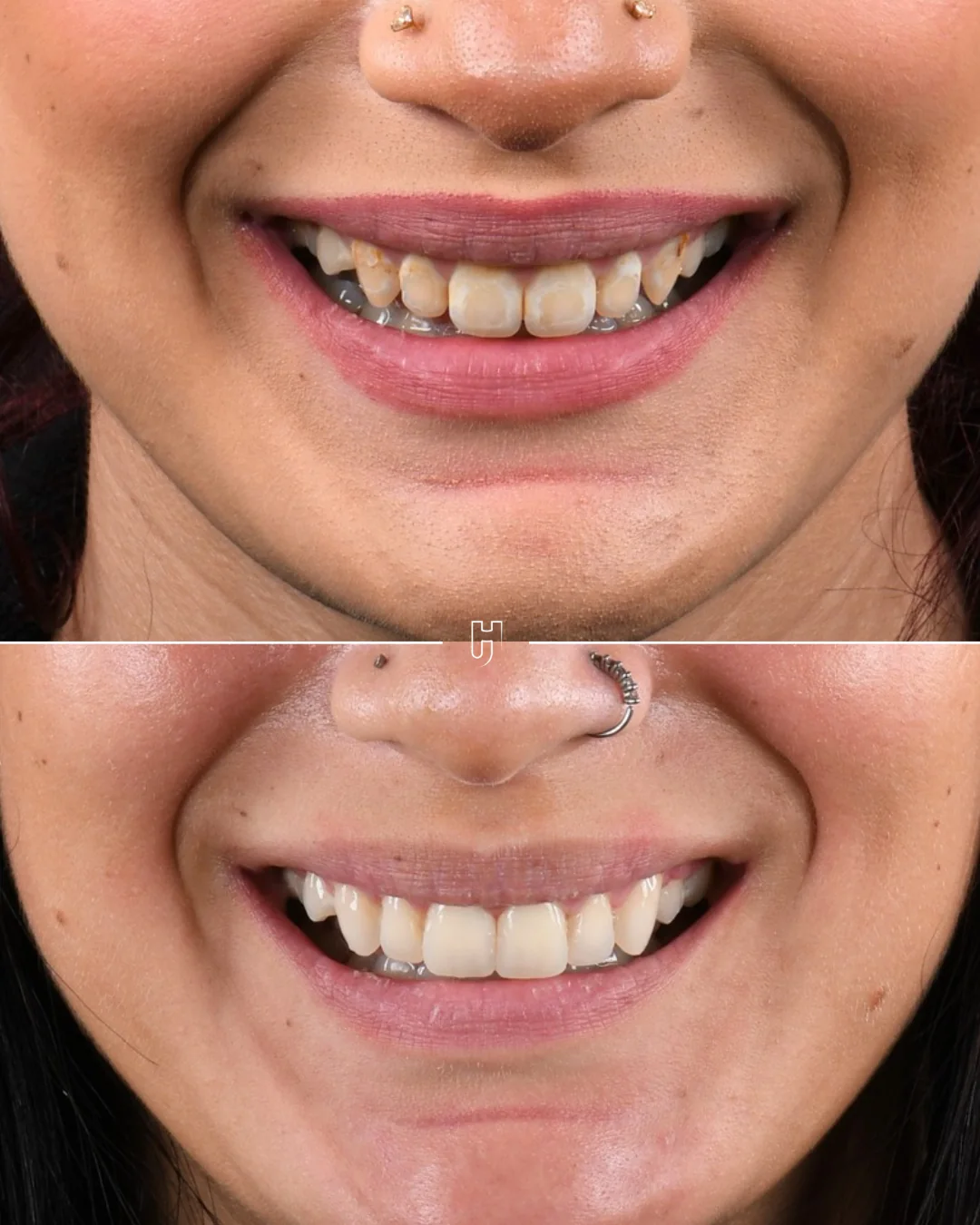
White spots and caries around the brackets
This young patient was very self-conscious about her smile. She had extensive white spots around the brackets of her orthodontic appliance, together with carious lesions at the neck of the teeth, near the gum, in a context of insufficient oral hygiene.
These spots correspond to enamel that has become porous, where plaque built up around the brackets during orthodontic treatment.
Treat first, then reduce the spots
The appliance was removed as a matter of urgency. Treatment then proceeded step by step: management of the active carious lesions, three weeks of at-home whitening, then micro-abrasion and resin infiltration to reduce the white spots.
After these steps, significant loss of tooth structure remained on the labial surfaces, that is, the visible surfaces of the teeth: a volume of enamel that neither whitening nor infiltration restores.
A digital design, then injection-moulded composite veneers
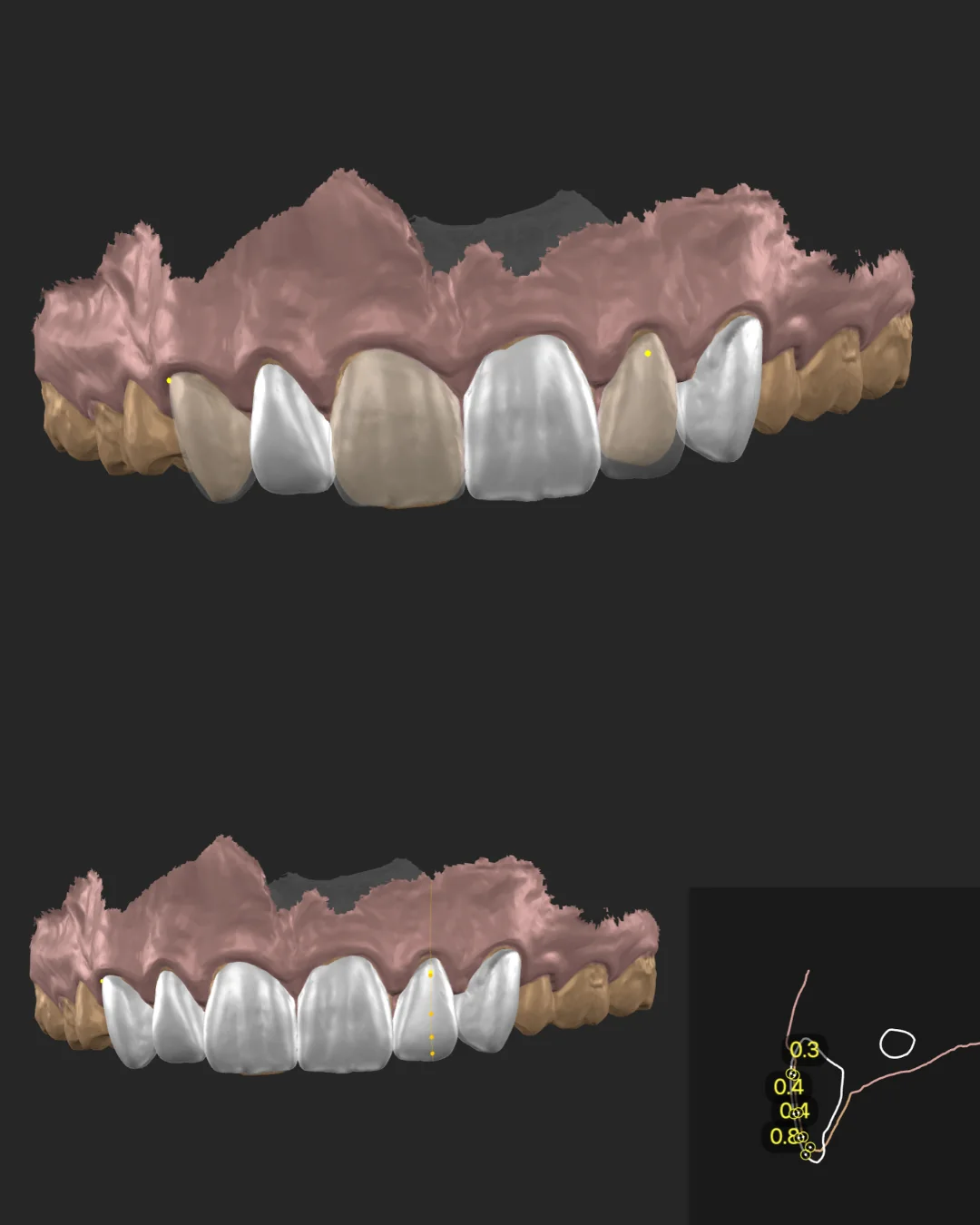
A digital wax-up made it possible to define composite thicknesses consistent with the volumes to be restored.
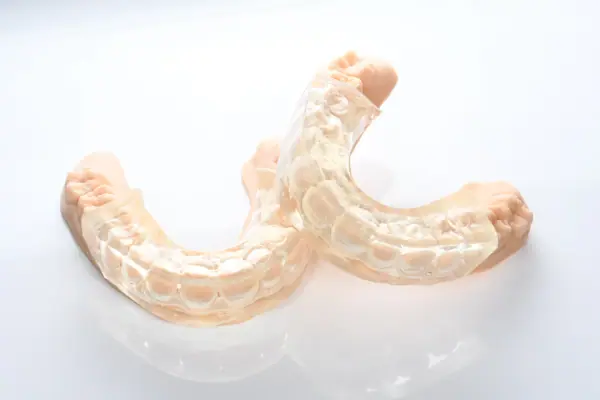
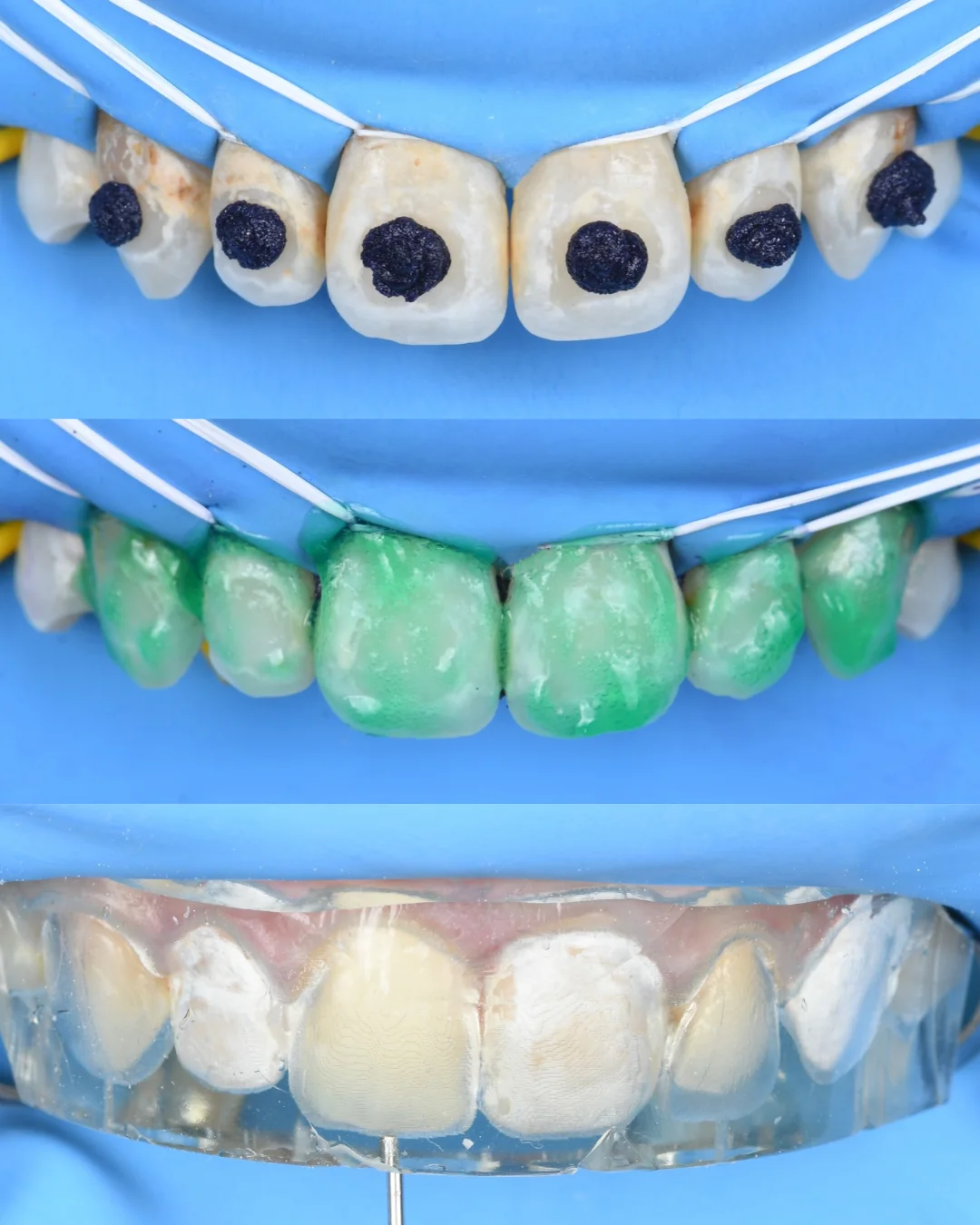
Injection-moulded composite then restored these volumes: composite veneers, injected through a clear key that transfers the shapes of the design into the mouth. The shapes were also slightly adjusted to meet the patient’s wish, as she found her teeth too rounded.
Composite veneers that restore first
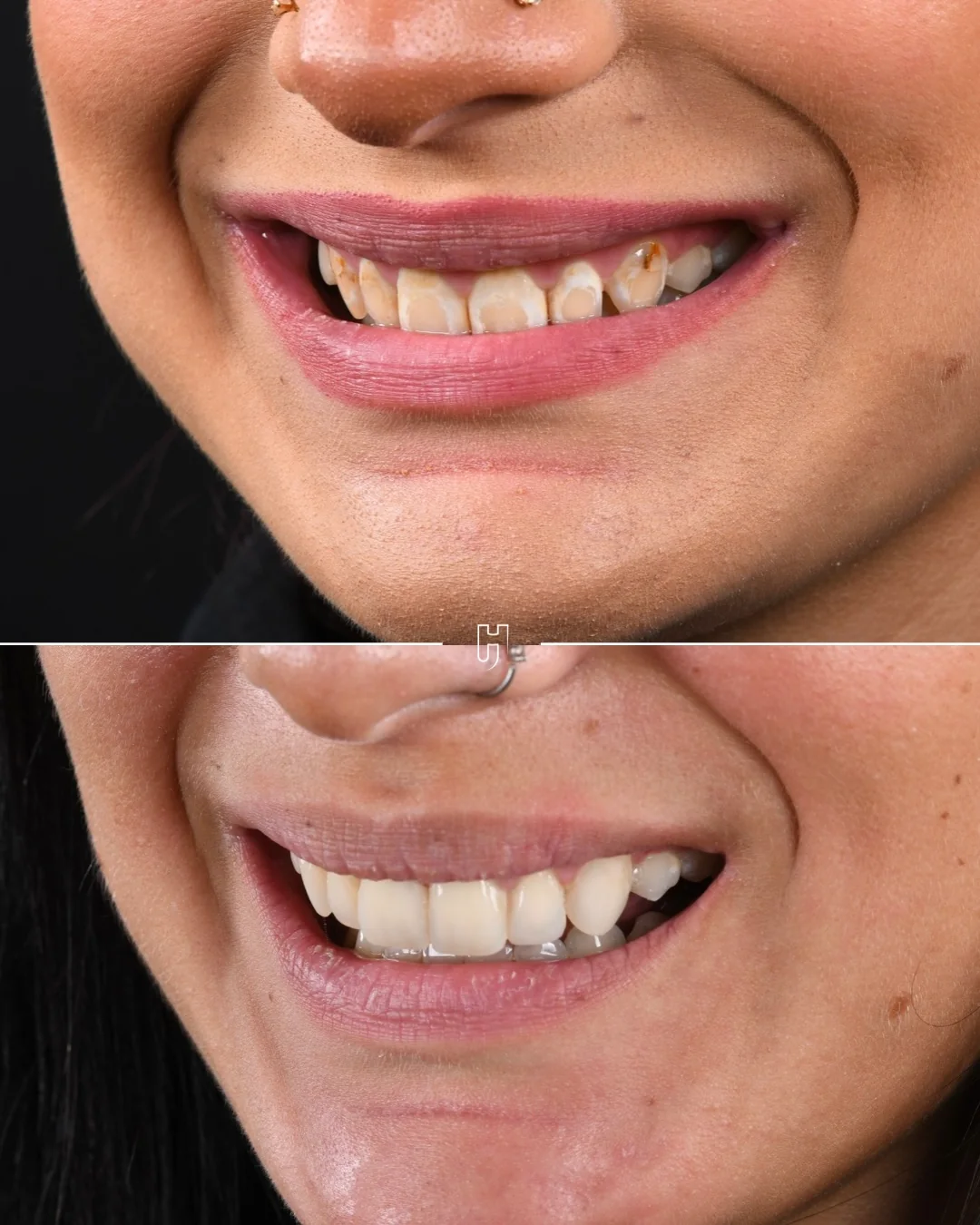
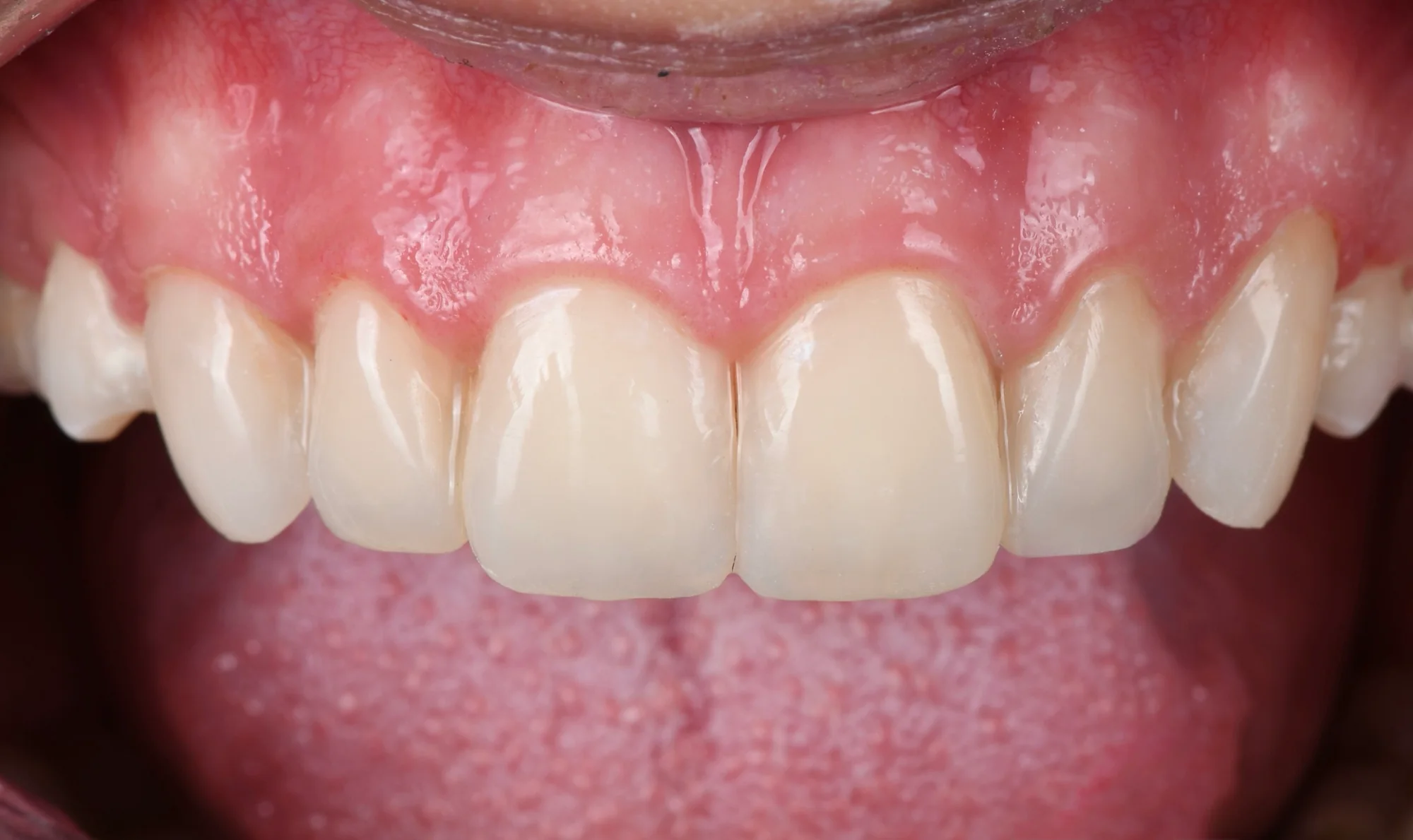
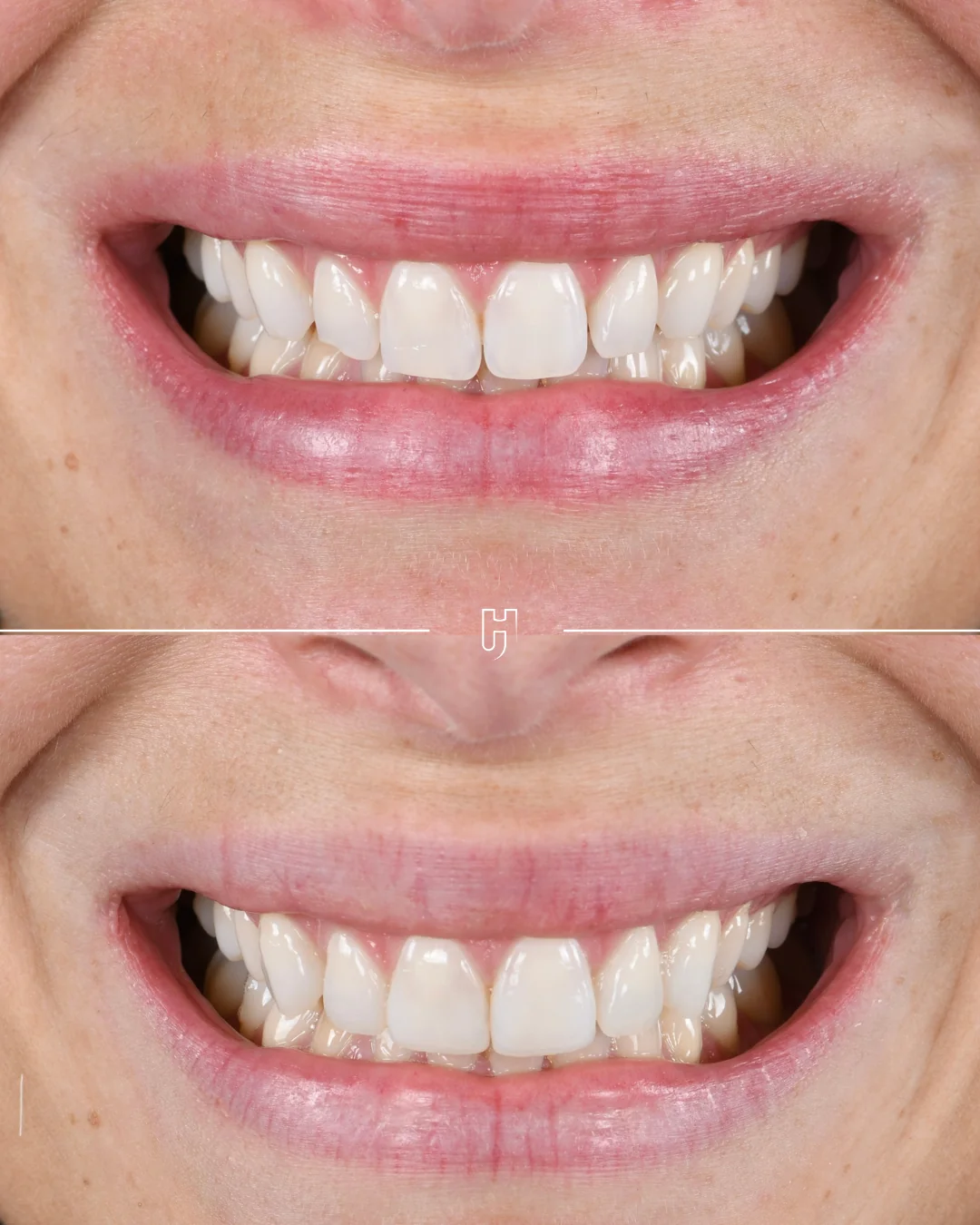
The injection-moulded composite veneers restored the lost volumes and gave the teeth a smooth surface again, which makes daily hygiene easier.
In this case, injection-moulded composite met first of all a need for restoration, with an aesthetic improvement built into the design: less rounded shapes, as the patient wished, and a more even smile. How long they last and how to look after them is covered in the article “Injection-moulded composite: how long does it last, and how do you look after it?”.
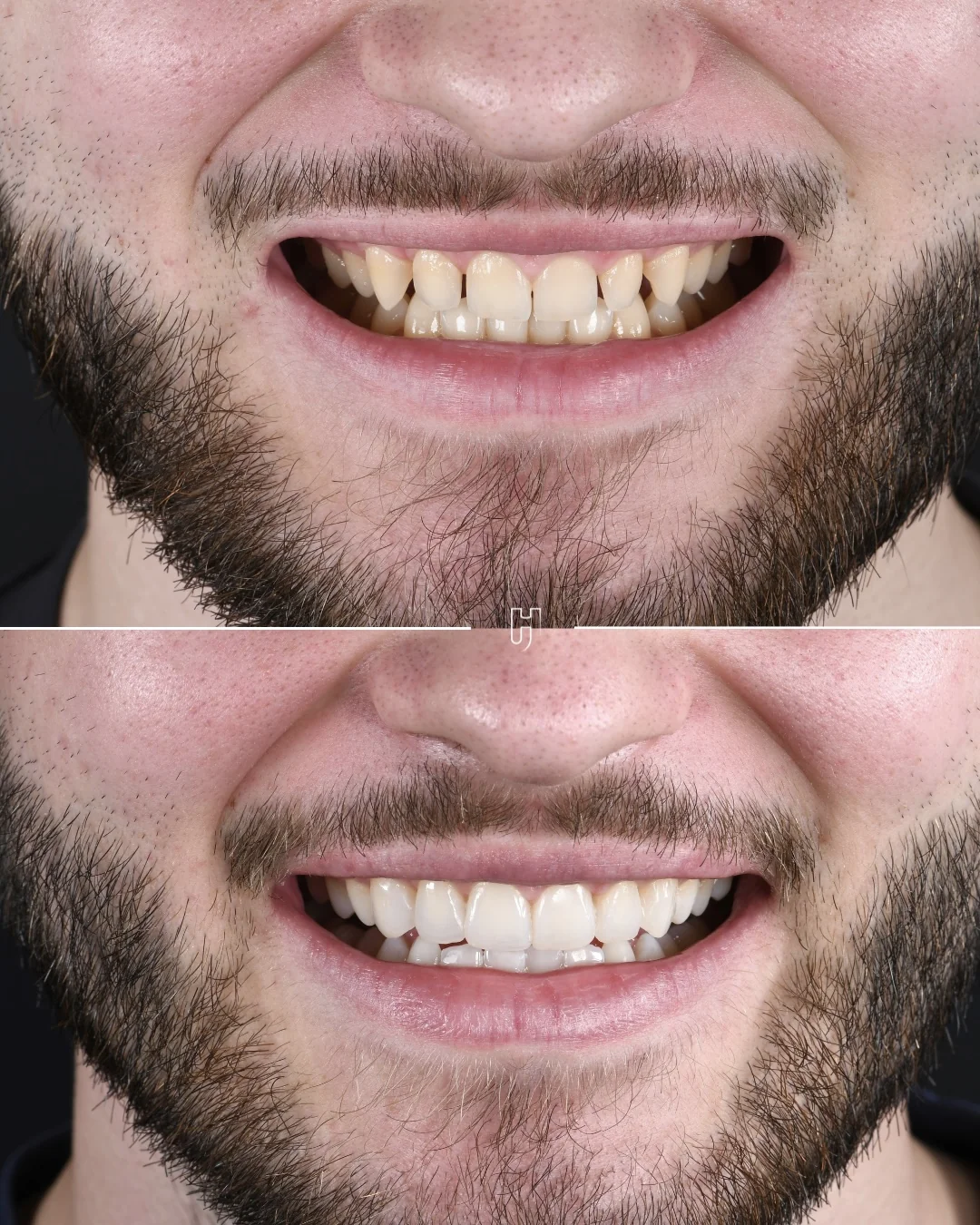
Individual result: another case of injection-moulded composite veneers shows the same technique on healthy teeth.