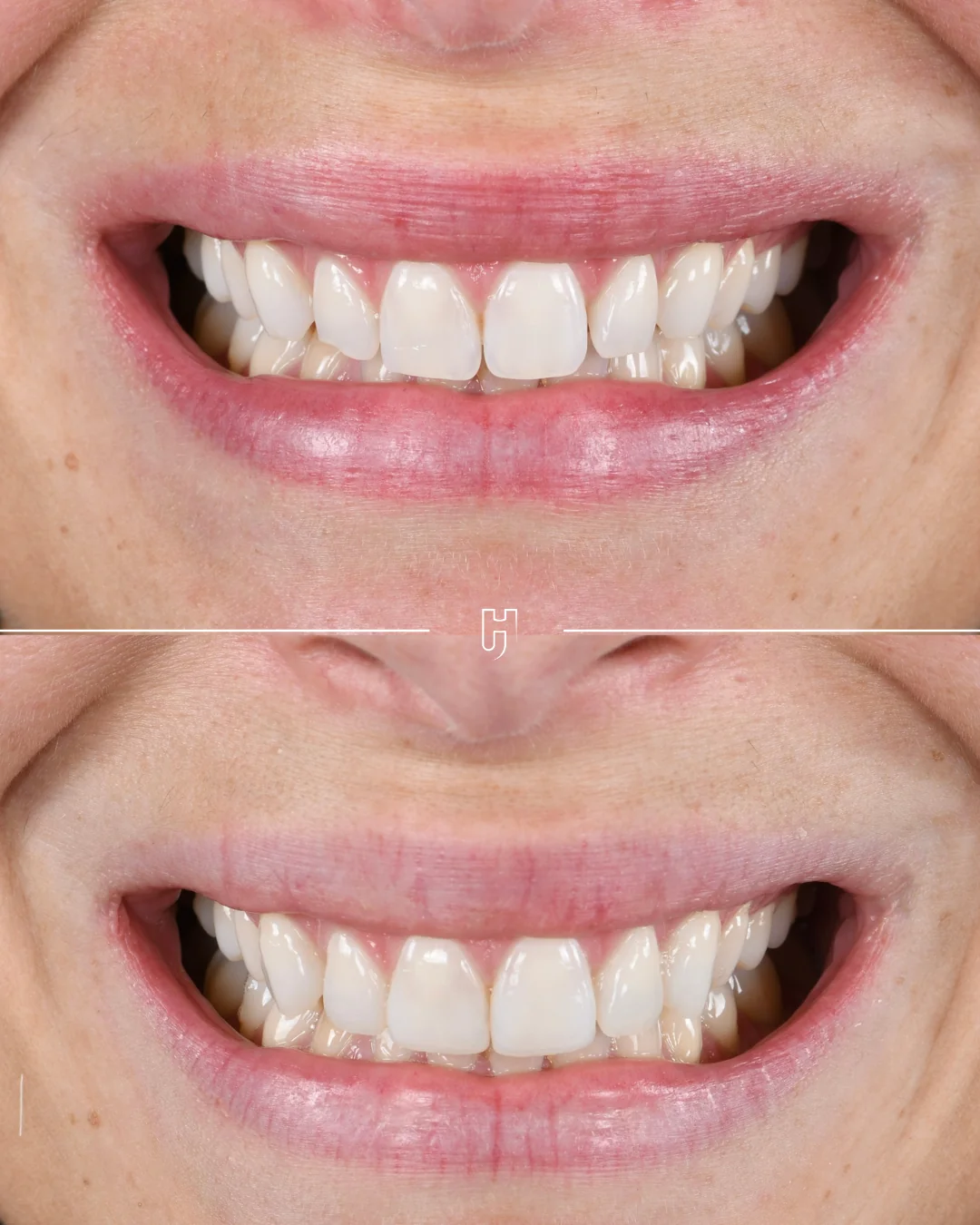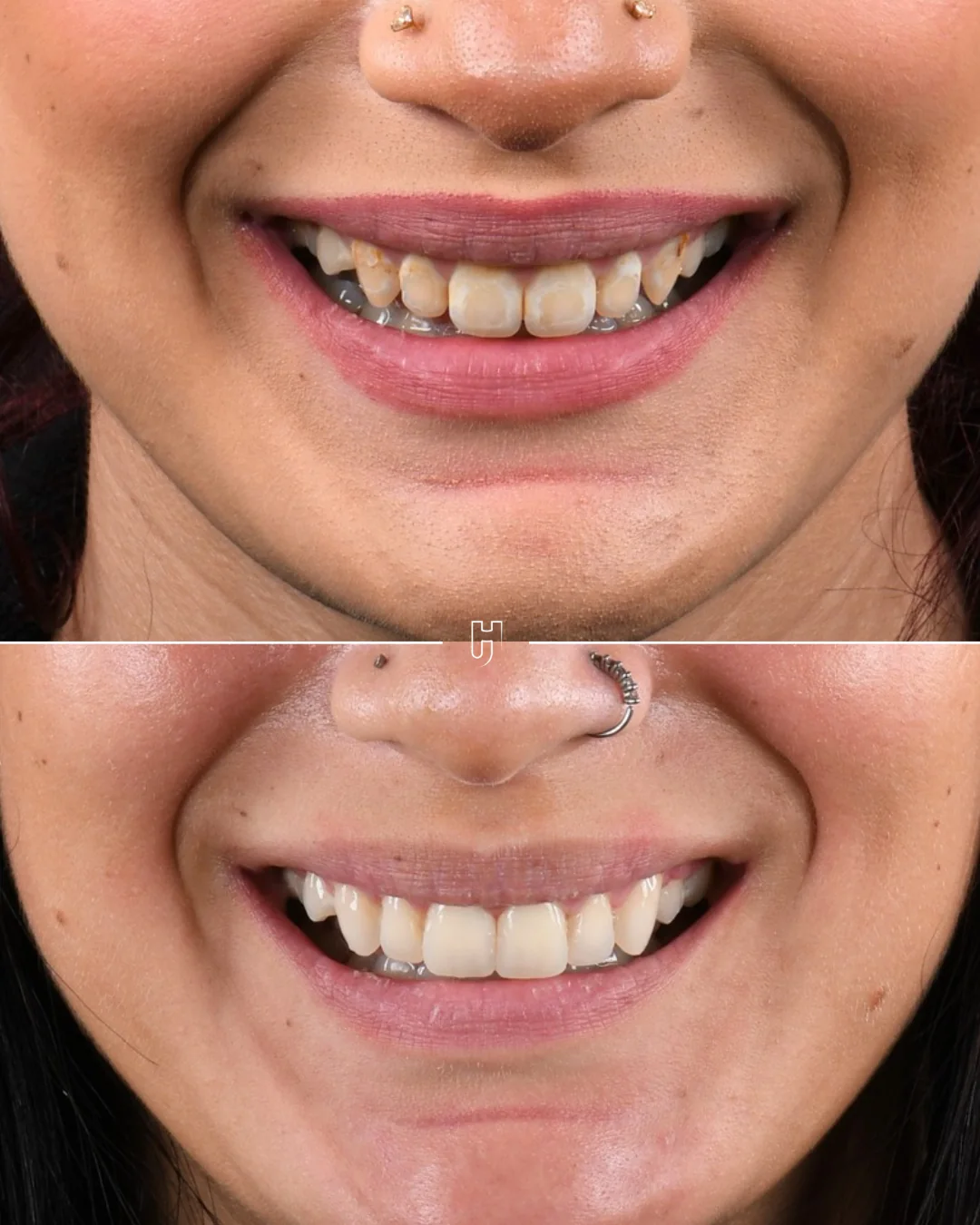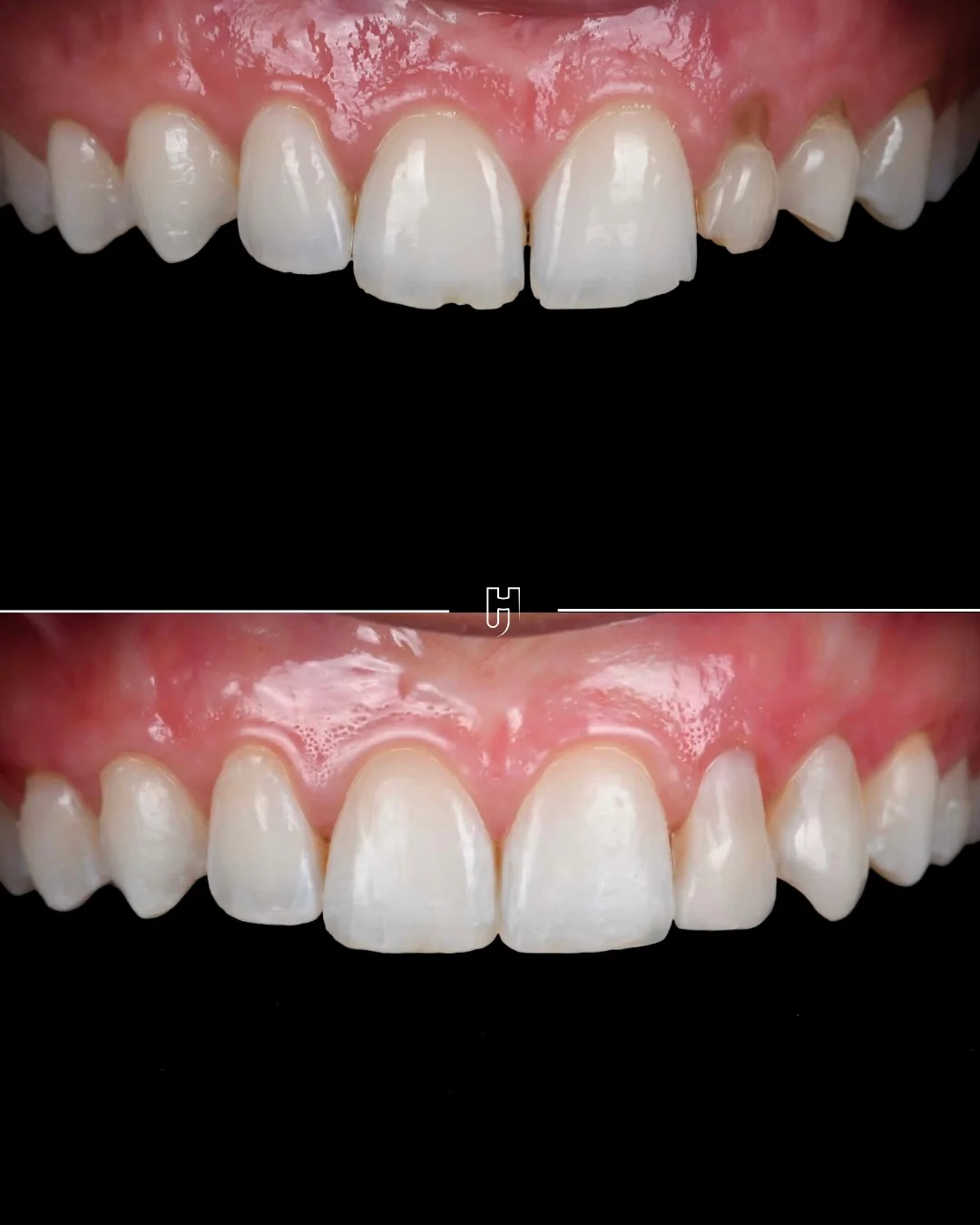
Two permanent teeth missing, two baby teeth still in place
This young 27-year-old patient came in with an uncommon situation: agenesis of the 22 and the 23, the upper left lateral incisor and canine. The two corresponding baby teeth had stayed in place and had now become loose.
Dental agenesis is the failure of a permanent tooth to form: the baby tooth it should have replaced can then remain in the mouth into adulthood. The treatment plan was clearly established: extract the two baby teeth, then replace them with two implants.
An interim solution, a few weeks before a wedding
One detail changed the treatment completely: her wedding was planned a few weeks later. Starting the extractions and placing the implants straight away was not an option.
She needed an interim solution that was quick, conservative and aesthetic enough for her to experience the occasion with peace of mind.
Freehand composite and injection-moulded composite veneers
The approach was entirely additive, that is, by simply adding composite to the teeth:
Layered composite applied freehand to the 11 and the 21, the two upper central incisors, to rebalance the proportions of the smile.
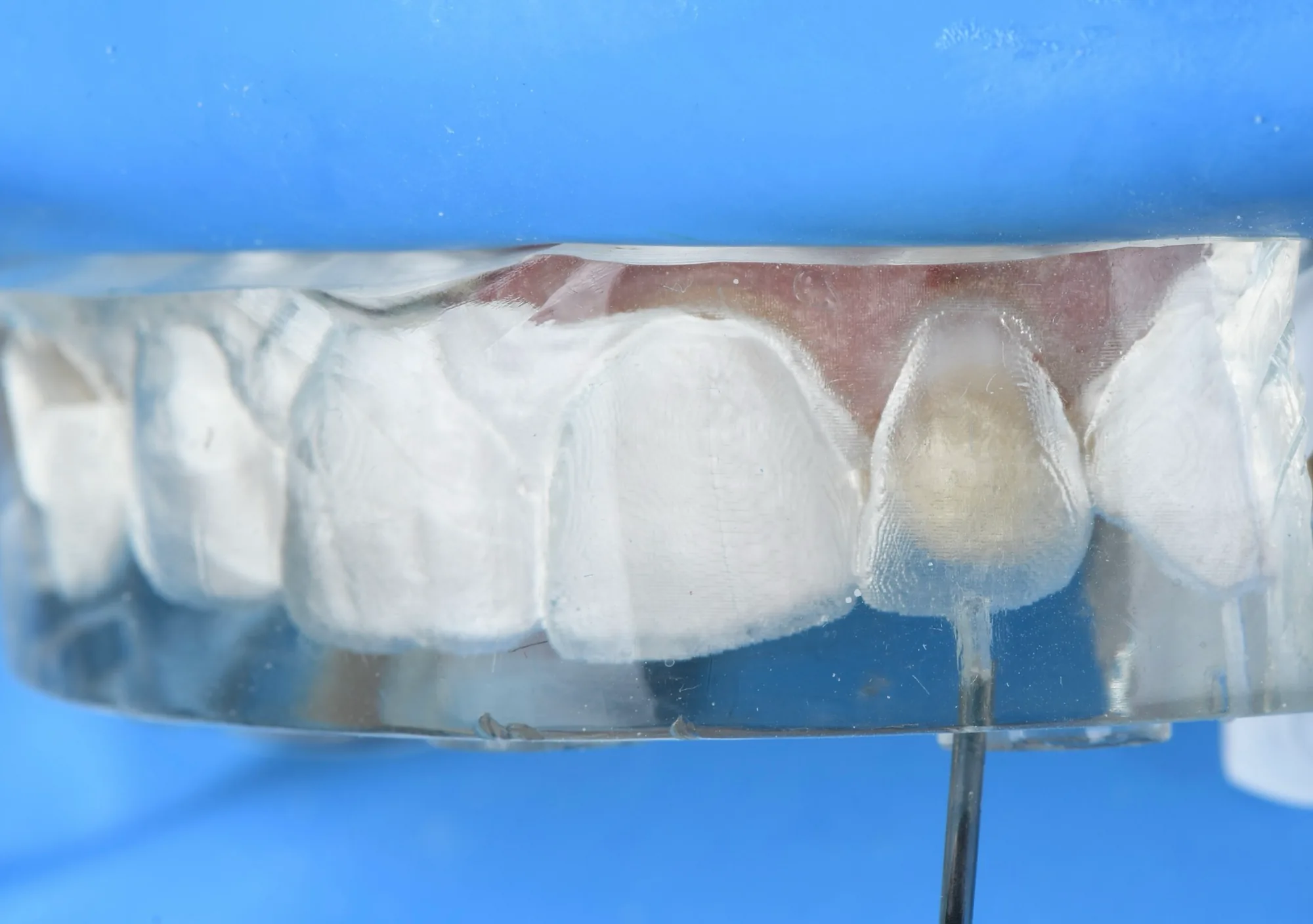
Injection-moulded composite veneers, layered, on the two baby teeth, to harmonise their volumes, their shapes and their aesthetic integration.
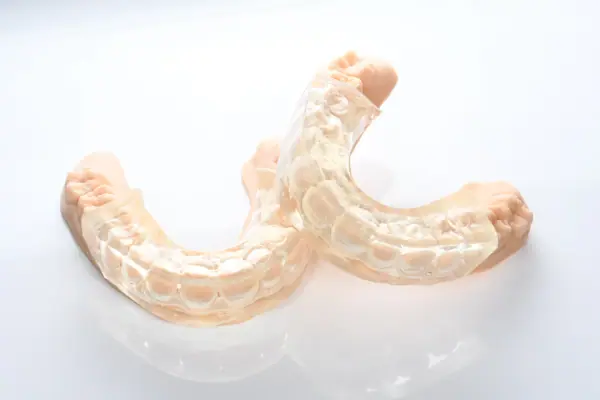
Injection-moulded composite is an aesthetic dentistry technique: a composite resin is injected through a clear key that reproduces the planned shapes of each tooth in the mouth.
The right treatment at the right time, before implants
The aim was not to carry out the definitive treatment, but to address a specific problem, at the right time, with the most suitable solution. Aesthetic dentistry also means adapting the treatment plan to biological, functional and human constraints.
Implant treatment was planned for a later stage. In the meantime, the patient had a smile with harmonised proportions for her wedding. How long injection-moulded composite lasts and how to look after it is covered in the article “Injection-moulded composite: how long does it last, and how do you look after it?”.
Individual result: another case of injection-moulded composite veneers shows the same technique, without preparation, on permanent teeth.