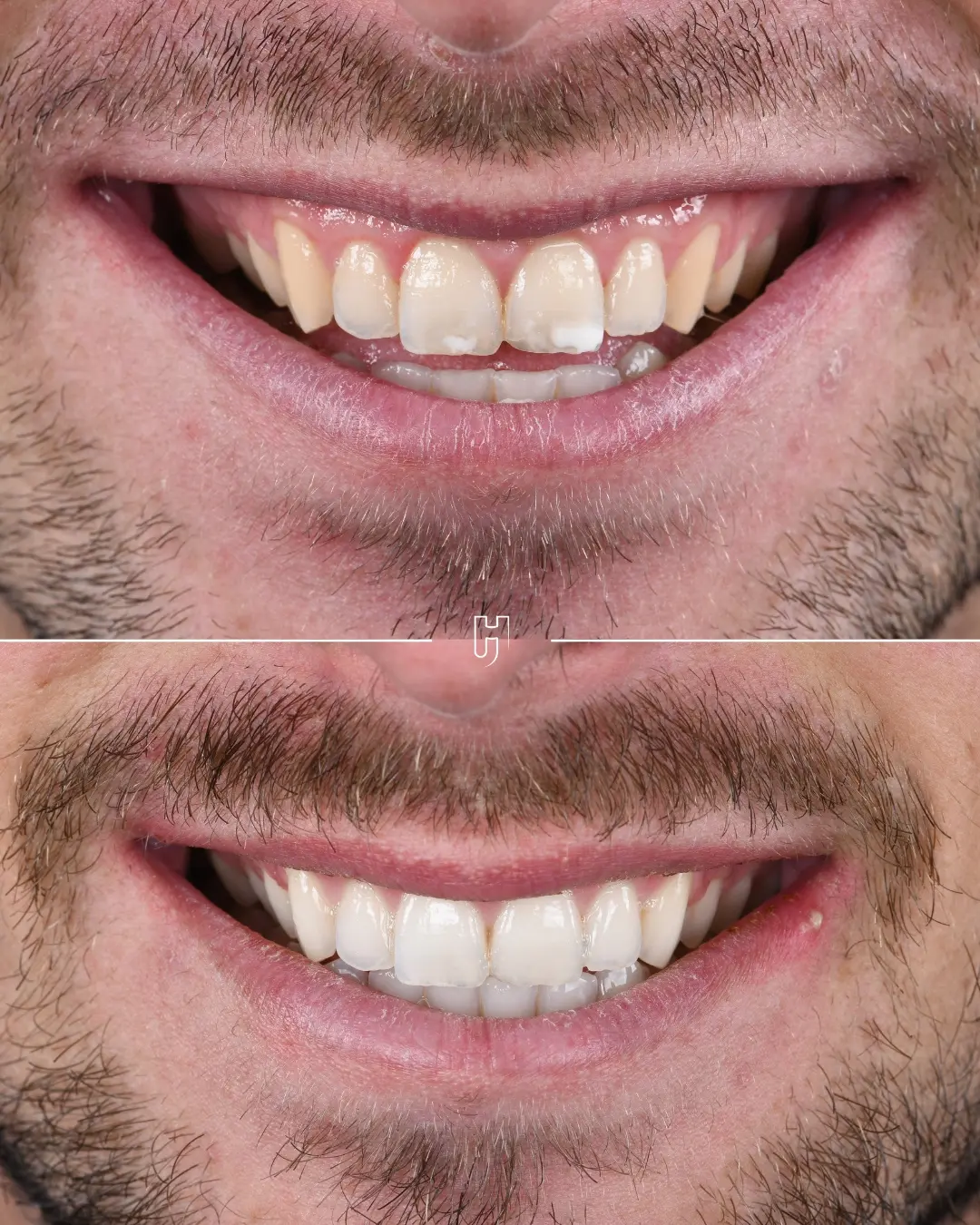
“Doctor, that spot is all I can see”
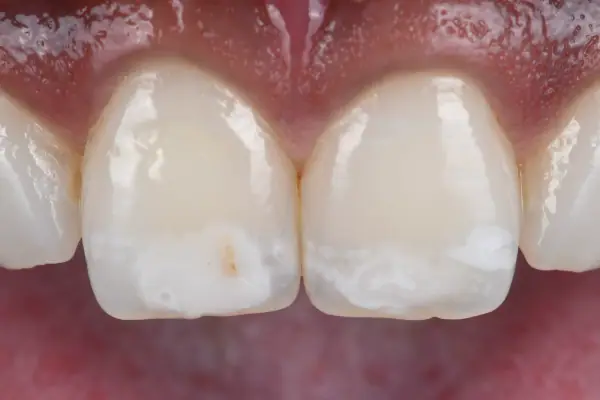
The reason for the visit was simple: a white spot on an upper central incisor, summed up in one sentence, “Doctor, that spot is all I can see”. A small spot can sometimes take over a whole smile.
This is often where aesthetic dentistry becomes interesting: the answer should not automatically be a restoration, a composite or a veneer. In some cases, a real aesthetic benefit can be obtained while preserving as much of the tooth structure as possible.
Why start with whitening
Before treating the spot itself, the contrast between the tooth and the white lesion has to be reduced. The darker the surrounding tooth, the more visible the spot. By gradually lightening the whole, part of the aesthetic result is already prepared.
The protocol therefore always begins with at-home whitening, that is, with trays worn at home, for three to five weeks.
Whiten, then infiltrate, without drilling
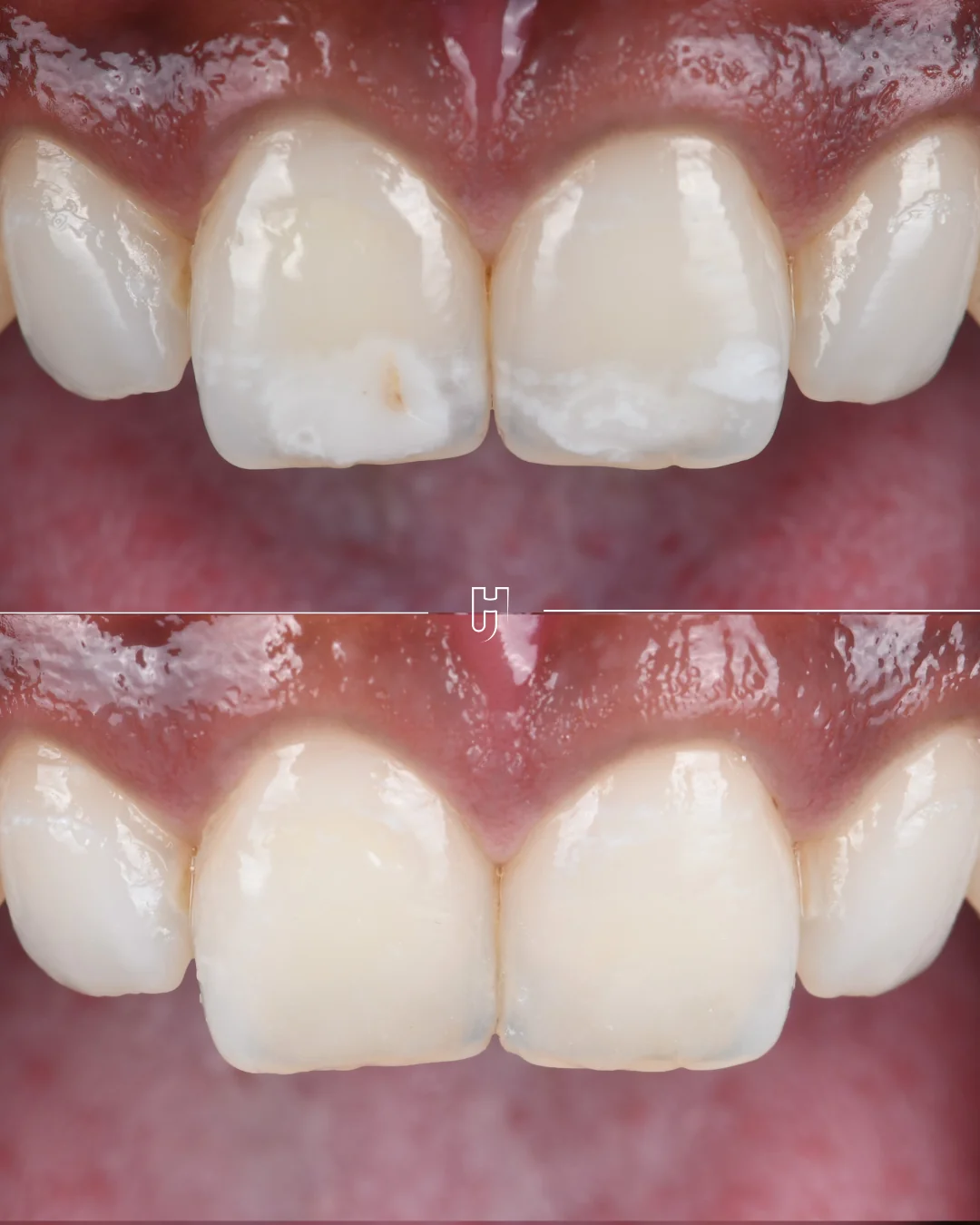
In a second stage, resin infiltration changes the way light travels through the lesion: a very fluid resin fills the pores of the enamel, and the spot stops looking white.
No drilling. No systematic covering. No healthy tissue sacrificed when it is not necessary. It is a minimally invasive treatment, whose aesthetic benefit can be very significant.
The right treatment is not always the most visible one
After whitening then resin infiltration, the spot can no longer be told apart from the surrounding enamel, and the tooth has been neither drilled nor covered.
This approach is a reminder of something essential: in aesthetic dentistry, the best treatment is not always the most visible or the most interventional. Sometimes the right one is simply the one that respects the tooth the most.
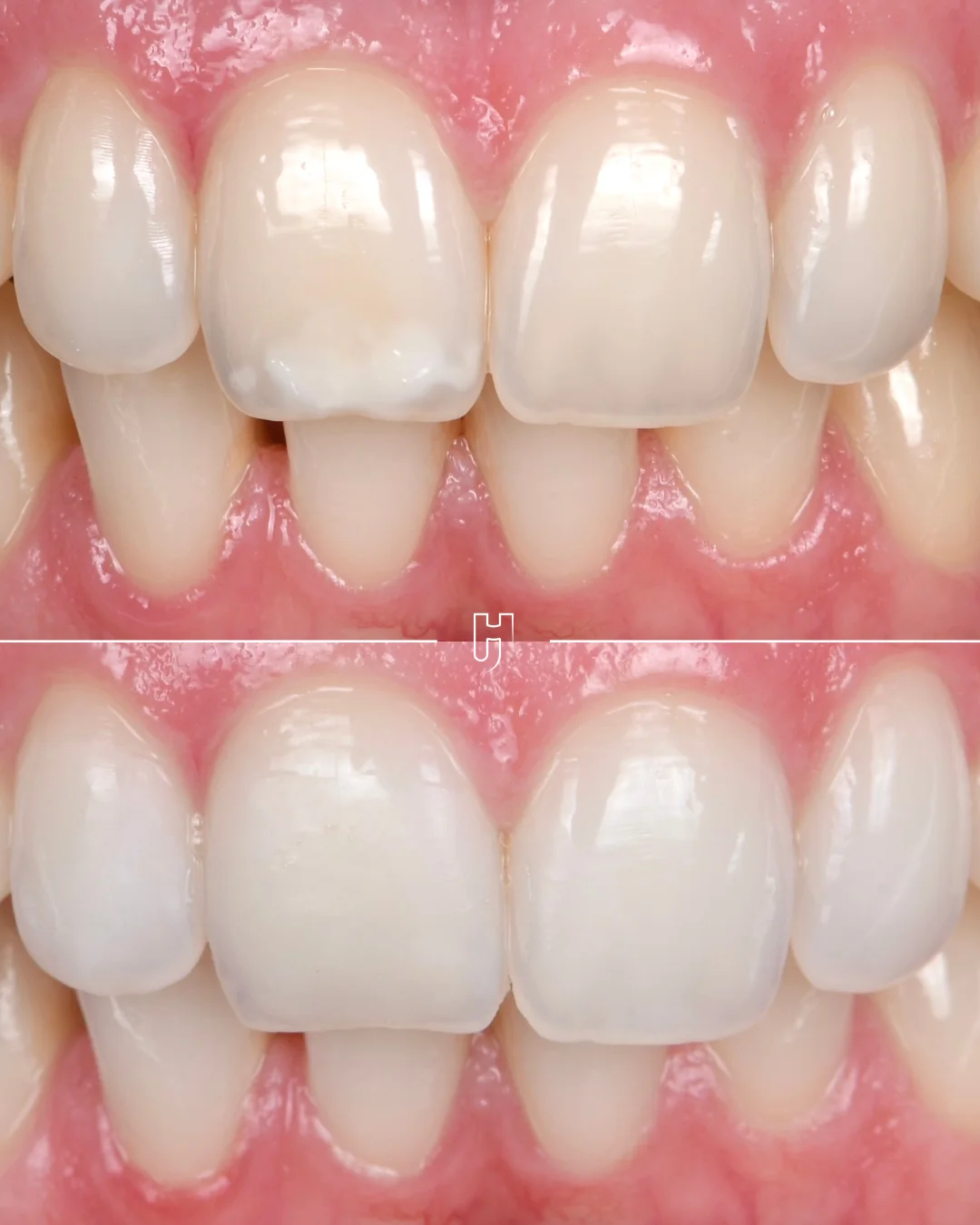
Individual result: another case of white spots on several front teeth is presented under stain treatment. To go further: “Does whitening damage the teeth?”